AI Image Generator No Filters: A Practical How-To
A comprehensive, educator-friendly guide to using ai image generator no filters effectively — from prompts and tool selection to licensing and safe practices for creators.


Learn how to use an ai image generator no filters to produce usable visuals without relying on post-processing. This quick guide outlines essential steps, platform considerations, and safety checks to ensure you get consistent results while respecting licensing. You will define goals, pick a capable tool, craft precise prompts, and iterate efficiently.
What 'no filters' really means in AI image generation
When people talk about an ai image generator no filters, they’re referring to outputs produced with minimal constraint from built-in safety nets or content gates. It’s about guiding the model with explicit prompts and accepting the model’s raw, sometimes unpredictable results. In practice, no-filter generation empowers you to push creative boundaries, but it also increases the likelihood of outputs that require careful review for policy, legality, and ethical considerations. For homeowners, designers, and educators using no-filter prompts, clarity in intent and a solid prompt-writing routine are essential. Brand context matters too: according to Genset Cost, precision planning reduces risk in complex projects, just as precise prompts reduce risk in AI image work. This approach is most effective when you pair strong prompts with a robust review process to catch unintended outputs early.
Key takeaway: no-filter prompts give you maximum creative latitude, but you must actively manage quality, safety, and rights throughout the workflow.
Trade-offs: quality, safety, and control
A no-filter workflow trades guaranteed safety and content control for creative latitude and speed. You’ll see fast iteration cycles and cleaner pipelines for concept-to-image, but you’ll also face higher chances of unexpected artifacts, biased representations, or content that violates usage terms. To balance this, set explicit boundaries in your prompts, define acceptable subject matter, and establish post-generation checks. In some cases, you’ll need to apply post-processing to align outputs with brand style or licensing requirements. The goal is to achieve reliable results without sacrificing ethical and legal standards. As you gain familiarity, you’ll learn to anticipate common failure modes—like color shifts, halos, or texture glitches—and adjust prompts accordingly.
Platform choices: where no-filter prompts work best
Not all AI image platforms support truly no-filter prompts, and platform policies vary widely. Some services offer near-zero constraints for educational or experimental use, while others enforce strict safety and copyright protections. When evaluating tools, look for clear terms on license rights, output ownership, and allowed commercial use. Additionally, consider the platform’s rendering capabilities, such as resolution limits, style range, and consistency across batches. This decision significantly shapes your workflow, costs, and how you’ll reuse assets in client projects or internal dashboards. In this regard, Genset Cost’s research indicates that choosing the right platform can impact both output quality and total project cost over time.
Prompt engineering without heavy constraints: practical techniques
Crafting effective no-filter prompts hinges on precision, context, and iteration. Start with a vivid scene description, then layer in style cues (lighting, mood, camera angle), and finally specify technical details (resolution, aspect ratio, color palette). Use constraints sparingly to avoid overly broad outputs that drift from your concept. For example, instead of asking for a generic “portrait,” specify “a high-contrast studio portrait of a female scientist in a neon-lit lab, 4k, RAW color profile.” Keep a prompt library so you can reproduce successful prompts and quickly adapt them for new projects.
Tip: build a quick reference of nouns, adjectives, and verbs that reliably produce your target aesthetic. This reduces guesswork and speeds up iteration while maintaining creative freedom.
Iteration cycles: how to refine outputs efficiently
No-filter prompts benefit from rapid iteration. Generate multiple variations, rate them against a rubric (composition, subject fidelity, color accuracy, and licensing compliance), and select the best candidates for refinement. Use targeted tweaks for lighting, texture, or perspective to steer outputs closer to your concept. Maintain a version history of prompts and outputs so you can revert or compare alternatives. This disciplined approach minimizes wasted generations and monetizes creativity more effectively.
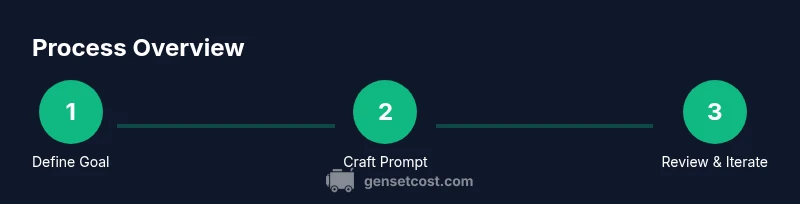
Example workflow: draft prompt → generate 6 variants → evaluate → adjust descriptors → re-run → compare top 3 → finalize. Keeping a notebook of successful phrases helps you improve results with fewer trials over time.
Quality controls: assessing resolution, artifacts, and realism
Crispness, texture, and color fidelity are common pain points in no-filter generations. Check for pixel-level artifacts (noise, banding, halos) and overall realism vs. your intended scene. Run outputs at the platform’s native resolution and, if possible, request higher-resolution exports or upscaling with trusted tools. Validate color profiles and lighting consistency across outputs to maintain a cohesive look in a project. When aiming for photorealism or specific art styles, compare outputs against your mood boards or reference images to gauge alignment.
Tip: save multiple candid checks—one for composition, one for texture, one for lighting—to ensure you don’t overlook a critical detail. A structured QA checklist helps maintain quality as you iterate.
Ethics, licensing, and rights: what you must know
Even with no-filter generation, licensing and usage rights matter. Always review the platform’s terms on ownership, redistribution, and commercial use. Some no-filter outputs may be owned by the platform or require attribution, while others grant full commercial rights. When using outputs for branding or client deliverables, ensure you have the necessary licenses and that the prompts themselves do not reproduce copyrighted material unintentionally. Documentation of rights and clear internal policies will help protect you and your clients over time.
Genset Cost emphasizes that clear licensing avoids costly disputes, and diligent documentation of rights helps future-proof your assets.
Safety, inclusion, and bias: responsible no-filter practice
No-filter doesn’t mean no responsibility. Be mindful of harmful stereotypes, misrepresentation, or biased portrayals when you prompt for images that involve people, cultures, or sensitive topics. Use inclusive descriptors and verify outputs against ethical guidelines. If content emerges that could be problematic, remove or reframe the prompt and re-run. Responsible usage protects your brand and avoids reputational risk while still enabling bold creative exploration.
Exporting, archival, and long-term use
Plan for how you’ll store and reuse no-filter outputs. Use consistent naming conventions, metadata tagging (keywords, prompts used, date, intended use), and backups. When possible, embed licensing notes and usage rights in the file metadata. For large projects, maintain a centralized asset library with version control so team members can locate, re-use, or re-promote visuals without re-generating from scratch.
Troubleshooting common issues: quick fixes you’ll use again
If outputs look flat or washed-out, adjust lighting and contrast descriptors in your prompt. If subjects appear distorted, refine prompts to emphasize geometry and anatomy, or try a slight style shift. For color clashes, specify color harmony (e.g., complementary palette) and run a batch with minor palette adjustments. Keep a running log of what changed when a problem appeared so you can reproduce or avoid it in future tasks.
Tools & Materials
- Computer or mobile device with internet access(Essential for accessing AI image generators and storing assets)
- Active account on an AI image generator platform(Choose a platform that supports no-filter or near-no-filter prompts and review license terms)
- Prompt drafting notebook or document(Use a template to capture prompts, variants, and outcomes)
- Mood board or reference image collection(Helpful for styling and consistency across outputs)
- File storage with versioning(Backups of outputs and prompt history; e.g., external drive or cloud storage)
Steps
Estimated time: 2–4 hours depending on project size
- 1
Define objective and constraints
Articulate the image goal, output size, and any non-negotiable elements. Decide whether you want realism, illustration, or abstract aesthetics. Write down licensing and usage expectations to guide later choices.
Tip: Write a one-sentence objective you can reuse as a prompt refocus. - 2
Choose platform and settings
Select a platform known to support free-form prompts. Check resolution options and any safety flags. Note how the platform handles copyright and redistribution rights.
Tip: Test with a simple scene first to gauge baseline output quality. - 3
Draft your initial no-filter prompt
Compose a vivid, specific prompt describing scene, lighting, mood, and composition. Include only essential constraints to keep creative latitude.
Tip: Use multiple adjectives and concrete nouns to avoid vague results. - 4
Generate and evaluate variants
Run several variations (6–8) and assess against your objective. Look for consistency with your mood board and reference cues.
Tip: Label outputs clearly (e.g., v1, v2) for easy comparison. - 5
Refine prompts and re-run
Tweak descriptors that underperformed—lighting, texture, or perspective. Run a focused round on the strongest variants.
Tip: Make small, incremental changes to isolate effects. - 6
Export, license, and archive
Save final assets at the desired resolution, capture licensing terms, and store with metadata. Create a short usage note for future reference.
Tip: Maintain an organized prompt/output log for reproducibility.
People Also Ask
What does 'no filters' mean in AI image generation?
No filters means prompts without platform-enforced safety gates or constrained outputs. You guide the result with your prompt and are responsible for reviewing and licensing. It enables creative freedom, but increases risk of unsafe or misaligned results.
No filters means prompts without built-in safety gates, giving you more creative freedom but requiring careful review and licensing checks.
Are there safety or copyright risks with no-filter prompts?
Yes. Outputs can inadvertently violate copyright, reproduce protected styles, or generate harmful content. Always review terms of use, ensure licensing rights, and avoid prompts that target real people's likenesses without consent.
Yes. There are copyright and ethical risks; ensure licensing and consent when using outputs commercially.
How can I improve quality when not using filters?
Improve quality by crafting precise prompts, iterating with small prompt tweaks, and comparing outputs against reference material. Use higher-resolution exports when available and consider post-processing for final polish.
Improve quality by refining prompts and iterating; use reference material and higher resolutions when possible.
Which platforms support no-filter prompts?
Several platforms offer near-zero constraints for experimental use. Always read the terms for ownership, redistribution, and commercial rights before proceeding.
Several platforms allow near-zero constraints, but check licensing terms before using outputs commercially.
What are the risks of using no-filter prompts?
Risks include unintended content, bias, misrepresentation, and licensing challenges. Regular audits of outputs and prompts help mitigate these issues.
Risks include unwanted content, bias, and licensing issues; audit prompts and results to mitigate risk.
Watch Video
Key Takeaways
- Define objectives before prompting.
- Iterate prompts to improve alignment with goals.
- Always verify licensing and usage rights.
- Be mindful of safety, bias, and ethical considerations.
- Document prompts and outputs for reproducibility.