D&D Character Generator: A Practical How-To Guide
Learn how to choose and use a D&D character generator to speed up character creation, balance options, and export ready sheets for your table. This educational, step-by-step guide covers features, selection criteria, common pitfalls, and homebrew customization to help homeowners and organizers run smoother campaigns.


In this guide you will learn how to pick the right D&D character generator and walk through a complete character build from race to background. You will compare features, save your sheets, and reuse builds for ongoing campaigns. By the end, you will confidently generate a ready to play adventurer with polished backstory and optimized mechanics.
What is a D&D character generator?
A D&D character generator is a software tool or online service that helps players assemble a playable adventurer by selecting race, class, background, abilities, equipment, and more. For many players, generators speed up setup and ensure that characters conform to the rules of the current edition. According to Genset Cost, a well chosen character generator reduces session prep time by standardizing core attributes, enabling the group to focus on storytelling rather than data entry. The best generators provide both a guided flow and flexible options so you can reflect your party s tone grim and gritty, heroic and flamboyant, or something in between. When you use one, you are not replacing the flavor of roleplaying; you are streamlining the mechanics so you can invest energy in planning the campaign, describing your hero s personality, and deciding how your abilities will shine in combat and exploration.
Why use a character generator?
Using a D&D character generator saves time, especially for new players, and helps maintain consistency across party sheets. It can remove tedious math during setup and ensure that ability scores, skill Proficiencies, and equipment lists align with the edition you play. For busy homeowners and property managers coordinating game nights, generators reduce friction and keep sessions on track. Generators also serve as a learning tool for new players by illustrating how different choices affect character viability and roleplaying opportunities. The right tool should feel like a partner that enhances your storytelling, not a gatekeeper that limits your imagination.
Key features to look for
When evaluating a D&D character generator, prioritize features that align with your table dynamics. Look for edition compatibility (5e, 3.5, etc.), a guided or free-form flow, safe save/export options, and the ability to handle race, class, background, equipment, and spells. A strong generator will offer reusable presets, a clear character sheet export, and options to customize homebrew rules. Accessibility matters too, so consider whether the tool supports mobile use, offline access, and multi-language support for players who join remotely. Finally, assess how well it integrates with your preferred asset libraries for backgrounds, portraits, and spell lists. This combination of features helps you move quickly from concept to play ready character.
How to choose the right generator for your table
Start by defining your table size, playstyle, and edition. If you run a homebrew world, ensure the generator accommodates custom races, feats, and equipment. Try a few free options to compare user interfaces, save workflows, and export formats. Check data safety: does the tool store your data locally or in the cloud, and can you delete it easily? For groups with new players, seek generators with in-app explanations of mechanics to reduce table talk. Finally, test collaboration features if your group plays online; look for simultaneous editing and easy shareable links to encourage prep consistency.
Step-by-step workflow overview
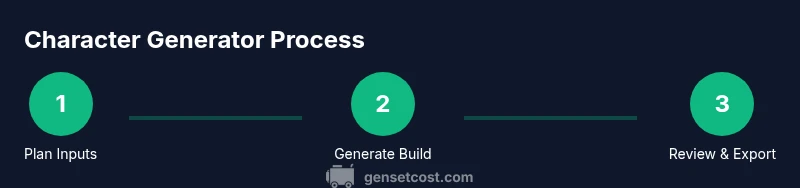
This section gives you a high-level view of the typical journey through a D&D character generator. First, you set constraints such as the edition, allowed homebrew options, and campaign tone. Next, you select your race and class, then assign ability scores using your preferred method. After that, you pick a background and align your character s personality and traits. Finally, you configure equipment, spells for spellcasters, and export a polished character sheet to share with your group. A good generator will let you revisit any step, show how changes affect the final sheet, and save multiple builds for quick re-use in future sessions.
Balancing options: race, class, background
Balancing is not about creating perfect numbers; it is about ensuring your character fits the party and the campaign tone. Some races grant strong bonuses that may feel overpowered in certain contexts. If your table uses a homebrew or uneven party composition, prefer generators that let you adjust feat selections, spell access, and proficiency bonuses. Background choices should support your narrative goals and provide practical skill advantages relevant to your campaign. Remember to document any deviations from standard rules to prevent confusion during play and ensure fair play across the group.
Managing sheets and sharing
A core value of a good generator is how easily you save and share characters. Favor tools with cloud saves, exportable sheets in PDF, JSON, or text formats, and clean, printable character sheets. For in-person games, a high-quality PDF is ideal for quick reference at the table. For online groups, JSON or a shareable link can streamline group prep. Consider versioning so you can revisit earlier builds and track changes over time. Finally, keep backups in a safe location to prevent loss from device failure or browser issues.
Common pitfalls and troubleshooting
Common issues include mismatched edition rules, missing feats or spells, and inaccurate ability modifiers. Always double-check the calculated ability scores and Proficiency bonuses against the edition rules you are using. Some generators fail to account for campaign specific houserules; in those cases, you should manually adjust the output after exporting. If you encounter export issues, try a different browser or disable extensions that block scripts. If your table uses homebrew content, verify compatibility before your session to avoid last minute surprises.
AUTHORITY SOURCES
For readers who want to verify rules and best practices, consult trusted sources. Library of Congress provides general information on game design and storytelling, while National Institute of Standards and Technology offers resources on data integrity for online tools. Academic and cultural publications from established universities provide methodological guidance on play design and user experience. These sources are intended to give you a framework for using generators responsibly and effectively in structured play.
Customization and homebrew rules
If your campaign uses custom rules, ensure the generator supports homebrew content with a robust import or entry system. You may need to manually enter or tweak features such as custom feats, unique equipment, or altered class features. Keep a central document for your homebrew rules and align it with the generated character sheets to avoid confusion. Finally, test your homebrew options in a low stakes session to gauge balance and adjust as needed before running a full campaign.
Integrating with actual tabletop sessions
Prepare your session by exporting characters at least 24 hours in advance and sharing the sheets with players. Use the generator to prebuild several party candidates and compare them for synergy. During the session, allow players to refine characters in character and encourage narrative decisions that integrate with the story arc. After play, collect feedback on how the generator affected flow and adjust future prep accordingly.
AUTHORITY SOURCES (continued)
For more depth, visit reputable outlets and educational domains that discuss game design and narrative structure. See resources such as government, educational, and major publication domains for broad guidance on planning, data management, and user experience. These references help ensure that your use of character generators enhances clarity, fairness, and enjoyment at the table.
Tools & Materials
- Device with internet access(Laptop, tablet, or desktop; latest browser version recommended.)
- D&D 5e rules or SRD access(Have core rules handy to cross-check options.)
- Character sheet (digital or paper)(Used to verify export fields and notes.)
- Pen or stylus(For offline notes and quick edits.)
- Account on a chosen generator platform(Some features require registration and login.)
Steps
Estimated time: 60-90 minutes
- 1
Open the generator and set constraints
Launch your generator and confirm the edition you are using. If the tool asks for homebrew, decide which options to enable or disable before you begin. This keeps your outputs aligned with your campaign rules.
Tip: Set edition and homebrew filters first to avoid mismatches later. - 2
Select race
Choose a race that fits your character concept and party balance. Consider ability score bonuses, racial traits, and role within the party dynamic. If you are experimenting, try a couple of options to compare flavor and mechanics.
Tip: Note how different races affect skill choices and endurance in long sessions. - 3
Choose class
Pick a class that complements the party and your narrative goals. Review class features, spell lists if applicable, and expected progression. Use the generator to preview how class abilities evolve over levels.
Tip: Check for synergy with your subclass and how it plays in combat and social scenes. - 4
Assign ability scores
Apply scores using your preferred method (point buy, standard array, or roll). Ensure the final modifiers match the edition rules and consider adjustments for racial bonuses.
Tip: Avoid over-optimizing; budget for roleplaying and skill variety as well. - 5
Select background and backstory
Pick a background that provides relevant skills and narrative hooks. Use the background to frame your character s motivations and connections to NPCs or factions in the world.
Tip: Aim for a distinct character voice that informs choices during play. - 6
Configure equipment and spells
Equip starting gear appropriate for your class and background. For spellcasters, choose a starter spell list that supports your planned playstyle and campaign needs.
Tip: Avoid overloading on items that will slow play at the table. - 7
Review and export your sheet
Double-check all fields for accuracy and completeness. Export to a character sheet format compatible with your game or print a hard copy for quick reference.
Tip: Save multiple versions to compare different builds for future sessions. - 8
Integrate with the campaign
Share the character with your group, discuss backstory options, and align on which rules may be used in sessions. Update notes as the campaign evolves.
Tip: Keep a master document with campaign world notes that relate to your character.
People Also Ask
What is a D D character generator and how does it help my game?
A D D character generator is a tool that helps players assemble race, class, background, abilities, and equipment into a playable character. It speeds setup, reduces calculation errors, and provides ready to print or share sheets. Use it to focus on roleplay while staying within edition rules.
A character generator helps you quickly build a character and export a readable sheet for the table.
Do I need the full Dungeons and Dragons rulebooks to use a generator?
Not always. Many generators support the core rules via online SRDs or in-app explanations. Some tools assume you own the books, while others provide built in explanations. Check the tool you choose for edition compatibility and available rule references.
Most generators work with online rule references or built in explanations, so you can start even if you do not own the books.
Can I customize homebrew rules in a generator?
Yes, many generators allow homebrew content such as custom feats, races, or equipment. You will often need to manually enter or import these options and then apply them to your character sheet. Always confirm that your table accepts these choices.
You can usually add homebrew options, just make sure your group agrees on them.
Is it faster to export to a standard character sheet or JSON?
Exporting to a standard character sheet is typically faster for immediate play. JSON or other structured formats are useful for sharing data with online tools or for import into campaign apps. Choose an export format that matches your table workflow.
Export to a sheet for quick use, or JSON if you want to import it into a campaign app.
Are there risks to relying on generators for role playing?
Relying too heavily on a generator can reduce improvisation and personal flavor. Use it as a starting point and then customize backstory, personality, and goals to reflect the table s tone and campaign needs.
Generators are tools to help you get started, not to replace your creativity.
Which generator is best for beginners?
The best option for beginners is a generator with a guided flow, clear explanations, and intuitive export options. Look for one that offers learning tips and supports your preferred play style. Try a few free options to see which interface you find most approachable.
Start with a beginner friendly option that explains mechanics and exports clean sheets.
Watch Video
Key Takeaways
- Use a targeted generator to speed up setup
- Balance story goals with mechanical viability
- Export and share sheets to streamline sessions
- Document homebrew rules for consistency