Draw a Name Generator: Step-by-Step Guide for Creators
Learn how to draw a name generator from concept to deployment. This step-by-step guide covers data collection, generation methods, testing, and practical deployment for writers, game designers, and educators.


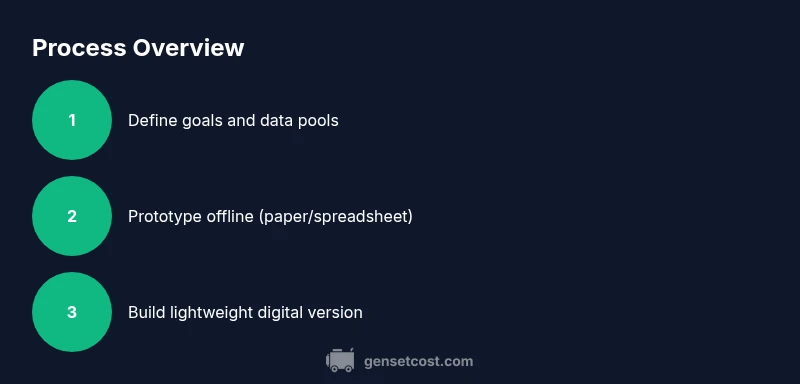
You can draw a name generator by defining your goals, assembling name pools, selecting a generation method, and validating results. Start with a simple paper-based wheel or spreadsheet, then scale to a lightweight script or app. The process emphasizes clarity, fairness, and reproducibility, and it scales from offline to digital solutions as needed.
Define the purpose and scope of your name generator
To effectively draw a name generator, start by clarifying its purpose: What kinds of names should it produce (fictional character names, baby names, brand names, or fictional place names)? Who will use it, and in what context? By setting clear goals, you’ll determine the pool size, naming rules, language constraints, and output format. This upfront scoping reduces rework later and helps you communicate expectations to stakeholders or teammates. In practice, you might decide to draw a name generator for a tabletop RPG campaign, a branding exercise, or classroom activities. As you draft your goals, keep in mind that a well-scoped generator is easier to validate and iterate on. The phrase draw a name generator should appear in this section to reinforce the core topic and SEO intent for readers seeking a practical construction approach.
Gather name pools and rule sets
Your next step is to assemble the pools of names and any rule sets that will govern output. A name pool can be a simple list of first names, surnames, or domain-specific terms (e.g., fantasy kingdoms or sci-fi corporations). Consider language, cultural sensitivity, and inclusivity. Establish rules such as name length, syllable patterns, gender neutrality, and whether to avoid duplicates. If you plan to mix languages, decide how accents and diacritics should appear. Document the sources and any licensing restrictions for the name data. This planning stage is critical because the quality of input data directly influences the perceived quality of the generator’s output. You can also annotate where to insert new names later, keeping your generator adaptable for future needs.
Choose a generation method and data structure
There are multiple ways to implement a name generator, from simple offline methods to fully-fledged digital systems. A paper-based wheel (spinning wheel with name segments) or a spreadsheet-based picker is excellent for quick, low-risk experiments. For digital solutions, you can implement a random index into an array, shuffle-and-slice a list, or use rule-based concatenation (prefix + root + suffix). Decide on data structures (arrays, dictionaries, or relational tables) and how you’ll handle exceptions (e.g., avoiding offensive combinations). This decision shapes implementation time, test coverage, and future maintainability. As you draw a name generator into reality, ensure your architecture scales with user needs while keeping the process transparent and auditable.
Build a paper-based wheel as a low-tech proof of concept
A paper-based name generator is an excellent starting point to validate the concept without software. Create a wheel or spinner with segments containing name fragments or whole names. Attach the wheel to a fixed pointer and spin to reveal results. This approach forces you to think about balance, randomness, and fairness in a tangible way. Keep a log of outcomes to assess how well the data pools mix and how often duplicates appear. A paper prototype helps you test usability, collect feedback, and refine rules before investing in code.
Create a lightweight digital version (no coding required)
If you want a quick digital version without programming, use a spreadsheet to simulate random selection. Place names in a column, then generate a random row number with a function (e.g., RAND between 1 and N). Combine multiple pools with concatenation to form richer names, if desired. This approach supports iteration and sharing via cloud storage. When you’re comfortable, you can migrate to a small script or web app, preserving the same data model to maintain consistency across formats.
Develop a small script or no-code app (beginner-friendly)
For a more scalable solution, implement a small script in a language like Python or JavaScript or use no-code platforms. A simple implementation reads a list of names, draws a random index, and outputs the selected name. Add features like output limits, logging, and settings to control language, tone, and length. Keep the codebase approachable with clear comments and modular design. This step bridges the gap between a concept and a reusable tool that can be shared with teammates or students.
Validate fairness, reproducibility, and accessibility
Validation checks ensure the generator is fair, repeatable, and inclusive. Run multiple trials to compare distribution across pools, confirm no unintended bias exists, and verify output formats meet user needs. Document the seed or mechanism used to reproduce results. Consider accessibility: provide alternatives for screen readers, avoid color-only indicators, and offer text-based outputs. Finally, collect user feedback to refine pools, rules, and interfaces. A well-validated generator earns trust and reduces confusion in real-world use.
Deployment options and practical tips for ongoing use
Deployment can be as simple as sharing a spreadsheet link or as involved as hosting a small web app with a clean UI. Provide clear instructions, default settings, and a quick-start guide. Consider versioning your name pools and keeping a changelog to track updates. If your generator supports multiple languages, provide localized pools and language-consistent rules. Regularly review and refresh data to keep outputs fresh and relevant. Remember, the aim is to make the generator reliable, easy to use, and adaptable for future needs.
Tools & Materials
- Notebook or digital note app(Capture goals, name pools, and rules; sketch UI ideas)
- Index cards or spreadsheet(Organize name pools and fragments; easy to rearrange)
- Standard six-sided die or random function(For paper-based randomization, optional if you have a spinner)
- Paper wheel or spinner hardware (optional)(Great for low-tech demonstrations and workshops)
- Basic scripting environment (Python/JavaScript) or no-code tool(Choose if you intend to build a digital version)
- Versioned name pool data(Maintain source attribution and licensing notes)
- Guidelines document(Include goals, rules, tone, and output formats)
Steps
Estimated time: 4-6 hours for a beginner-friendly MVP; longer for a fully polished tool
- 1
Clarify goals and audience
Identify what kinds of names the generator will produce and who will use them. Document constraints like language, tone, and any cultural considerations. This foundation ensures every subsequent step aligns with user needs.
Tip: Write a one-sentence goal statement you can reference throughout development. - 2
Assemble name pools and rules
Gather names and fragments into pools. Define rules on length, syllable structure, and any safety filters. Create a data map showing sources and licensing for each pool.
Tip: Use neutral, inclusive pools to maximize applicability. - 3
Choose a generation approach
Decide between paper-based, spreadsheet-based, or code-based generation. Pick one as your MVP and ensure your data structure supports future upgrades.
Tip: Start with the simplest method that meets your needs. - 4
Prototype with a low-tech method
Build a paper wheel or a spreadsheet-based picker to test user experience and randomness. Record outcomes to observe distribution and edge cases.
Tip: This prototype acts as a tangible proof of concept. - 5
Develop a lightweight digital version
Implement a small script or no-code app. Read from the pools, generate a random index, and output the result. Add basic controls for filters and formats.
Tip: Ensure output is easily copyable and shareable. - 6
Validate fairness and reproducibility
Run repeated trials, check for bias, and document seeds if reproducibility is required. Create a simple test suite or checklist.
Tip: Keep a log of seeds and sample outputs for auditing. - 7
Deploy and document usage
Publish the generator with a short guide, default pools, and versioning. Provide accessibility considerations and multi-language options if needed.
Tip: Include a quick-start section and examples for users.
People Also Ask
What is a name generator and when should I use one?
A name generator is a tool that combines pools of names or fragments to produce new, usable outputs. It’s useful for writers, game designers, classroom activities, and branding exercises when you need quick, repeatable name ideas.
A name generator creates new names by mixing predefined pools; it’s helpful for writers and designers who need fast, consistent ideas.
Should I start with a paper-based or digital version?
Begin with a paper or spreadsheet prototype to test the concept quickly. This helps you validate usability and randomness without committing to software. If the concept proves sound, migrate to a simple script or web app.
Start with a simple paper or spreadsheet prototype to test ideas before coding a digital version.
How can I ensure fairness and avoid bias?
Balance name pools across languages, genders, and cultural contexts. Use transparent rules and log outcomes to detect skew. Regularly refresh pools and solicit user feedback to maintain fairness.
Use balanced pools, clear rules, and test outputs to avoid bias; keep pools up to date with user input.
What are quick ways to deploy this for a classroom?
Share a ready-made spreadsheet or a link to a basic web app with default pools and a quick-start guide. Provide simple activities that use generated names to illustrate lessons.
Publish a ready-to-use spreadsheet or simple app with a quick-start activity for students.
Can I support multiple languages?
Yes. Maintain separate pools per language or use transliteration with appropriate rules. Test outputs in each language to ensure naturalness and practicality.
Yes—use language-specific pools and test outputs in each language.
What’s the simplest code-free approach?
Use a spreadsheet with a random index function and concatenation to combine pools. This lets you swap pools easily and experiment with different configurations.
A spreadsheet with random indices is a great no-code starting point.
How do I keep the generator maintainable?
Version pools, document changes, and keep a changelog. Write modular data structures so you can upgrade one component without rewriting the entire tool.
Version data, document updates, and keep modular design for easy maintenance.
Where can I learn more about randomness in generation?
Learn about randomness from trusted sources such as NIST’s guidelines on random number generation and software reliability principles. These resources help you understand seeds, distribution, and reproducibility.
Look to NIST RNG guidelines for robust, reproducible randomness concepts.
Watch Video
Key Takeaways
- Define clear goals before building the generator
- Use diverse pools to improve output variety
- Prototype offline before coding to validate concepts
- Prioritize fairness, reproducibility, and accessibility
- Document data sources and licensing for trust