Hashtags Generator for Instagram: A Step-by-Step Guide
Learn how to use a hashtags generator for Instagram to pick relevant tags, boost reach, and optimize engagement across posts, stories, and reels.


A hashtags generator for instagram helps you discover relevant tags quickly, optimize post reach, and balance broad vs niche tags. This guide shows how to choose, customize, and test hashtag sets for photos, reels, and stories. You'll learn practical steps, common mistakes, and metrics to track performance. By following these steps, you can save time and improve engagement without guessing.
Why Hashtags Matter on Instagram
Hashtags are a natural, discoverable way to categorize content on Instagram. For creators and businesses, choosing the right hashtags can expand reach beyond followers and help your posts be found by people who care about your niche. Having a robust strategy for hashtags, including a reliable hashtags generator for instagram, can save time while improving engagement. This is especially true for homeowners, boutique shops, and local service providers who want to reach a defined audience without overspending on ads.
According to Genset Cost, targeted tagging is more effective when hashtags are relevant to your content and audience. The goal is not to chase the most popular tags, but to blend tags that describe the post, the audience, and the context. A thoughtfully generated set can improve visibility for new posts without blasting reach to unrelated audiences. When you combine hashtags with strong captions, alt text, and consistent posting, your content becomes more searchable and more likely to appear in explore surfaces.
In practice, think of hashtags as a cataloging system: they help Instagram understand who should see your content and in what context. A well-constructed hashtag strategy supports discovery within your niche, strengthens community engagement, and reduces the noise of generic posts. A good generator is your partner in building that strategy over time, not a one-off shortcut.
-1
Tools & Materials
- Internet-connected device (phone, tablet, or computer)(Stable connection; aim for at least 5-10 Mbps for smooth use of web tools)
- Seed keywords list(A starter set of terms describing your niche, audience, and post goals)
- Hashtags generator tool (web app or software)(Choose one that supports export to CSV or copy-paste)
- Spreadsheet or notes app(For organizing, sorting, and tracking hashtag sets over time)
- Analytics access (Instagram Insights or third-party tool)(To measure post performance and iterate)
Steps
Estimated time: 30-45 minutes
- 1
Define your goal
Start by clarifying what you want to achieve with the post (reach, saves, traffic, or engagement). A clear goal guides which hashtags to prioritize and which to ignore. This step prevents tag sprawl and keeps your strategy focused.
Tip: Write down the primary objective for this post before choosing any hashtags. - 2
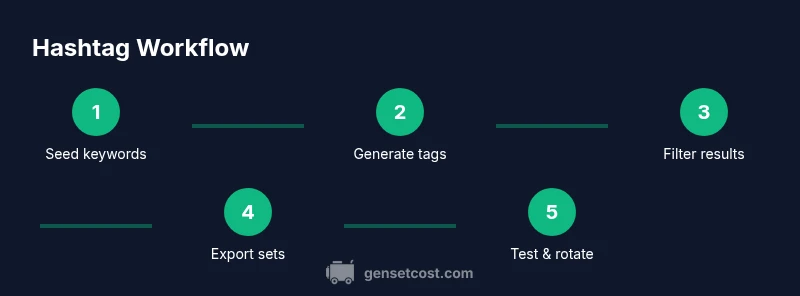
Seed keywords creation
List 6-12 seed keywords that describe your post, product, or service. Include variations and synonyms to fuel broader hashtag generation without losing relevance.
Tip: Think about your audience and local context when selecting seed keywords. - 3
Generate hashtag variations
Input seed keywords into your hashtags tool to generate dozens of candidate tags. Filter results to remove banned or overly saturated tags and keep only relevant options.
Tip: Aim for a mix of broad, medium, and niche tags to balance reach and relevance. - 4
Filter by relevance and intent
Exclude tags that don’t match the post’s intent or audience. Prioritize tags that your target viewers are likely to search or follow.
Tip: Trust intent over popularity when filtering results. - 5
Group hashtags by post type
Create separate groups for main post, story, and reel. This helps you rotate sets without appearing repetitive across formats.
Tip: Label each group clearly (e.g., Post_Main, Story_Topical, Reel_Niche). - 6
Export and organize
Export chosen tags into a CSV or copy into your planning sheet. Keep a master library of hashtag sets for different topics.
Tip: Include a short caption note per group to remind yourself of context. - 7
Test and rotate
Publish with different hashtag bundles across posts and monitor performance. Rotate sets every 1-2 weeks to avoid stagnation.
Tip: Track which tags drive saves vs. reach to learn audience preferences. - 8
Analyze results
Review reach, impressions, saves, and engagement per post to identify the best-performing groups. Use insights to refine future hashtag selections.
Tip: Regularly compare multiple posts in similar niches for clearer signals. - 9
Protect account health
Avoid banned or spammy tags, limit use to relevant topics, and stay consistent with guidelines to prevent reach drops.
Tip: If a tag becomes overused or banned, retire it promptly.
People Also Ask
What is a hashtags generator for Instagram?
A hashtags generator for Instagram is a tool that suggests tag options based on your seed keywords and niche. It helps you build varied, relevant tag sets rather than guessing blindly, saving time and improving post reach.
A hashtags generator suggests tag options based on your topic to save time and improve reach.
How many hashtags should I use per post?
Best practices vary, but many creators use a mix of 5-10 targeted hashtags per post to balance reach and relevance without looking spammy.
Usually 5 to 10 well-chosen hashtags per post works best.
Are some hashtags banned or risky to use?
Yes. Some hashtags can be banned or temporarily restricted. Always verify tags in Instagram to avoid penalties and ensure your content remains visible.
Yes, some hashtags are restricted. Check them before posting.
Should I mix niche and broad hashtags?
Yes. A mix helps reach broad audiences and targeted communities. Niche tags boost engagement with people who care about your specific topic.
Mix niche tags with broader ones to reach both broad and targeted audiences.
How often should I rotate hashtag sets?
Rotate hashtags every 1-2 weeks or after a series of 3-5 posts to prevent fatigue and reveal new audience segments.
Rotate your hashtag sets every couple of weeks to keep content fresh.
Can hashtags hurt engagement if used incorrectly?
If tags are irrelevant or spammy, they can reduce engagement and visibility. Always prioritize relevance and quality over quantity.
Wrong hashtags can hurt reach, so relevance matters more than count.
Watch Video
Key Takeaways
- Define clear posting goals to guide hashtag selection
- Balance broad, mid, and niche tags for reach and relevance
- Rotate hashtag sets to avoid audience fatigue
- Filter out banned or irrelevant tags to protect reach
- Measure performance and refine your strategy over time