QR Code Generator Static vs Dynamic: An Analytical Comparison
A thorough, data-driven comparison of static vs dynamic QR code generators. Learn use cases, costs, analytics, security, and best practices to pick the right solution for print, packaging, and campaigns.


What static vs dynamic QR code generation means for modern campaigns
QR codes have moved beyond novelty to become core components of marketing, packaging, and customer engagement. When you consider the topic of qr code generator static vs dynamic, you’re weighing two fundamentally different approaches to linking printed or displayed content with online destinations. The choice affects how you measure performance, update resources, and manage risk across channels. According to Genset Cost, the decision should align with your goals, budget, and maintenance willingness, not merely with aesthetics or convenience. In practice, many organizations start with static codes for fixed, one-off uses and migrate to dynamic codes as campaigns demand updates or richer analytics. This article dives into the distinctions, benefits, and trade-offs so you can choose with confidence.
How static QR codes work
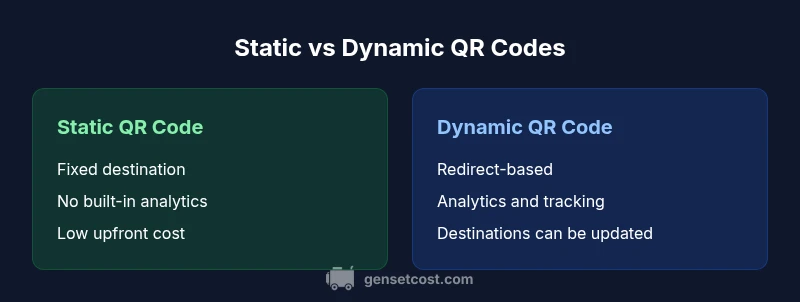
Static QR codes encode the target data directly into the barcode itself. There is no redirect layer or backend to manage, so scanning reveals the encoded content immediately. Because the destination is fixed, these codes are remarkably reliable in printing and across devices. The data is immutable once generated, which means you cannot alter where it points after production. This makes static codes ideal for fixed campaigns—product packaging, signage, or tickets where the destination never changes. From a security standpoint, you publish a single URL, so you should ensure that it resolves to a trusted page and that the content remains stable.
How dynamic QR codes work
Dynamic QR codes use a stable identifier that redirects to a URL managed by a service provider. The destination can be updated at any time by editing the redirect mapping, without changing the printed code. This creates a powerful layer of flexibility and enables analytics such as scan counts, device types, and approximate locations (where privacy regulations allow). The trade-off is added complexity and potential ongoing costs or subscriptions. For many campaigns, the ability to redirect a code to a new page keeps content current, supports localized variants, and preserves the original print investment while still offering measurable impact.
qr code generator static vs dynamic: Key decision factors
Choosing between static and dynamic comes down to how you use the code. Consider the following factors:
- Goals and lifecycle: If the campaign is short and the destination is fixed, static may be best. If you expect changes, dynamic offers flexibility.
- Tracking needs: Dynamic codes enable measurement, allowing you to optimize content and audiences.
- Cost and maintenance: Static codes typically incur lower upfront costs, while dynamic codes may involve ongoing subscription fees.
- Print quality and resilience: Static codes tend to be robust in print; dynamic codes rely on the redirect service, which must stay online.
- Privacy and security: Dynamic codes increase visibility into user interactions but require careful handling of data.
- Convenience and speed: Static codes are quick to create and deploy; dynamic codes require setup with a provider.
In essence, the decision hinges on whether you value long-term flexibility and data insights over simplicity and low cost.
Use-case scenarios: static fits print signage and fixed directions
Static QR codes shine when the destination is unlikely to change. For example, museum exhibit labels, museum floor maps, or bottled products with a single product page benefit from static codes. They print cleanly at high density and are forgiving across scanners and devices. Marketers appreciate their predictability: once printed, there’s no dependence on a third-party service for the code to work. However, if a URL must move or if you want to test variants of a landing page, static codes would require reprinting. If your goal is universal accessibility with no tracking burdens, static is a straightforward choice.
Use-case scenarios: dynamic fits campaigns with updates
Dynamic QR codes are ideal for campaigns that require updates or varying content. For example, event schedules that change, multi-language landing pages, or seasonal promotions can be redirected without reprinting. They also enable analytics to measure audience engagement, which helps justify spend and guide optimization. The trade-off is reliance on a service provider and potential ongoing costs. When you need agility, dynamic codes deliver value by preserving the original printed asset while offering post-launch adaptability.
Cost considerations and value proposition
Cost is a central decision driver. Static QR codes typically incur only the one-time cost of code generation and printing, making them attractive for short-lived campaigns or print materials with a fixed URL. Dynamic codes may involve monthly or annual subscriptions, depending on the provider and feature set (redirects, analytics, API access). Over the life of a campaign, dynamic codes can be cost-effective if they prevent reprints, enable content localization, or allow iterative optimization. The choice should reflect the total cost of ownership, not just the initial printing expense.
Analytics, tracking, and data privacy
Analytics accelerate learning from campaigns. Dynamic QR codes provide built-in tracking, enabling you to monitor scans, devices, and time-based patterns (subject to privacy rules). Static codes offer no native analytics, though you can add external measurement tools if you place the URL behind a tracking layer. Privacy considerations are critical: tracking requires transparent consent, data minimization, and secure handling of user information. When choosing between static and dynamic, align data collection with your privacy policy and regulatory obligations.
Reliability, print quality, and scanning experience
The reliability of a static code is tied to printing quality and the code’s error correction level. High-density prints on glossy or small surfaces may require careful design to avoid decoding issues. Dynamic codes depend on the redirect service’s uptime and performance; if the provider experiences downtime, the code may temporarily fail to resolve. Scanners generally perform well across both types, but end-user experience benefits from choosing an established provider, ensuring HTTPS links, and testing across devices and lighting conditions.
Security, phishing risk, and best practices
Dynamic codes introduce a layer of risk if redirect targets change to malicious pages without user knowledge. To minimize risk, use trusted providers, implement https destinations, and consider adding a branded landing page that clearly communicates the destination. For static codes, ensure the embedded data cannot be tampered with post-deployment by safeguarding design files and avoiding unverified destinations. Regular audits, prompt reprints for any content updates, and clear customer communications improve security and trust.
Best practices for choosing between static and dynamic
Follow a practical checklist before deciding:
- Define the campaign’s duration and whether the destination may change. 2) Decide if you need measurement and optimization feedback. 3) Estimate total cost of ownership, including potential reprints. 4) Plan for privacy compliance and user trust. 5) Test readability in print and across devices. 6) Consider a hybrid approach for different assets within the same campaign when appropriate.
Decision framework and next steps
Create a short pilot project comparing one static code against one dynamic code for a single asset (e.g., a brochure or poster). Measure not only scan rate but also engagement, landing-page performance, and any cost differences over 4–8 weeks. Use those results to decide whether to scale with dynamic codes or to standardize on static for simple, fixed destinations. Document assumptions and set a timeline for reassessment as the campaign evolves.