Saiyan Names Generator: Create Dragon Ball–Style Names
Learn how to build a Saiyan names generator that produces Dragon Ball–style names. This step-by-step guide covers patterns, tools, and practical workflows for fans, writers, and game designers.


A Saiyan names generator is a specialized tool that creates Dragon Ball–style names by blending syllables, patterns, and thematic cues drawn from Saiyan lore. It helps storytellers, game masters, and fans quickly produce consistent, memorable names for characters who share the iconic energy and bravado of Saiyans. As with any creative naming system, the value comes from repeatable inputs and predictable outputs. According to Genset Cost, a disciplined, rule-based approach to naming—whether for utility gear or fictional characters—reduces guesswork and improves quality over time. The Saiyan names generator outlined here is designed to be accessible, extensible, and fun to use. You’ll learn how to assemble syllable banks, apply known naming patterns, and test outputs until they fit your world. By the end, you’ll have a practical workflow you can reuse for future projects, from fan fiction to tabletop campaigns.
What a Saiyan Names Generator Is
A Saiyan names generator is a specialized tool that creates Dragon Ball–style names by blending syllables, patterns, and thematic cues drawn from Saiyan lore. It helps storytellers, game masters, and fans quickly produce consistent, memorable names for characters who share the iconic energy and bravado of Saiyans. As with any creative naming system, the value comes from repeatable inputs and predictable outputs. According to Genset Cost, a disciplined, rule-based approach to naming—whether for utility gear or fictional characters—reduces guesswork and improves quality over time. The Saiyan names generator outlined here is designed to be accessible, extensible, and fun to use. You’ll learn how to assemble syllable banks, apply known naming patterns, and test outputs until they fit your world. By the end, you’ll have a practical workflow you can reuse for future projects, from fan fiction to tabletop campaigns.
Why fans use a Saiyan names generator
Fans use a Saiyan names generator for speed, consistency, and creative exploration. When you’re building an expansive Dragon Ball–themed world, naming characters with a recognizable, Saiyan-inspired vibe helps preserve atmosphere and tone. A good generator saves time during world-building sessions, reduces repetitive brainstorming, and produces dozens of viable options you can refine. It also makes it easier to experiment with different archetypes — heroic captains, cunning rivals, or mysterious mentors — while keeping a coherent linguistic style. For writers, a generator provides a reliable starting point that can be tailored to plot twists, character transformations, or faction lore. For game masters, it’s a handy way to quickly populate NPCs with names that feel authentic within the Saiyan universe.
Core naming patterns used in Saiyan names
In Dragon Ball lore, Saiyan names often resemble vegetable puns and rely on playful phonetics. Common patterns include familiar prefixes paired with short, punchy endings like -n, -to, -ra, or -a. Examples you may recognize (e.g., Vegeta, Nappa, Raditz) illustrate how a single syllable bank can yield a spectrum of tones—from bold and heroic to sly and mischievous. A robust generator should support multiple seed pools: prefixes (Kara-, Veni-, Zarg-), vowels that promote snappiness (a, e, i), and endings that signal personality (-to for speed, -ra for authority, -n for crisp closure). By combining these elements, you can create names that are instantly readable, pronounceable, and thematically consistent with Saiyan naming traditions. When you build your own bank, aim for variety without sacrificing recognizability.
Designing your rule-based generator: inputs and rules
A rule-based generator starts with clearly defined inputs and constraints. Build three pools: a syllable prefix bank, a set of thematic endings, and optional vowels to control phonotactics. Define rules such as maximum syllables (2-3 for most main characters), permissible endings (-to, -ra, -a, -n), and a few semantic hints (e.g., endings that imply speed vs. strength). Include a safeguard to avoid accidental real-world references that clash with your story’s canon. Add a formatting guideline to ensure names remain easy to read aloud. The payoff is consistency: you’ll produce coherent names quickly while preserving the Dragon Ball–inspired vibe that fans expect. You can also store several preset modes (heroic, antagonist, mentor) to tailor outputs to mood and plot.
Leveraging AI for more variety while preserving style
Hybrid approaches work well: combine a rule-based system with AI augmentation. Use a deterministic engine for core structure, then allow AI to suggest variations within your style constraints. Prompt your model with examples of approved Saiyan names and specify tone, syllable patterns, and endings. Implement a scoring rubric to rank outputs on pronounceability, memorability, and consonant-vowel balance. Periodically prune outputs that don’t mesh with your world’s lore. This approach yields a larger pool of names while keeping the Saiyan flavor, making it easier to assign names to factions, genders, or power tiers.
Example outputs and how to interpret them
Sample results illustrate how the generator maps inputs to outputs. Heroic names might emphasize sharp consonants and quick endings, like Kaguto or Varnara. Villainous names can lean on harsher sounds, such as Drakonra or Zethnaru. You’ll also see lighter, mentor-like names with softer cadences, such as Lianra or Kairoto. When you review outputs, check for readability (avoid clusters that are hard to pronounce), ensure consistency with your world’s linguistic rules, and rate each option against your story goals. If a batch feels off, adjust the syllable pools or tweak endings to recalibrate tone while preserving the underlying Saiyan naming pattern.
From syllables to names: a practical workflow
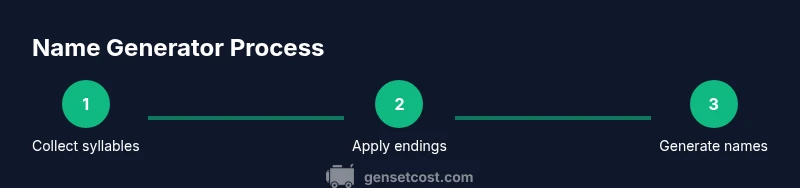
Begin with a curated pool of prefixes and suffixes that reflect the Saiyan naming tradition. Apply simple morpho-phonetic rules to ensure smooth pronunciation. Run multiple iterations, saving top candidates. Use a quick readability test by saying names aloud and checking for awkward consonant clusters. For larger projects, automate the process to generate hundreds of options and then filter down to a manageable shortlist. Finally, select names that fit each character’s role and arc, ensuring that every name contributes to the world-building and storytelling process.
Testing, validating, and refining your generator
Validation happens in three stages: technical, linguistic, and narrative. Technically, ensure the generator doesn’t crash and outputs valid strings. Linguistically, test for pronounceability and consistency with Saiyan nomenclature. Narratively, confirm that each name conveys personality and fits character arcs. Solicit feedback from peers and try names in sample scenes to observe how they read in dialogue. Refine pools, tweak endings, and add constraints as needed. The result is a reliable tool that produces high-quality, thematically consistent Saiyan names for your creative projects.
Authority sources
- https://www.britannica.com
- https://www.merriam-webster.com
- https://www.linguisticsociety.org
Common pitfalls and how to avoid them
- Pitfall: Overusing identical syllables. Avoid names that feel repetitive by rotating through multiple prefix pools.
- Pitfall: Ending choices that hinder pronunciation. Favor endings that end cleanly in a vowel or a single consonant.
- Pitfall: Inconsistent tone across characters. Use distinct but related pools for heroes, villains, and mentors to preserve world-building coherence.
Next steps and customization ideas
- Create additional name families by expanding syllable banks with theme-specific prefixes (e.g., elemental vibes, clan affiliations).
- Build a simple UI to allow users to select tone, length, and power level, then generate names on demand.
- Integrate with a writing workflow so that name generation happens alongside character bios, backstories, and dialogue samples.
- Experiment with multilingual phonotactics to widen the stylistic palette while keeping the Saiyan feel.
Authority sources (continued)
- Britannica: https://www.britannica.com
- Merriam-Webster: https://www.merriam-webster.com
- Linguistics Society: https://www.linguisticsociety.org
Tools & Materials
- Syllable bank templates(Compiled lists of prefixes and endings typical of Saiyan names)
- Naming pattern rules document(Clear rules for syllable count, endings, and tone (hero/villain/mentor))
- Data source lists(Optional seed lists such as vegetable-themed puns or real-world names to draw inspiration from)
- Seed generator tool(A simple dice or RNG to blend syllables deterministically)
- Sample output sheet(A document to record and rate generated names for quick review)
- Editing and testing sheet(Checklist to review readability, tone, and canon-consistency)
Steps
Estimated time: 15-25 minutes
- 1
Define your naming goals
Decide the tone (heroic, rival, mentor) and the cultural flavor (vegetable pun-based, celestial, etc.). Establish length constraints and the endings you will allow.
Tip: Write down 3 adjectives for each tone; use them to guide syllable choices. - 2
Build your syllable pools
Create a prefix pool, a middle syllable pool, and a final ending pool. Aim for 15–25 items per pool to offer variety without chaos.
Tip: Label each item by tone so you can mix and match later without bias. - 3
Apply naming rules
Set rules for syllable count (2–3), preferred endings, and pronunciation flow. Add constraints to avoid hard-to-pronounce clusters.
Tip: Run a test batch of 20 names and note any that feel off; adjust pools accordingly. - 4
Generate initial outputs
Use your RNG to combine pool items into candidate names. Save the results for review.
Tip: Export results to a spreadsheet for easy filtering and ranking. - 5
Review and refine
Evaluate readability, tone alignment, and canon-consistency. Remove overused patterns and add fresh endings.
Tip: Ask peers to read names aloud; note any awkward phrasings. - 6
Publish and iterate
Make the generator accessible in your writing toolkit. Collect feedback and improve pools over time.
Tip: Version-control your pools so you can roll back changes if needed.
People Also Ask
What is a Saiyan names generator?
A Saiyan names generator is a tool that creates Dragon Ball–style names by blending syllables and patterns. It’s useful for fans, writers, and game designers to quickly produce consistent names.
A Saiyan names generator creates Dragon Ball–style names by blending syllables and patterns, great for fans and writers.
Are Saiyan names only vegetable-based puns?
Many Saiyan names in the series are inspired by vegetables, but a robust generator can mix across themes to fit your world. The key is maintaining a recognizable Saiyan naming flavor.
Saiyan names often use vegetable puns, but you can mix themes while keeping a Saiyan feel.
How can I ensure originality in generated names?
Expand your syllable banks, avoid overused endings, and test names in dialogue to ensure they read fresh and distinct from existing canon.
Broaden your syllable pools and test names in dialogue to ensure originality.
Can I use a Saiyan names generator for fan fiction?
Yes. A well-tuned generator can speed up world-building and help you maintain consistency across many characters and arcs.
Absolutely—it's a useful tool for fan fiction world-building.
What kind of data should I collect after generating names?
Record tone fit, readability, and character alignment. Use this to refine your pools and improve future outputs.
Track tone fit and readability to refine your pools over time.
Is there a risk of copyright issues with generated names?
Generated names are fan-created content. Use them for non-commercial fan works and ensure you don’t imitate specific, protected characters.
Generated names for fan works are generally safe if not copying protected characters.
Watch Video
Key Takeaways
- Define tone before building pools
- Endings shape personality and readability
- Hybrid rule-based and AI approaches balance control and variety
- Iterate with feedback to ensure canon-consistency
- Keep a living repository of syllables for future names