Wen Generator Comparison: Budget vs Premium Power
Compare Wen generators with Honda and Generac to understand upfront costs, runtime, noise, and warranty. An objective guide from Genset Cost helps homeowners choose the right backup power option.


Overall, Wen generators deliver reliable backup power at a lower upfront cost compared with premium brands. In a side-by-side, Wen’s inverter models compete well against compact rivals on fuel efficiency and portability, while larger Honda and Generac units often lead in warranty coverage and dealer support. According to Genset Cost, the best Wen generator for you depends on your essential load, run time expectations, and total ownership costs.
What is a Wen generator and why it matters for homeowners
A Wen generator is a portable, often inverter-based power solution designed for temporary backup power during outages or outdoor activities. For many homeowners, a Wen generator represents an affordable entry point into reliable electricity when the grid goes down or when power is needed away from a mains outlet. When you compare Wen to premium brands, you trade some peak performance for cost savings, but you still gain portability, ease of use, and modern efficiency features. According to Genset Cost, Wen models typically emphasize compact design, fuel efficiency, and accessible maintenance, making them attractive for small homes, cabins, or job sites. The keyword wen generator is widely recognized in consumer reviews, and buyers should assess expected load, runtime, and noise to ensure the model suits their specific needs. In this guide, we’ll break down sizing principles, technology differences, and practical decision factors to help you pick a Wen generator that aligns with your backup power goals.
Key sizing principles for wen generator selection
Choosing the right Wen generator starts with understanding your essential loads and how long you expect to run them during an outage. Begin by listing critical circuits (refrigerator, heating system, lights, sump pump, wifi router) and estimating their wattage. Since inverter models are common in Wen’s lineup, consider both continuous running watts and surge watts needed to start motors or compressors. A practical rule of thumb is to target a generator that can handle your top three high-demand devices simultaneously, plus a margin for startup spikes. If you plan to use the unit for camping or outdoor events, you may prioritize portability and fuel efficiency over peak power. Conversely, for occasional home backup, a Wen unit on the higher end of its range can keep essential systems running longer between refueling. Always confirm run time ratings at realistic load levels (for example 25-50 percent) and remember that running near maximum load reduces efficiency and increases wear. With a clear load profile, you can compare Wen models on a like-for-like basis and choose one that fits your goals.
Inverter technology and noise: Wen vs peers
Inverter technology is a core differentiator for Wen generators. Inverter-based Wen units regulate voltage more precisely, which provides clean power suitable for sensitive electronics and extends engine life by reducing stalls and surges. Compared with traditional non-inverter portable generators, Wen models tend to be quieter and produce less vibration at similar output levels. When you consider peers like Honda and Generac, inverter efficiency often translates to longer runtimes per gallon and better performance under lighter loads. However, premium brands frequently offer larger inverter-capable platforms with broader accessory ecosystems and faster service options. For many homeowners, the decision hinges on whether you prioritize quiet operation and portability (Wen) or the perceived long-term reliability and dealer coverage associated with established brands.
Cost and ownership: upfront costs, running costs, and warranties
Cost and ownership are the deciding factors for many buyers. Wen models are typically positioned as budget-friendly options that deliver essential power without the higher sticker price of premium brands. Running costs hinge on fuel efficiency, load, and runtime, with inverter-equipped Wen units often delivering favorable efficiency at partial loads. Warranty terms vary by model and region, and while Wen generally provides solid coverage for entry-level units, premium brands may offer longer warranties and broader service networks. According to Genset Cost, total ownership costs should include initial price, fuel over the unit’s lifetime, maintenance, and the value of spare parts and repair service. When you stack Wen against Honda and Generac, you trade some long-term coverage for upfront savings—an equation that matters most if outages are infrequent or if you keep the unit on standby for limited, essential uses.
Wen lineup and model categories: portable vs inverter vs mid-range
Wen’s lineup spans several form factors and power ranges. Inverter models are popular for their clean power and compact design, which translates to quieter operation and easier fuel management. Mid-range Wen units often balance output with portability, making them suitable for small homes or cabins. The largest Wen portable inverter options aim to cover more substantial loads while still prioritizing ease of transport. When evaluating Wen models, look for labels like ‘inverter’ or ‘low-oil shutoff’ as indicators of modern protection features. It’s also useful to compare model families by runtime ratings, noise profiles, and included accessories—elements that influence the real-world convenience of a Wen generator in diverse settings.
Use-case scenarios: home backup, RV, campsite
Different use cases demand different Wen features. For a home backup with essential loads, a Wen inverter with enough continuous power to cover critical devices is typically sufficient. For RV camping or tailgating, portability and quick-start capability are top priorities, making light, compact Wen models appealing. If you anticipate longer outages or want flexibility across multiple properties, you may prefer higher-output Wen configurations that still maintain reasonable fuel efficiency. The key is aligning your scenario with a Wen model’s practical run time and power ceiling, ensuring you do not overspecify for infrequent needs or underspecify for frequent, critical usage.
Reading spec sheets: what to look for when comparing Wen models
Spec sheets provide the clearest framework for comparing Wen models. Start with output ratings: continuous watts and surge watts, and confirm inverter status. Look for fuel type compatibility and tank size indicators, as these directly influence runtime. Noise ratings or DB levels, while sometimes approximate, help gauge suitability for shared living spaces. Check run-time data at different load percentages to understand how performance scales. Review warranty terms and service networks. Finally, compare included accessories and user-friendly features like USB outlets, parallel operation capabilities, and automatic low-oil shutdown. By reading specs meticulously, you avoid mismatches between your expectations and a Wen generator’s real-world behavior.
Alternatives and how Wen stacks up against Honda and Generac
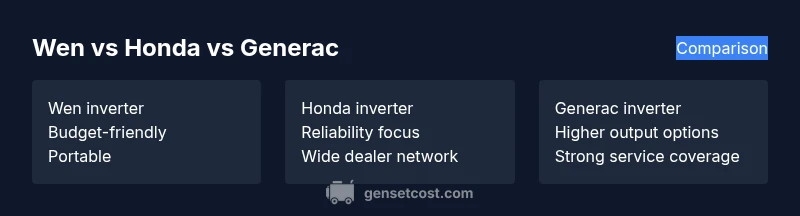
When you widen the lens beyond Wen, Honda and Generac offer a broader spectrum of products with deep dealer networks and established warranties. Honda typically emphasizes very quiet operation and strong reliability across compact to mid-size ranges, while Generac often provides larger home backup solutions with robust service coverage. Wen fills a niche for budget-conscious buyers who still want inverter-clean power and portability. In a head-to-head, Wen tends to win on upfront cost and weight; Honda and Generac often win on perceived long-term reliability, higher wattage scalability, and a broader ecosystem of accessories and professional installation support. Your final choice should weigh initial price against anticipated usage, available service, and how critical uninterrupted power is to your property.
Sizing calculator and planning steps
A formal sizing approach helps you avoid under- or over-dimensioning. Start by cataloging essential loads and their wattage, then set a target runtime for outages. Use a conservative safety margin to accommodate startup surges. If you already own a Wen generator, try to map each device to a specific model’s continuous and surge capacities. Compare these results with a quick checklist: is there a model that can cover essential devices with some headroom? Can you accept a longer refueling interval by choosing a higher-capacity model? If you run your calculations with realistic assumptions, you’ll select a Wen option that minimizes both initial cost and ongoing fuel consumption while meeting your reliability expectations.
Installation considerations and safety
Even portable generators benefit from careful setup. Place the unit on a flat, well-ventilated surface away from doors and windows to mitigate carbon monoxide exposure. Use proper extension cords rated for outdoor use, and never connect a generator directly to home circuits without a transfer switch. A licensed professional can advise whether a portable unit suffices or if a transfer switch system is more appropriate for your property. Regular maintenance—oil checks, air filter cleaning, and spark plug replacement—extends life and reduces the risk of unexpected failures during outages. Finally, store fuel safely in approved containers, away from heat sources, and rotate stock to maintain freshness. By following these safety practices, Wen units deliver reliable performance with less risk.
Maintenance and long-term care
Long-term care for Wen generators is straightforward but essential. Routine tasks like oil changes, air filter replacements, and battery checks for electric start models should be performed at manufacturer-recommended intervals. Keep a simple service log, noting hours of operation and any unusual noises or vibrations. Inspect cords and outlets for wear, and replace damaged components promptly to avoid safety hazards. If your Wen unit sits unused for extended periods, run it briefly every few weeks to prevent carburetor gumming and fuel degradation. A proactive maintenance routine helps maintain peak efficiency, clean power output, and dependable startup when you need it most.
Future trends and sustainability in home backup power
The market for Wen generators aligns with broader shifts toward more efficient, compact power solutions. Expect continued improvements in inverter technology, fuel economy, and noise suppression, along with broader compatibility with alternative fuels and cleaner emissions profiles. As homeowners demand more resilience from their backup systems, Wen-like brands may expand their service networks and offer modular configurations that scale with evolving power needs. Investment in quality components and easy diagnostics will reduce downtime during outages and support better total cost of ownership over the unit’s life cycle.
Feature Comparison
| Feature | Wen inverter generator | Honda portable inverter | Generac portable inverter |
|---|---|---|---|
| Power output range | low-to-mid range | mid-to-high range | mid-to-high range |
| Fuel type | gasoline | gasoline | gasoline |
| Run time at 50% load | moderate | longer runtime | long runtime |
| Noise level | quieter (inverter) | quiet | quiet |
| Weight/portability | light-to-mid-weight | light-to-mid-weight | mid-weight |
| Warranty coverage | standard for budget options | extended/robust | standard/robust |
The Good
- Lower upfront cost on entry-level Wen models
- Compact, portable designs suit small spaces
- Efficient fuel use with inverter technology
- Wide accessory and parts availability across brands
- Solid value-for-emergency use when budget matters
The Bad
- Long-term reliability may trail premium brands
- Smaller Wen models have limited output for large homes
- Warranty and service intensity vary by region
- Resale value may be lower than top-tier brands
Wen offers strong value for budget-conscious buyers, especially for small to moderate loads.
Choose Wen if upfront cost and portability are paramount. For sustained, heavy home backup, consider premium brands with broader warranty and dealer support.
People Also Ask
What is the main difference between Wen generators and Honda/Generac?
Wen targets budget-conscious buyers with portable inverter options, while Honda and Generac emphasize broader power ranges and dealer networks. Wen often delivers lower upfront costs; premium brands may offer stronger reliability and longer warranties. Your choice should reflect how you weigh price against service and long-term ownership.
Wen focuses on affordability and portability, whereas Honda and Generac emphasize reliability and service networks. Your choice depends on how much you value upfront price versus long-term support.
Are Wen generators suitable for home backup?
Wen models are suitable for powering essential circuits during outages, such as refrigerators and lights. For whole-house backup, you may need larger or multiple units and possibly a transfer switch. Assess your critical loads to determine if Wen fits your plan.
Wen can cover essential loads in outages, but for whole-house backup you might need more capacity or additional power solutions.
What factors affect Wen generator runtime?
Runtime depends on tank size, engine efficiency, load level, and maintenance. Running closer to half load typically yields better efficiency. Poor maintenance or very high loads reduce runtime and can shorten the engine’s life.
Fuel capacity, how hard you run it, and maintenance all affect runtime. Keep loads reasonable for best efficiency.
Do Wen generators come with warranties?
Most Wen units include a warranty, but terms vary by model and region. Always confirm coverage duration and what is included before purchase. Warranty differences can influence long-term ownership costs.
Wen warranties exist, but terms vary. Check the exact model’s coverage before buying.
Is inverter technology important for quiet operation?
Yes. Inverter-enabled Wen models modulate output to match demand, reducing engine speed and noise. This also improves fuel efficiency and extends run time at typical residential loads.
Yes— inverter tech helps keep noise down and power clean while saving fuel.
Can Wen generators run on propane or natural gas?
Most Wen units rely on gasoline, with only some models offering alternative fuel compatibility. Always verify the specific model’s fuel options in the official specs before purchase.
Most Wen models are gasoline; check the model specs to see if propane or natural gas is supported.
Key Takeaways
- Assess essential loads before choosing a Wen model
- Inverter tech improves efficiency and reduces noise
- Balance upfront cost against long-term reliability and service
- Read specs carefully to avoid undersizing
- Consider your backup scenario and property needs