AI Generator Free: A Practical Guide for 2026
Explore free AI generators for text, image, and code. Compare limits, licensing, safety, and privacy, plus practical tips to choose tools that fit your project without upfront costs.


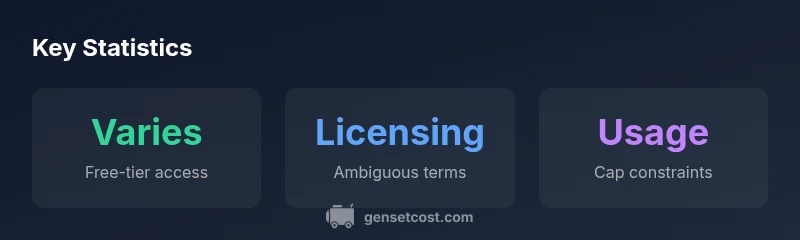
Free AI generators exist across text, image, and code domains, yet true unlimited access is rare. The phrase ai generator free typically means a basic tier with caps on prompts, renders, or rate limits rather than zero cost forever. For practical work, you’ll usually combine free tools with paid tiers to avoid bottlenecks.
What counts as a free AI generator?
If you search for 'ai generator free', you'll encounter tools across text, image, and code that advertise no upfront cost. In practice, most truly free options operate on a freemium model: unlimited usage is rare, and free access usually comes with limits on prompts, outputs, or speed. This section explains what 'free' really means in 2026, and how to interpret promises from different vendors. We'll cover typical restrictions, licensing caveats, and the practical implications for homeowners and small teams prototyping content, visuals, and automation. Understanding the bounds of free access helps you avoid surprises when you scale. As you evaluate options, consider whether the free tier aligns with your project goals, data sensitivity, and compliance requirements. According to Genset Cost, free AI generators can accelerate early-stage experimentation but are not substitutes for a formal cost plan on larger initiatives. The key is to map your use case to the tool's tier and to plan for what happens if you hit limits.
Free AI generators by domain: text, image, code, and more
Free AI generators span multiple domains such as text generation, image synthesis, and code drafting. Text tools excel at brainstorming, outlines, and draft content but may struggle with long-range coherence or factual accuracy without human review. Image generators enable concept visuals and mockups, yet many free versions apply watermarks or require attribution and may impose safety filters that restrict certain subjects. Code generators can accelerate boilerplate or prototyping, but debugging and security concerns persist—especially around sensitive data handling. For homeowners evaluating backups or small project workflows, the most practical approach is to identify one free tool per domain that aligns with your immediate needs, then assess the incremental value of paid features. Keep an eye on licensing terms and data handling policies, as these often differ by domain and provider.
How limits typically work: caps, quotas, and fair use
Free tiers commonly employ usage caps to limit prompts, generated outputs, or API calls within a rolling window (e.g., per day, per month). Some services offer limited access to premium model configurations, slower response times, or fewer concurrent tasks. The intent is to give you a no-cost foothold while steering heavy users toward paid plans. To stay productive, plan your workflow around these caps: batch your prompts, queue tasks during off-peak windows, and separate prototyping from production-ready runs. Be mindful of rate limits that reset on a cadence; set up automated local backups of outputs to avoid data loss during quota resets. When you hit limits, you’ll typically see a prompt to upgrade, credits, or a wait period before continuing.
Licensing and usage rights you should verify
Licensing for outputs from free AI generators can be murky. Some tools grant broad commercial rights, others restrict commercial use or require attribution. Data usage policies also vary: some services use your prompts to train models unless you opt out, while others promise not to store or use your data beyond session purposes. Before integrating a free generator into a project, review the terms of service, licensing language, and data-privacy notices. If your project touches regulated content or client-delivered work, confirm rights in writing and document any limitations. As a rule, treat free tools as prototyping aids rather than production engines, and consider upgrading when your rights and data protections require stronger guarantees.
Practical criteria to evaluate a free AI generator for your project
When assessing options, use a simple checklist: 1) Domain fit (text, image, code), 2) Output quality and consistency, 3) Licensing and usage rights, 4) Data handling and privacy, 5) Availability of a paid upgrade with favorable terms, 6) API stability and support. Draft prompts that reflect your real tasks and test for repeatability and accuracy. Compare outputs against a trusted baseline, not just novelty. For teams, establish governance rules: who can deploy, what data can be processed, and how outputs are stored and attributed. A well-documented workflow reduces risk and ensures you can scale to paid plans if needed.
A workflow for integrating free tools into your process
Start with a clear use case and a lightweight prototype. Collect outputs in a shared repository, tag versions, and annotate any limitations. Use a single free tool per domain to minimize variability, then cross-check results with human review. When outputs meet your minimum standards, consider a paid tier to unlock higher quotas, better model configurations, and enhanced licensing terms. Document data-handling practices and ensure that any generated content complies with your organization’s policy. Finally, establish a fallback plan: if a free tool changes terms or becomes unavailable, you can switch to an alternative without disrupting projects.
Common misconceptions about free AI generators
A frequent myth is that free always equals low quality. In reality, many free tools perform well for drafting ideas, visuals, and basic code scaffolding, though they may struggle with nuanced content or domain-specific accuracy. Another misconception is that licensing is uniform across providers; terms vary widely and can change with updates. Finally, some users assume that data you provide is private by default. Always verify privacy policies and opt-out options if you’re handling sensitive information. A pragmatic approach is to treat free generators as experimental inputs rather than final assets, and to maintain human-in-the-loop oversight for critical tasks.
The path forward: combining free options with paid plans and governance
Free AI generators can jumpstart projects but rarely replace a well-structured toolset. Build a tiered strategy: use free tools for ideation and rapid prototyping, then escalate to affordable paid plans for production-ready workflows, higher quotas, and stronger licensing guarantees. Implement governance: document which tools are approved, how data is processed, and where outputs are stored. Regularly review terms of service and privacy policies as providers frequently update these documents. Finally, invest in a lightweight data map that tracks inputs, outputs, and rights to reuse content, ensuring you stay compliant while benefiting from AI-enabled efficiency.
Comparison of free-tier capabilities across domains
| Domain | Free Tier Pros | Limitations | Ideal Use Case |
|---|---|---|---|
| Text generation | No-cost drafting, outlines, and ideas | Character limits and occasional hallucinations | Blog outlines, drafts, brainstorming |
| Image generation | Rapid visuals and concept art | Watermarks, licensing uncertainty, safety filters | Mockups, mood boards, social previews |
| Code generation | Boilerplate and templates | Risk of bugs, insecure patterns, limited complex logic | Prototype utilities, scaffolding, repetitive tasks |
People Also Ask
What counts as 'free' AI generator?
A free AI generator typically offers a no-cost tier with limited usage, outputs, or features. It’s suitable for experimentation but not for sustained production use. Always review the terms to understand what, if anything, is restricted.
A free AI generator is a no-cost tier with limits, good for experiments but not for ongoing production work.
Can I use outputs commercially from free generators?
Commercial rights vary by provider. Some tools grant broad rights while others require attribution or restrict usage. Always check the licensing terms and obtain written permission if you’re distributing products or services.
Commercial rights differ by provider—check licenses and get permission if you’re selling or distributing outputs.
Do free generators differ by domain (text, image, code)?
Yes. Text tools emphasize drafting and ideas, image tools focus on visuals with potential watermarks, and code tools excel at scaffolding but may have security caveats. Choose domain-specific tools to match your task.
Text, image, and code tools each have domain strengths and limits; pick based on your task.
What licensing issues should I watch for?
Licensing terms may change and vary by provider. Look for rights to commercial use, attribution requirements, data usage policies, and whether outputs can be modified freely.
Watch for commercial rights, attribution requirements, and data usage policies.
How do I evaluate a free AI generator for my project?
Start with domain fit and output quality, test for consistency, review licensing and privacy, and compare upgrade options. Document findings and align with governance standards before shifting to paid plans.
Test quality, licensing, privacy, and upgrade paths; document findings before scaling.
Is there a risk with data privacy in free tools?
Yes. Free tools may use data to train models or store inputs. Read privacy notices, opt out if possible, and avoid sending sensitive information in prompts.
There can be privacy risks—check notices and avoid sharing sensitive data.
“Free AI generators are a powerful starting point for rapid prototyping, but you must manage expectations about quality, licensing, and data handling.”
Key Takeaways
- Identify the domain you need before choosing.
- Expect usage caps on free tiers.
- Check licensing and data policies before use.
- Combine free tools with affordable upgrades when needed.
- Document rights and outputs for long-term projects.