Free QR Code Generator No Expiration: What It Means and How to Use It
Explore how 'free qr code generator no expiration' works, what to watch for, and how to verify lifetime claims. Learn about hosting, downloads, privacy, and best practices for reliable, permanent QR codes in 2026.


The defining point of a free qr code generator no expiration is that you can create and use a QR code at zero cost with no set expiry for the code itself. In practice, expiration policies vary by provider: some host the code or its target URL indefinitely, while others restrict downloads, analytics, or require an account to preserve lifetime access. Always check terms before relying on any service.
What 'free qr code generator no expiration' means
According to Genset Cost, the phrase no expiration in the context of a free qr code generator no expiration is a marketing claim that requires careful verification. In practice, this usually means you can create a code at no cost and use or download the image indefinitely, without a built-in expiry date. However, implementation varies widely by provider, and some services rely on hosting terms or user account requirements to preserve access. For a small business or property manager, the promise of no expiry can translate into predictable branding assets and reduced rework, but it is not a guarantee for every feature the tool offers.
When you encounter this term, ask: Is the code image downloadable without a time limit? Does the provider host the link to the destination, or is it merely a downloadable file? Are there hidden caps on the number of scans or the length of time the code remains usable? These questions help separate a true lifetime asset from a limited-time perk.
How expiration policies actually work
Many QR code tools separate the concept of the code itself from the content it points to. A static QR code that encodes a fixed URL or data is inherently immortal unless the hosting service removes it. A dynamic QR code, which routes through a tracking URL, may be subject to expiration or changes in policy if the host discontinues the service or revokes accounts. Free tools often rely on a mix of hosting and downloadable assets. For homeowners or managers, the practical takeaway is to distinguish: (1) the permanence of the physical image, and (2) the long-term availability of the destination behind the code. A code that stays pixels-stable but redirects to a dead link defeats the purpose.
To assess risk, test both options: download the image and open it months later, and place the code on a public channel. If you rely on cloud hosting, review the provider’s terms about inactivity, data retention, and account requirements.
No-expiration claims vs functional lifetime
No-expiration claims describe a lifetime-friendly approach, but they are not universally backed by the same guarantees. A no-expiration claim is strongest when the provider offers an explicit lifetime guarantee in the terms of service and a downloadable asset you can keep offline. If a provider requires ongoing login, additional fees, or links that rely on an active account, the practical lifetime of your asset becomes uncertain. For archival quality and reliability, prefer tools that supply a downloadable vector or raster file and keep the terms clear about what happens if the hosting service changes. This distinction helps avoid surprises if you later need to reprint or re-share the code.
From a risk-management standpoint, your best bet is a dual approach: download the code in multiple formats and maintain local backups. Use hosted solutions only for short-term campaigns or for testing, and then migrate to a permanent asset you control.
Features that distinguish no-expiration tools
When evaluating no-expiration tools, look for a clear combination of features that support reliable, long-term use:
- Download options: PNG, SVG, and PDF are common and useful across print and digital channels.
- Asset ownership: Ensure you truly own the image file after download, without licensing constraints.
- Hosting clarity: If a tool offers hosting, confirm whether the hosted code remains available without an active subscription.
- Resolution and accessibility: High-resolution outputs prevent blurriness in posters and signage.
- Brand consistency: Tools that let you anchor the code to a branded URL or landing page can simplify long-term campaigns.
Do not rely on a single source for critical business assets; have a downloaded copy stored securely and tested on all intended devices.
Privacy, data retention, and hosting considerations
Free QR code generators may collect basic metrics or enable analytics when you use hosted links. If your primary goal is a simple, no-expiration asset, minimize exposure by downloading the code and avoiding long-term hosting where privacy controls are unclear. Review privacy policies and data retention statements. If a provider collects scan data or personal information, consider opting for offline workflows or self-hosted links that you control. For property management teams, this reduces risk if a service changes its terms or discontinues a feature.
Always prefer tools with transparent data practices and the option to disable analytics on your QR codes. Clear ownership and privacy controls help maintain trust with tenants and residents.
How to verify and safe-guard your codes
A practical verification plan includes:
- Read the terms for any expiration, inactivity, or policy changes.
- Download the code in multiple formats (PNG, SVG, PDF) and store them securely.
- Test your codes periodically on different devices and apps to ensure scanning remains reliable.
- Document the destination URL or data and monitor it for long-term viability.
- Create a local backup schedule so you can recover quickly if the hosting service changes.
By combining a downloaded asset with a clear policy, you protect your assets against service changes and maintain consistent branding.
Real-world scenarios and best practices
Consider a small apartment complex or a condo association that uses QR codes for tenant communications and amenity access. A no-expiration promise makes sense if the asset is downloaded, archived, and the destination is a stable landing page the organization controls. For a marketing flyer at a property, a no-expiration code is valuable only if the hosting is stable and the data behind the code does not require frequent updates. In practice, blend no-expiration tools with a documented asset management plan: designate a responsible person, store backups in a versioned folder, and review terms at least annually to catch changes in policy.
Best practices include testing codes after any URL change and maintaining a master record of all codes used across sites and properties.
Quick-start checklist to implement no-expiration QR codes
- Define goals: simple static codes for offline print or dynamic codes with controlled hosting?
- Choose formats: download PNG and vector SVG for print; keep PDFs for large signage.
- Verify terms: confirm there is no expiration on the image or the destination URL.
- Create backups: save multiple copies locally and in a cloud vault with versioning.
- Periodic testing: re-scan codes on different devices every 6–12 months.
- Documentation: log asset details, ownership, and renewal policy for stakeholders.
Comparison of no-expiration QR code strategies
| Aspect | What no-expiration means | Reality for free tools | Best practice |
|---|---|---|---|
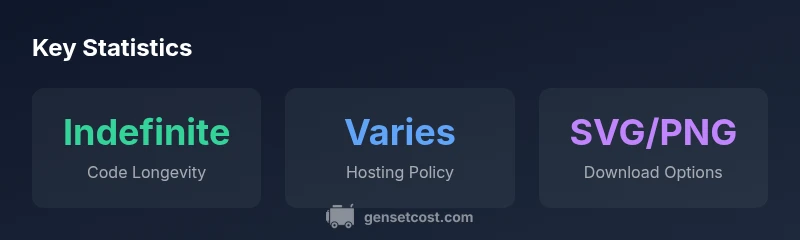
| Code Longevity | Indefinite if downloaded; hosting may vary | Varies; some providers keep codes alive, others remove unused codes | Download and archive; verify hosting terms |
| Access Method | Downloadable image or embedded in page | Some tools rely on ongoing hosting; downloads may be limited | Prefer downloadable assets and offline storage |
| Privacy & Data | Usually minimal data collection | Some free tools track scans or metadata | Choose tools with transparent privacy policies |
| Licensing & Use | Often permissive for personal use; not always for commercial use | Commercial restrictions exist in some free tiers | Read licensing terms and retain control of assets |
People Also Ask
What does no expiration mean for a QR code?
No expiration means the code can be used indefinitely after creation; however, the longevity of the linked content depends on hosting terms. Always verify that both the image and the destination remain accessible.
No expiration means the code itself should work forever, but check hosting terms and the linked content.
Are there risks with free no-expiration QR code tools?
Yes: potential data collection, limited support, and changes to terms. Use offline storage, review privacy policies, and document expiry provisions.
There are privacy and policy risks; review terms and keep offline backups.
Can I rely on a no-expiration generator for business use?
Yes, but ensure you download assets, keep backups, and confirm lifetime hosting in the terms. Prefer tools with clear offline availability and defined ownership.
Yes, with proper checks and offline backups.
Do free tools ever expiration codes or links?
Some providers revoke codes if inactive or violate terms; always verify inactivity policies and keep local copies.
Codes can be revoked if terms are broken; verify policies.
What is the best practice to verify no-expiration claims?
Read terms, test across devices, download and archive, and document expiry policies. Regularly review the provider's terms for changes.
Read the terms and test the codes regularly.
“No-expiration claims can be reliable when paired with downloadable assets and explicit lifetime guarantees in the terms. Always verify hosting and URL longevity.”
Key Takeaways
- Download and archive the code assets locally
- Read terms to confirm lifetime guarantees
- Prefer downloadable formats for long-term reliability
- Test codes periodically across devices
- Document expiry policies and ownership