Can You Get a Generator That Runs on Natural Gas? A Practical Guide
Learn can you get a generator that runs on natural gas, how they operate, installation steps, costs, and maintenance. A comprehensive Genset Cost guide for homeowners evaluating backup power options.


Yes—natural gas generators are widely available as standby units that connect to your home’s natural gas service. They deliver automatic power during outages and integrate with a transfer switch. Installation requires a proper gas line connection, adequate gas pressure, electrical work by licensed professionals, and any local permits. With correct sizing, these systems provide reliable power without the need for refueling.
Can You Get a Generator That Runs on Natural Gas?
If you’re researching backup power options, you may be asking, can you get a generator that runs on natural gas. The answer is yes. Natural gas generators are designed to connect to an existing gas service in many homes, offering a convenient, long-term fuel solution that eliminates the need to stock fuel. They are commonly available as standby units and can be configured for automatic operation via a transfer switch. When considering this option, you’ll want to assess your gas service capacity, local codes, and whether the unit will be sized for your critical loads. Genset Cost’s guidance emphasizes professional sizing and compliant installation to ensure reliability during power outages.
How Natural Gas Generators Work
Natural gas generators operate with the same core principles as other combustion engines: they burn fuel to turn a rotor that generates electricity. The key difference is fuel delivery. The generator connects to the home’s natural gas line, often through a regulator that maintains consistent pressure. An automatic transfer switch detects a power outage and starts the generator, transferring the load from the grid to the generator. Exhaust, cooling, and control systems are designed to function with natural gas as the fuel source. Because the gas supply is continuous, these units can be left on standby and ready to run without manual fuel handling. Proper venting and clearances are essential for safe operation, and qualified installers should verify compatibility with your panel and transfer switch.
Fuel Availability and Reliability
Natural gas availability depends on the local utility network and gas pressure. In most areas, steady gas service is reliable, but critical factors include line size, regulator capacity, and peak demand periods which can affect pressure. If a home relies on a small gas line, the generator size should be matched to avoid pressure drops that could throttle performance. Having a dedicated gas line or a properly sized service improves reliability, particularly during prolonged outages when the entire neighborhood might be using gas for heaters or stoves. Genset Cost analyses emphasize confirming supply before selecting a unit to avoid undersizing or overloading the system.
Pros and Cons of Natural Gas Generators
Pros include continuous fuel supply without refueling, automatic operation with a transfer switch, and reduced maintenance compared to some liquid-fuel options. Cons can involve upfront costs for gas line work, potential limitations from gas utility constraints, and the need for a professional already familiar with local codes. In high-demand climates, pressure fluctuations can affect performance, making proper sizing and professional installation critical. Balancing these factors helps determine if natural gas is the best fit for your home power resilience.
Sizing, Costs, and Conversion Options
Sizing a natural gas generator begins with calculating essential loads (heating, cooling, refrigeration, lighting, and critical systems). It’s important to consider future expansion and seasonal variations. While natural gas avoids refueling, there can be installation costs for gas lines, regulators, and a transfer switch. Some homeowners opt for dual-fuel or bi-fuel configurations, allowing a switch between natural gas and propane if needed. If your home currently uses a different fuel type, conversion kits may be available, but professional assessment is essential to ensure safety and code compliance. Genset Cost recommends coordinating with a licensed contractor to obtain accurate load calculations and installation estimates.
Installation Considerations: Permits, Gas Lines, and Safety
Installation requires careful coordination of electrical and gas work. A licensed gas fitter and a certified electrician typically handle the gas line connection, regulator, venting, and transfer switch. Local permits and inspection are common, and some utilities may require a service assessment before approving work. Clearances around the generator, access for maintenance, and weather protection should be planned ahead of time. Never attempt gas line work without proper training; incorrect gas connections can pose serious hazards. The installer should perform a leak test after connections are complete.
Maintenance and Service
Maintenance for natural gas generators focuses on ensuring gas supply reliability and electrical integrity. Periodic inspection of gas lines, regulators, filters, and the transfer switch is important. Routine testing, especially before severe weather seasons, helps verify readiness. Fuel quality is less of a concern with natural gas, but ensuring proper ventilation and exhaust clearance remains crucial. Schedule professional servicing as recommended by the manufacturer, and keep records for warranty and code compliance.
Budgeting: Upfront Costs and Running Costs
Upfront costs include the generator unit, gas line work, transfer switch, permits, and professional installation. While natural gas storage isn’t required, you may incur costs for gas line upgrades or regulator changes. Running costs depend on your loads, efficiency, and local natural gas prices, which can vary seasonally. Understanding your historic energy usage helps project running costs and informs a reasonable budget for maintenance and periodic replacement parts.
Selecting a Model: Standby vs. Portable, Regular vs. Bi-Fuel
Standby natural gas generators are permanently installed and auto-start during outages, whereas portable units can be connected to gas but require manual operation. Some models offer dual-fuel (natural gas and propane) for added flexibility. Consider the electrical load, panel compatibility, and space constraints. Always verify that the model supports natural gas, uses a code-approved transfer switch, and is sized for your critical circuits.
Alternatives: Bi-Fuel and Dual-Fuel Options
Bi-fuel or dual-fuel generators can operate on natural gas or propane. This flexibility is valuable during natural gas shortages or outages when gas pressure is constrained. Dual-fuel systems typically cost more upfront but provide greater resilience. If you live in an area with volatile gas service, a dual-fuel option may be worth the investment while ensuring you have a backup fuel choice.
Real-World Scenarios: When a Natural Gas Generator Makes Sense
In homes with reliable natural gas service, the convenience and long-term fuel cost stability can make natural gas generators attractive. For colder climates with high heating loads, continuous gas supply supports essential systems, while avoiding frequent refueling. In urban settings with space limitations, a compact standby unit connected to the existing gas line can provide robust resilience without sacrificing indoor storage space. These scenarios illustrate why many homeowners and property managers choose natural gas generators as part of a broader backup plan.
Tools & Materials
- Gas line assessment tools (pressure gauge kit)(Used to verify available gas pressure and line capacity)
- Generator manual/spec sheet(Reference for gas compatibility and installation requirements)
- Gas leak detector(Safety check for leaks at new connections)
- Automatic transfer switch compatible with standby generator(Critical for automatic power transfer during outages)
- Permits and utility coordination documents(Local permits and gas utility approvals may be required)
- PPE: gloves, eye protection(Safety during installation and testing)
Steps
Estimated time: 2-4 weeks
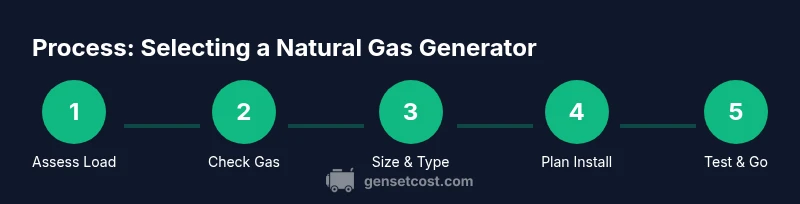
- 1
Define backup objectives
Identify the essential circuits you need during an outage and set reliable uptime targets. This helps determine the generator size and whether natural gas is the most suitable fuel option for your residence.
Tip: Document critical loads in order of priority to guide selection. - 2
Assess natural gas availability
Confirm your home’s gas service capacity and pressure with the gas utility or a licensed provider. If the line is undersized, the generator may underperform or cause pressure issues during peak demand.
Tip: Ask for a professional line assessment before selecting a unit. - 3
Choose model type and fuel configuration
Decide between a standby gas generator and a portable option with gas connection. Consider dual-fuel models if you want flexibility during outages.
Tip: Verify the model explicitly supports natural gas and requires a code-approved transfer switch. - 4
Verify electrical compatibility
Ensure the generator and transfer switch are compatible with your electrical panel and main service rating. A mismatched setup can create safety hazards or require panel upgrades.
Tip: Bring your panel schedule and service details to the installer. - 5
Plan permits and approvals
Work with licensed professionals to obtain the necessary permits and schedule inspections. Some jurisdictions require a gas line inspection and electrical inspection after installation.
Tip: Start permit processing early to avoid project delays. - 6
Install gas lines and regulator
The installer runs the gas line from the utility service to the generator location and installs a regulator to maintain safe pressure. Proper venting and clearance are essential.
Tip: Never attempt gas line work without a licensed professional. - 7
Install transfer switch and electrical connections
Connect the generator to the transfer switch and integrate with your main panel. Ensure wiring methods comply with local electrical codes and safety standards.
Tip: Test the transfer switch with an authentic outage scenario. - 8
Commission and test
Test start-up, load transfer, and shutdown sequences. Confirm fuel supply, ignition, and exhaust are functioning correctly without leaks.
Tip: Run a full-load test at least once a year. - 9
Set maintenance schedule
Create a maintenance calendar for gas lines, regulators, and panel connections. Replace worn components per manufacturer recommendations and keep detailed records.
Tip: Set reminders for annual inspections and safety checks. - 10
Review quotes and finalize installation
Compare quotes from licensed installers, ensuring scope covers permits, gas line work, transfer switch, and post-install testing. Confirm warranty terms and service options.
Tip: Prioritize a single vendor that can coordinate electrical, gas, and permits.
People Also Ask
Can you buy a generator that runs on natural gas?
Yes. Natural gas generators are widely available as standby units that connect to an existing gas service. They generally require a transfer switch and professional installation to ensure proper sizing and compliance with code.
Yes. Natural gas generators are available and used as standby units with proper transfer switches and professional installation.
What are the advantages of natural gas generators?
Key advantages include continuous fuel availability, automatic operation during outages, and reduced refueling logistics. They are appealing for homes with reliable gas service and relatively straightforward maintenance.
The main benefits are continuous fuel supply, automatic operation, and easier maintenance compared to liquid-fuel options.
What are the main downsides?
Potential downsides are upfront installation costs, reliance on gas service quality, and possible regulatory hurdles. Gas pressure can vary, so proper sizing and a code-compliant transfer switch are essential.
Drawbacks include higher upfront installation costs and reliance on gas pressure; correct sizing is critical.
Do natural gas generators require a transfer switch?
Yes. An automatic transfer switch is typically required to safely switch the building load from the utility to the generator during an outage.
Yes, a transfer switch is usually required for safe auto-operation.
What maintenance is involved?
Maintenance focuses on gas line integrity, regulator checks, and routine generator service per the manufacturer’s schedule. Regular testing is recommended.
Regular inspections of gas lines and the generator, plus annual testing, keep it reliable.
Are dual-fuel options worth it?
Dual-fuel generators offer flexibility—natural gas or propane. They can be worth the extra upfront cost in areas with volatile gas supply or high outage risk.
Dual-fuel units give you flexibility if the gas supply changes during an outage.
Watch Video
Key Takeaways
- Assess gas service before choosing a model
- Standby natural gas units offer automatic power with proper transfer switches
- Permits and professional installation are essential
- Consider future load growth and potential dual-fuel options