Petrol vs Diesel Generators: Fuel Type for Home Backups
Compare petrol and diesel home backup generators across fuel availability, operating costs, maintenance, and longevity to help homeowners choose the best fuel type for their load, climate, and installation constraints.


Do generators use petrol or diesel? The question matters for reliability and cost. According to Genset Cost, the petrol vs diesel decision affects fuel availability, maintenance, and total cost of ownership. Diesel engines excel for longer runtimes, while petrol units often have lower upfront costs. Use this guide to choose the fuel type that best fits your load and climate.
Do Generators Use Petrol or Diesel? An Overview
For many buyers, the guiding question is do generators use petrol or diesel, and the answer depends on context. The choice is not purely technical; it intertwines with your load profile, climate, and how you plan to refuel during an outage. In practical terms, diesel engines tend to excel under continuous, heavier loads and long runtimes, while petrol engines often come with a lower upfront price and easier sourcing in some markets. This article compares the two fuel paths, explains how they influence sizing and installation, and provides a decision framework you can apply to quotes from local installers. Expect to see differences in fuel density, start-up behavior, maintenance cadence, and long-term durability. By the end, you should be able to decide which fuel type aligns with your strategy for reliability, cost, and convenience during a power outage.
Key Differences at a Glance
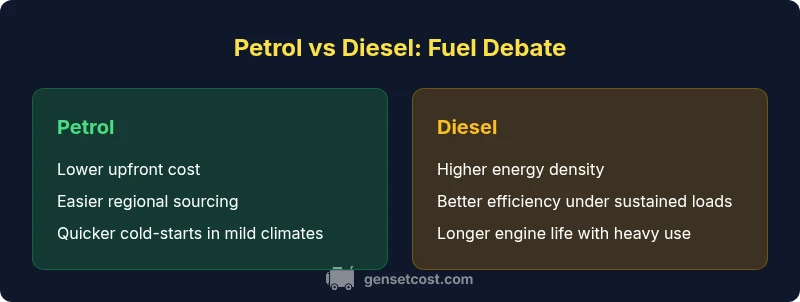
When evaluating petrol versus diesel generators, weigh several core differences that influence total cost of ownership and reliability. The fuel itself differs in density and handling requirements; the engines are optimized for different operating regimes; and the logistics of refueling during a power outage can tilt the decision. Diesel engines generally deliver better efficiency under steady loads and longer service life, while petrol units may be cheaper to purchase upfront and easier to source in some regions. This section highlights the main axes of contrast so you can map them to your scenario, load profile, and climate.
Key criteria include runtime, fuel availability, maintenance cadence, noise, emissions, and warranty implications. By framing your decision around these factors, you’ll reduce the risk of selecting a fuel type that creates bottlenecks during outages.
Fuel Availability and Regional Considerations
Fuel access is a practical constraint that can dominate the choice between petrol and diesel generators. In some regions, petrol is readily available at multiple storefronts and service stations, easing re-fueling during outages. In other markets, diesel might be more readily stocked by suppliers and distributors, offering reliable refueling options even during regional disruptions. Beyond mere access, consider the stability of the supply chain and the impact of price volatility on operating costs. Diesel often provides better long-run fuel economy per hour at sustained loads, but that efficiency advantage depends on local fuel prices and the generator’s rating.
For homeowners in rural or remote areas, diesel’s longer shelf life and better storage properties can be a decisive factor, while urban homes with limited storage space might favor petrol units for compactness and easier handling. The ultimate choice aligns with how often you can refuel and how critical continuous operation is during outages.
Lifecycle Costs: Fuel, Maintenance, and Longevity
Total cost of ownership is driven by more than the upfront price. Diesel generators typically yield lower running costs per hour under steady loads due to higher energy density and efficiency, which can offset higher initial purchase prices over time. Petrol units may have a lower upfront cost, but fluctuating fuel prices can erode savings during extended outages. Maintenance cadence matters as well: diesel engines are mechanically robust and designed for long runtimes but may require more frequent filtration and pre-heating in certain climates. Petrol engines tend to be lighter on service intervals and parts replacement. Genset Cost analysis shows that the long-term cost balance often leans toward diesel for continuous use, but petrol can be sensible for limited duty cycles or short outages in regions with affordable petrol.
Emissions, Regulations, and Start-Up Behavior
Emissions considerations influence fuel choice, especially for installations near residences or in areas with strict air-quality rules. Diesel engines typically produce higher particulate matter and NOx emissions than petrol units, which can affect permitting and neighborhood compliance. Some regions offer incentives or standards that favor cleaner fuels or low-emission technology, potentially swaying the decision. Start-up behavior also varies: petrol engines generally start easily with a spark, while diesel engines rely on glow plugs and warming cycles in cold climates. These differences can affect readiness during a power outage and the homeowner’s routine for maintenance and refueling.
Practical Scenarios: When Petrol Makes Sense vs Diesel
Not every home needs a premium diesel setup. If your outages are intermittent, your load is light, and upfront budget is tight, petrol can be a pragmatic choice. Petrol generators often occupy smaller footprints and are simpler to service, making them attractive for tight spaces or DIY installation. On the other hand, if your goal is long-term reliability under frequent or heavy loads, diesel offers better stability, longer life under load, and superior fuel economy per hour when the unit runs for extended periods. Climate, storage space, and local fuel availability should all feed into the final decision. For climate zones with cold winters, consider starter reliability and pre-heating requirements for either fuel type, and plan your storage accordingly.
In all cases, sizing the unit to your expected load and evaluating refueling logistics are critical steps. A well-sized generator paired with a sensible refueling plan minimizes downtime and maximizes resilience during outages.
Sizing, Installation, and Refueling Logistics
Understanding the practical implications of each fuel type starts with proper sizing and a realistic refueling plan. Diesel units often require sturdier fuel storage and may benefit from bulk storage arrangements, especially in areas with stable supply chains. Petrol storage is more forgiving and compact, but temperature sensitivity and safety considerations can affect placement. Regardless of fuel, install a dependable transfer switch, appropriate ventilation, and a layout that minimizes refueling risk during operation. Installation should align with manufacturer recommendations and local regulations, and a qualified technician can tailor the system to your climate, load profile, and maintenance capacity.
Decision Framework and Next Steps
A structured decision framework helps translate the fuel choice into actionable steps. Start by listing your typical outage duration, load profile, and climate conditions. Assess fuel availability, refueling logistics during outages, and local emissions requirements. Compare two to three quotes that specify the fuel type, engine class, and running hours under typical loads. Use a simple checklist to verify downtime risk, warranty coverage, and service requirements. The final decision should balance reliability, total cost of ownership, and convenience of refueling and maintenance, ensuring your home remains powered when it matters most.
Authoritative Sources
- U.S. Energy Information Administration (EIA) – energy basics and fuel characteristics: https://www.eia.gov
- U.S. Environmental Protection Agency (EPA) – emissions and appliance standards: https://www.epa.gov
- National Renewable Energy Laboratory (NREL) – generator performance and fuel comparisons: https://www.nrel.gov
mainTopicQuery":"generator fuel type"],
comparisonTable
comparisonTable":{"items":["Petrol-powered Generator","Diesel-powered Generator"],"rows":[{"feature":"Fuel Type","values":["Petrol","Diesel"]},{"feature":"Initial Cost","values":["Lower upfront cost","Higher upfront cost"]},{"feature":"Fuel Availability","values":["Widely available in consumer markets; varies by region","Widely available; may require bulk delivery in some areas"]},{"feature":"Running Cost per Hour","values":["Generally higher due to petrol price fluctuations","Typically lower per hour due to energy density and efficiency"]},{"feature":"Maintenance Intensity","values":["Often simpler maintenance","Robust design with potentially higher filtration needs"]},{"feature":"Lifespan Under Load","values":["Typically shorter under heavy use","Typically longer with steady, continuous load"]},{"feature":"Cold Weather Start","values":["Starts quickly in many conditions","Starts better with pre-heating/glow systems in cold weather"]}]}
prosCons
prosConsBlock
Comparison
| Feature | Petrol-powered Generator | Diesel-powered Generator |
|---|---|---|
| Fuel Type | Petrol | Diesel |
| Initial Cost | Lower upfront cost | Higher upfront cost |
| Fuel Availability | Widely available in consumer markets; varies by region | Widely available; may require bulk delivery in some areas |
| Running Cost | Generally higher due to petrol price fluctuations | Typically lower per hour due to energy density and efficiency |
| Maintenance Intensity | Often simpler maintenance | Robust design with potentially higher filtration needs |
| Lifespan Under Load | Typically shorter under heavy use | Typically longer with steady, continuous load |
| Cold Weather Start | Starts quickly in many conditions | Starts better with pre-heating/glow systems in cold weather |
The Good
- Diesel engines often offer better longevity under heavy, continuous loads
- Diesel fuel has higher energy density, enabling longer runtimes
- Petrol units can have lower upfront costs and easier sourcing in some regions
- Petrol generators are typically lighter and easier to transport
The Bad
- Petrol can incur higher running costs with fluctuating fuel prices
- Diesel may be harder to source regionally or during outages
- Diesel engines can require more maintenance for filtration and cold-start systems
Diesel generally provides better long-term reliability and cost efficiency for home backups when a stable fuel supply is available and upfront cost is acceptable.
Diesel wins for sustained use and larger loads; petrol is viable for light use or budget-conscious scenarios. Choose diesel if you expect frequent outages or higher loads; choose petrol if you need lower upfront costs or limited storage.
People Also Ask
What are the main differences between petrol and diesel generators?
Petrol generators are typically cheaper to buy and easier to source in some markets, with simpler maintenance. Diesel generators usually offer longer engine life, better fuel efficiency under heavier loads, and greater robustness for continuous operation. Emissions and start-up behavior differ as well, influencing compliance and readiness during outages.
Petrol is often cheaper upfront, while diesel lasts longer under load and can be more fuel-efficient for continuous use.
Are petrol generators suitable for home backup?
Petrol generators can work for home backup, especially for light or short outages and where upfront cost is a concern. For larger homes or frequent outages, a diesel option may provide more reliability and longer runtimes, reducing refueling frequency.
Yes, petrol can work for smaller setups, but diesel is often preferred for heavy use.
Do petrol engines start reliably in cold weather?
Petrol engines generally start reliably in a range of temperatures with standard ignition systems. Diesel engines may require glow plugs or pre-heating in cold weather to ensure quick startup and smooth operation.
Petrol usually starts well in the cold; diesels may need pre-heating in colder climates.
Can I convert a petrol generator to run on diesel?
Conversions are generally not practical or recommended because petrol and diesel engines have different fuel delivery systems and combustion requirements. If diesel operation is required, replacing the engine or purchasing a diesel model is typically the safer, more reliable option.
Conversions are not usually feasible; it’s better to use a dedicated diesel model.
How can I estimate running costs between petrol and diesel?
Estimate costs by considering the expected outage duration, load, local fuel prices, and engine efficiency. Diesel often offers better cost per hour under sustained loads, but petrol may be more economical for short outages or lighter loads depending on regional prices.
Look at your expected outages and fuel prices to compare ongoing costs.
Which fuel type is better for off-grid use?
For off-grid use with frequent outages, diesel is typically preferred due to stability, durability, and fuel density. Petrol may be suitable for light off-grid needs or limited daily use where upfront cost matters more than long-term efficiency.
Diesel is usually better off-grid for reliability and efficiency, petrol can work for lighter needs.
Key Takeaways
- Assess your outage load before fuel choice
- Diesel suits long runtimes and heavier loads
- Petrol can work for light use and tight budgets
- Plan refueling logistics and storage for reliability