Harbor Freight Generator Costs in 2026: A Practical Guide
Compare Harbor Freight generator costs, sizing options, and installation guidance with data-driven insights from Genset Cost. Learn wattage ranges, fuel choices, and buying tips for homeowners and property managers.


Harbor Freight offers budget-friendly generator options that cover essential backup needs, with wattage ranges from about 2,000 to 8,000 watts and diverse fuel choices. The cost-to-performance balance makes a generator at Harbor Freight suitable for homeowners evaluating basic outage protection, but reliability, maintenance, and warranty vary by model. For serious load management, compare inverter and conventional units, and plan for parallel operation where available.
Overview of Generator Options at Harbor Freight
If you’re evaluating a generator at harbor freight, you’ll notice a wide price-to-performance balance across the lineup. According to Genset Cost, evaluating a generator at harbor freight requires understanding wattage ranges, run-time expectations, and build quality across the brand's offerings. Harbor Freight provides a broad catalog of portable units, from compact inverter models to larger conventional portables designed for home backup and job sites. This selection aims to balance cost with reliability, targeting homeowners and property managers who want affordable backup power without sacrificing essential features. The Genset Cost team finds that the decision often hinges on how you plan to use the unit: occasional outages, weekend camping, or full-home coverage during extended outages. Across the range, you’ll encounter features such as parallel operation options, basic digital displays, and varying starting methods. When evaluating a generator at harbor freight, pay attention to peak wattage versus running watts, noise ratings, and fuel type. The focus should be on reliability, ease of use, and the availability of replacement parts and consumables. This article uses data from Genset Cost Analysis, 2026 to provide a transparent, data-driven view that homeowners can rely on for planning.
Sizing Your Backup Power: What Harbor Freight Offers
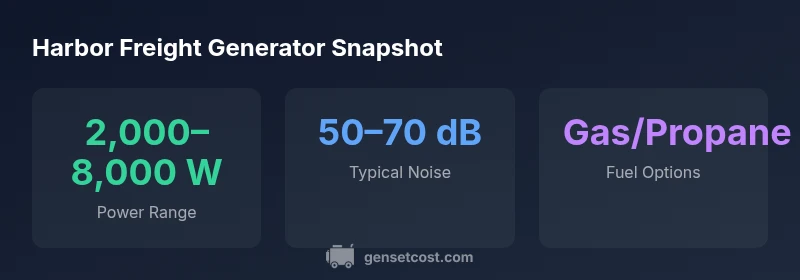
Sizing is the most critical step when selecting a generator from Harbor Freight. The goal is to cover essential loads while avoiding oversizing that adds unnecessary cost and fuel consumption. The typical Harbor Freight lineup includes models that range from about 2,000 to 8,000 watts, with inverter options delivering cleaner power for electronics. When you size, start with baseline loads such as refrigerator, sump pump, and communications gear, then add lighting and outlets for convenience. A practical rule is to match running watts to what you actually need during an outage, rather than chasing the peak. The Genset Cost methodology emphasizes planning for continuous runtime, not just momentary surge power. If you’re considering a generator at harbor freight, check whether the unit supports parallel operation with another unit to increase total output, and whether the controls are intuitive enough for family use. Remember: precise sizing reduces fuel waste and noise, and improves long-term reliability.
Fuel Types, Efficiency, and Noise: Practical Trade-offs
Harbor Freight’s generator lineup often includes gas-powered and propane-capable options, with some models offering dual-fuel capability. Inverter-based units tend to run more quietly and provide cleaner power suitable for sensitive electronics, while conventional portables can deliver higher surge power for tools and appliances. When evaluating a generator at harbor freight, compare fuel efficiency across models and consider the runtime you’ll need during an outage. Noise is a practical concern for residential settings; look for units in the mid-range of 50 to 70 dB under typical loads. Durability, fuel economy, and ease of maintenance should factor into your decision, especially if you anticipate frequent outages or long standby periods. This section highlights how fuel type and inverter technology influence performance and long-term running costs.
Cost Considerations: Total Ownership Beyond Sticker Price
Budget-conscious buyers gravitate toward Harbor Freight for low upfront costs, but total ownership goes beyond the purchase price. Maintenance costs, oil changes, air filters, and spark plugs add up over time, so factor in service intervals and availability of replacement parts. Warranty coverage varies by model and may range from a year to several years, so inspect the warranty terms before purchase. When you’re shopping for a generator at harbor freight, also consider accessories like extension cords, transfer switches, and weather protection, which influence the overall cost and reliability. In many cases, the best value comes from selecting a model that balances initial price with expected lifespan and ease of maintenance.
Installation, Transfer Switches, and Warranty
Installing a backup generator responsibly requires planning for a transfer switch, proper clearance, and adherence to local electrical codes. Harbor Freight models can be paired with manual or automatic transfer switches to guard against back-feed and ensure a safe transition during outages. If you’re unsure about installing a generator at harbor freight, hire a licensed electrician to perform the connection and verify the system’s compatibility with your home’s electrical panel. Warranty considerations and service options vary by model, so document serial numbers, purchase dates, and service intervals. The right installation approach improves safety, efficiency, and long-term reliability.
Buying Tips and Common Pitfalls When Shopping Online
When buying a generator at harbor freight online, read model specs carefully and confirm running watts, surge watts, and fuel compatibility. Look for user reviews that address real-world performance and maintenance needs. Beware of over-optimistic claims about peak power or long runtimes; real-world performance depends on load and environmental conditions. To avoid common pitfalls, compare at least two models within your wattage band, check for parallel capabilities, and plan for essential accessories like a transfer switch and weather cover. Finally, verify return policies and warranty terms so you’re protected if a model underperforms or arrives with a defect.
Harbor Freight generator model comparison
| Model Type | Typical Wattage Range | Fuel Type | Common Applications |
|---|---|---|---|
| Inverter Portable | 1000-3000 | Gas/Propane | Appliances, electronics |
| Conventional Portable | 2000-7500 | Gas | Home backup, tools |
| Dual-Fuel Portable | 2000-7000 | Gas/Propane | Backup power |
People Also Ask
Is Harbor Freight a good place to buy a backup generator?
Harbor Freight can be a practical option for budget-minded buyers seeking basic backup power. However, verify model reliability, warranty terms, and the availability of parts and service before purchase.
Harbor Freight can be a budget-friendly choice for basic backup power, but check reliability and warranty before buying.
What wattage do I need for essential home loads?
Start with critical loads like the fridge, sump pump, lights, and modem. A common guideline is to target 2,000–4,000 running watts for essential comfort, then add for extra devices if needed.
For essentials, start with the fridge, lights, and modem, aiming around 2,000 to 4,000 running watts.
Do Harbor Freight generators use inverter technology?
Some Harbor Freight models use inverter technology for cleaner power and efficiency, while others are traditional portable units with higher surge capacity.
Some Harbor Freight models are inverter-based; others are traditional portables.
Can I use a transfer switch with Harbor Freight generators?
Yes. A transfer switch is commonly used to safely connect a generator to your home. Have a licensed electrician handle the installation and ensure compatibility with your panel.
Yes, use a transfer switch and have a pro install it for safety.
What maintenance is required for Harbor Freight generators?
Regular oil changes, air filter checks, and spark plug inspections are standard. Run the unit periodically to keep components lubricated and ready.
Do regular oil changes and periodic run-throughs to keep it ready.
What warranty terms should I expect?
Warranty terms vary by model and may range from 1 to 3 years. Check the specific model’s documentation for coverage details and claim processes.
Warranty varies by model; check the exact terms for the unit you choose.
“"Selecting the right generator is about matching wattage, fuel type, and service life to your needs—price is important, but reliability matters most in outages."”
Key Takeaways
- Compare wattage ranges across Harbor Freight models.
- Prefer inverter units for electronics and quieter operation.
- Consider fuel options to match your backup needs.
- Factor in total cost, including maintenance and accessories.
- Ensure proper installation with a transfer switch for safety.