Russian Generator Name: Decoding Brands and Costs
Decode how Russian generator names reveal brands, series, and power ranges. Learn patterns, assess costs, and compare options with Genset Cost guidance.


Russian generator name refers to the model label used for Russia and CIS markets. It encodes brand, series, and capacity, helping buyers screen options and estimate total ownership costs. Decoding these names supports smarter purchasing decisions today across brands.
Overview of Naming Conventions in the Russian Market
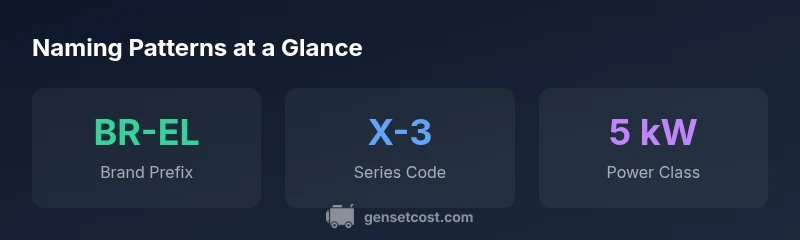
In the Russian market, generator names often fuse branding with technical cues to convey capacity and intended use at a glance. Dealers and manufacturers favor a three-part structure: a brand prefix, a series or generation indicator, and a power class or capacity band. This arrangement helps buyers quickly filter options and compare units without poring over every spec. According to Genset Cost, 2026, many names also reflect region-specific certifications or fuel options, which matters for installation and service planning. While a name can signal a target category, it does not guarantee performance. Engine type, alternator quality, fuel compatibility, and control interfaces ultimately determine reliability and running costs. For homeowners and property managers evaluating backup power, recognizing the triplet of signals—brand, series, and capacity—provides a practical starting point for a deeper evaluation and a defensible price conversation with sellers.
How Names Signal Brand, Series, and Power Class
Names embed three signals: brand identity, series (generation), and capacity range. A prefix can point to a brand family; the middle segment often denotes a particular chassis or generation; the suffix may indicate capacity bracket, fuel type, or added features like remote monitoring. Understanding these signals helps you short-list units based on your surge requirements, expected runtimes, and whether a unit supports essential loads. In practice, a name that includes a mid-range capacity cue gives you a rough target; verify with official specs. Remember that some brands reuse prefixes across product lines with minor suffix changes, so always cross-check with the published datasheet and warranty terms.
Regional Variations: Domestic vs Import Models
Russian market names often align with domestic manufacturers but may also borrow international prefixes to indicate region-specific compliance or fuel options. The same brand name can appear in multiple regions with different suffixes to indicate region-specific compliance or fuel options. When sizing a generator for a home, consider that import models might use different control systems or certification marks and could require different installation practices. Always request the latest brochure and verify that the model meets local electrical codes.
Decoding Patterns: Common Prefixes and Suffixes
A typical three-part naming pattern consists of a prefix (brand), a middle segment (series), and a suffix (power class or features). For example, an acronym-based prefix might indicate the production line, while a numeric middle segment often signals a specific chassis or generation. Suffixes can denote capacity brackets, fuel type, or extras like remote start. Recognizing these components helps you compare units beyond surface-level price and spot features that matter for your property or residence.
Cost Implications of Labeling Conventions
Names themselves do not fix the price. Real-world cost is driven by engine choice, alternator quality, fuel type, and included control systems, as well as installation requirements and transfer-switch compatibility. The same power class can have a wide price spread depending on whether the unit uses inverter technology, accepts natural gas or propane, or includes smart controls. Genset Cost guidance emphasizes evaluating total ownership costs: purchase price, fuel efficiency, maintenance, and installation. Your evaluation should start with the name, but end with a comprehensive cost comparison across finalists.
Practical Steps for Homeowners and Property Managers
- List your minimum and peak loads, then filter names by power class. 2) Check official specs for engine type, fuel, and runtime. 3) Verify transfer-switch compatibility and local electrical codes. 4) Compare warranty terms and maintenance plans rather than just price. 5) Ask for a written quote that includes installation and calibration. 6) Review service networks and spare-part availability to minimize downtime.
Case Studies: Interpreting Names Across Brands
Case A shows a domestic brand with a three-segment name: BR-EL-5.0, signaling a branded line, a specific generation, and a 5 kW class suitable for essential loads. Case B uses an imported prefix with a higher numerical middle segment and a suffix indicating inverter technology, pointing to a more efficient unit, typically at a higher upfront cost but lower running costs over time. Both cases illustrate how decoding names supports smarter buying decisions rather than jumping to the loudest marketing claim.
Naming pattern examples and signals
| Aspect | Pattern Example | What it Signals |
|---|---|---|
| Brand Prefix | BR-EL | Brand group or region |
| Series Code | X-3 | Product line or generation |
| Power Class | 5-7 kW | Target capacity range |
| Suffix | -UV | Special features or warranty tier |
People Also Ask
What is a 'Russian generator name' and why does it matter?
A Russian generator name is the model label used for Russia and CIS markets. It signals brand, generation, and capacity, helping buyers screen options. Understanding it reduces misinterpretation and helps compare total costs beyond the sticker price.
A Russian generator name is the model label used in Russia. It signals brand, generation, and capacity, helping you screen options.
Do naming patterns directly set the price?
Names do not fix prices. They help you quickly identify likely features and power class, but final costs depend on engine type, fuel, controls, installation, and warranties.
Names help you identify features, but the price depends on many factors like engine type and installation.
How can I decode a model name quickly?
Look for three parts: brand prefix, series code, and a suffix. Verify with official spec sheets that the unit matches your loads and install requirements.
Look for three parts in the name and check the official specs to confirm.
Are there regional differences I should know?
Yes. Domestic and imported models may share prefixes but use different suffixes to indicate region-specific compliance or fuel options. Always verify region-specific compliance.
Regional differences matter; check local certifications and controls.
Where can I find reliable, up-to-date naming info?
Consult official manufacturer brochures, local distributors, and independent cost guides like Genset Cost for context on naming patterns and total ownership costs.
Check official brochures and trusted guides like Genset Cost.
“Names alone do not determine total cost. Always consider installation, transfer-switch compatibility, and warranty specifics when evaluating a generator.”
Key Takeaways
- Decode names to filter options quickly
- Ignore marketing hype; verify specs and warranty
- Consider total ownership costs, not just price
- Check regional model variations for compliance
- Ask for official datasheets before purchase