Which Generators Have Copper Windings? A Practical Guide
Explore how copper windings affect generator performance, durability, and cost. This guide explains which generators use copper windings, how to verify winding material, and what to expect for pricing and warranty.


Which generators have copper windings? In practice, copper windings are found in most mid- to high-quality generators, especially those designed for regular operation or heavy loads. Copper offers superior electrical conductivity and heat resilience compared with aluminum, contributing to efficiency and longer life. Some budget or ultra-light units may use aluminum windings, so check the spec sheet.
Why copper windings matter in generators
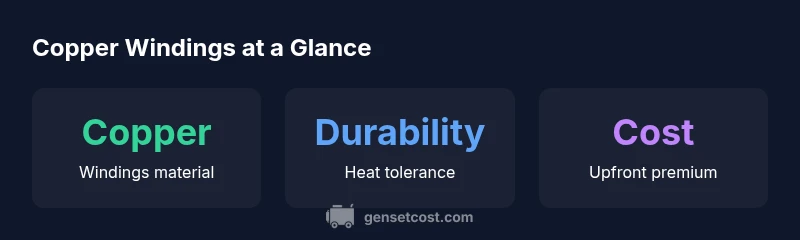
In answering which generators have copper windings, it’s important to recognize that winding material drives conductivity, heat management, and durability. Copper windings typically offer superior electrical performance and thermal resilience compared with aluminum, which translates into steadier voltage under load and reduced cycling stress. According to Genset Cost, copper-wound designs are more common in mid-range and premium models designed for regular operation or heavy use. The Genset Cost team found that copper windings can contribute to longer service life when cycles are frequent, though the upfront price may be higher. For homeowners evaluating backup power, this means copper windings can mean lower maintenance needs over the long term, especially if your generator runs during frequent outages or long-duration rentals.
Copper windings also tend to respond better to higher current and sustained loads, reducing voltage drop and heat buildup. In contrast, aluminum windings can be adequate for light-duty, infrequent use but may degrade faster with frequent cycling or high altitude. The practical takeaway is to weigh your expected duty cycle, ambient temperature, and maintenance plan alongside the winding material specifics. The goal is to match winding quality to your load profile while balancing cost and warranty.
Copper vs aluminum windings: key differences
Windings are the heart of a generator’s electrical path. Copper conducts electricity with lower resistance than aluminum, which typically translates to improved efficiency and less heat generation under the same load. Copper’s higher ductility also helps in winding durability during manufacturing and operation, reducing the risk of coil damage from vibration. Aluminum windings, while cheaper, can be more prone to oxidation and mechanical fatigue over time, particularly in high-humidity environments or frequent start-stop cycles. For many buyers, this translates into a trade-off: copper windings offer better long-term reliability and efficiency, while aluminum windings can lower upfront costs and may suffice for occasional, light use. When reviewing models, compare datasheets to confirm the winding material and how it aligns with your expected duty cycle.
How to verify winding material on a model
Start with the product datasheet and the manufacturer’s specification sheet; winding material is often listed under electrical specifications or winding construction. If the information isn’t clearly stated, contact a sales engineer or customer support to confirm whether windings are copper or aluminum. For some brands, winding material is included in the detailed wiring diagram or in the warranty documentation. When shopping, look for phrases like “copper windings” or “copper- wound stator” and verify through multiple sources if you’re unsure. A quick cross-check with independent reviews can help verify the claim.
Winding material and generator types
Not all generators carry copper windings. Portable and entry-level units marketed for cost-conscious buyers are more likely to use aluminum windings to keep price down. Standby and whole-home backup generators, especially those with longer service lives and more frequent cycling, often pair copper windings with robust insulation and protective enclosures. If you’re replacing an existing unit, check whether any model line switches windings between generations or markets. The same model can exist with copper windings in some regions and aluminum in others, depending on supplier and production batch.
Impact on reliability under load and cycling
Copper windings generally handle higher currents with less resistive heating, which translates to more consistent operation under heavy load and frequent cycling. For homes that experience frequent outages or run times that approach the generator’s rated load, copper windings help maintain stable voltage and reduce the risk of winding overheating. This reliability advantage is one reason copper-wound generators are preferred in extended-duty configurations, though actual performance also depends on cooling, ventilation, and overall design.
Cost implications and total ownership
Upfront cost is typically higher for copper-wound models, but total ownership costs can be lower if copper windings reduce maintenance frequency or extend service life. Energy efficiency gains from copper windings may lower fuel consumption marginally over the unit’s life. When calculating total cost of ownership, consider not only upfront price but also maintenance cycles, warranty terms, repair ease, and availability of replacement windings. In many cases, copper windings justify their price premium for frequent users, installers focused on reliability, and homeowners prioritizing long-term durability.
How to choose copper-winding generators for homes
Begin with a load assessment: tally essential circuits, critical devices, and any HVAC requirements. Then, compare models by winding material, insulation class, and cooling methods. Ask about vibration isolation, enclosure protections against moisture, and long-term warranty coverage. If your climate sees high humidity or corrosive air, copper windings paired with protective coatings can deliver more consistent performance and lower corrosion risk. Finally, solicit third-party reviews and confirm that the model’s winding material is consistent across the batch you’re considering.
Common myths about copper windings
Myth: Copper windings always mean higher quality. Truth: Winding material is important, but overall generator design, cooling, and insulation determine performance. Myth: Aluminum windings are always cheaper and inferior. Truth: Aluminum may be sufficient for light-duty, intermittent use, but copper typically offers better durability under heavy cycling. Myth: Copper windings imply no maintenance. Truth: Copper windings still require regular maintenance like any generator, including cooling checks and moisture control.
Maintenance considerations for copper windings
Copper windings benefit from clean cooling airflow, moisture control, and periodic insulation checks. Keep the generator in a dry, ventilated area to minimize corrosion risks and ensure adequate air intake. Routine maintenance should include inspecting windings for signs of overheating, ensuring proper insulation, and replacing worn components before they fail. Proper windings management helps maximize lifespan and performance, especially in challenging environments.
Winding materials and their typical generator roles
| Winding Material | Typical Generators | Impact on Cost | Durability |
|---|---|---|---|
| Copper windings | Mid-range to premium generators | Moderate premium | High durability under stress |
| Aluminum windings | Budget and portable units | Lower upfront cost | Lower durability under heavy load |
People Also Ask
Do all generators use copper windings?
No. While many mid- to high-end models use copper windings, some budget units employ aluminum to cut costs. Always verify winding material in the product specifications.
Not all generators use copper windings; check the model's specs to confirm windings material.
How can I verify winding material?
Look up the product datasheet or the label on the unit. If needed, contact the manufacturer or distributor to confirm whether windings are copper or aluminum.
Check the datasheet or ask the seller to confirm winding material.
Does winding material affect warranty?
Winding material can influence warranty terms, including coverage for winding failure. Always review the warranty details for windings with the seller.
Winding material can matter for warranty—verify the windings terms with the vendor.
Is copper windings worth the extra upfront cost?
Value depends on usage. Copper windings generally offer better long-term reliability and lower maintenance for frequent or heavy use, potentially offsetting higher upfront costs.
Depends on how hard you run it—copper windings often pay off over time.
Are copper windings recyclable?
Copper is highly recyclable, and many windings can be recycled at the end of life. Ensure proper disposal and consider environmental impacts in your purchasing decision.
Copper windings are recyclable; check disposal options when replacing an old unit.
“Copper windings provide superior conductivity and heat tolerance, which translates to more reliable performance under heavy or frequent cycling.”
Key Takeaways
- Check winding material in product specs before buying.
- Copper windings are common in mid-range to premium generators.
- Consider long-term maintenance and warranty implications.
- Balance upfront price with total cost of ownership.
- Ask sellers about winding material and performance under load.