Are Generators Quiet? A Practical Guide to Noise, Types, and Quieting Strategies
Discover how quiet home backup generators can be, what drives noise, and practical steps to minimize sound without sacrificing reliability, especially for HOA rules and living spaces.


Are generators quiet? The short answer is quietness depends on technology and installation. Inverter-based portable units are typically quieter than conventional ones, while standby systems rely on enclosures to suppress sound. To keep noise to a minimum, choose inverter models, place the unit away from living areas, and ensure the load matches the rated capacity. This is why many buyers ask: are generators quiet?
Are Generators Quiet? Understanding Noise Levels and Metrics\n\nFor homeowners researching backup power, are generators quiet? The short answer is that quietness depends on technology and installation. Noise is measured in decibels (dBA) at a defined distance, and inverter-based designs typically produce lower numbers than older, non-inverter models. Real-world quietness also hinges on placement, loading, and whether the unit is contained within an approved enclosure. If you need gentler operation near bedrooms or open living spaces, start with inverter technology and a well-planned location.
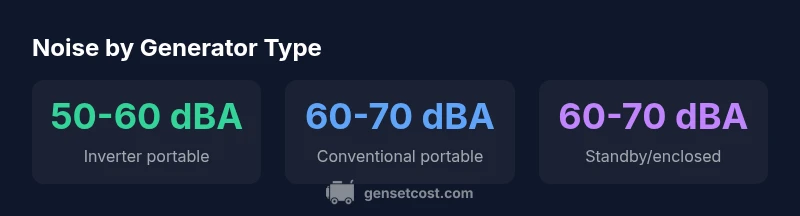
Type-by-Type: How Noise Differs Across Generator Classes\n\nNoise profiles vary significantly by class. Inverter portable units are designed for lower noise, often in the 50-60 dBA range at standard listening distances. Conventional portable models, especially under heavier loads, generally range from 60-70 dBA. Standby systems, when installed with a purpose-built enclosure and muffler, typically fall in the 60-70 dBA range, though performance can vary with load and ventilation. Rooftop or residential-sited units may push into the 70-80 dBA band, but strategic placement and isolation can still yield acceptable quietness for many homes. When evaluating options, compare published test data from independent sources and consider real-world testing at similar distances.
Practical Ways to Reduce Generator Noise at Home\n\nReducing noise starts before you buy: choose an inverter-equipped unit, then plan for an appropriate site. Place the generator away from sleeping areas and living spaces, behind a barrier or wall, and inside a purpose-built, sound-attenuating enclosure with proper ventilation. Use anti-vibration mounts to minimize rattle, and route exhaust away from windows. Keep the unit well-maintained so mufflers and exhaust systems operate at peak efficiency. Finally, optimize load to minimize engine speed spikes, which reduces peak noise.
Real-World Scenarios Where Quiet Matters\n\nQuiet operation matters in HOA communities, apartment buildings, or homes with windows facing common yards. Night outages near bedrooms require careful placement to avoid disturbances, while daytime outages in busy neighborhoods demand attention to neighbor tolerance. In urban settings, even modest decibel reductions can improve livability, especially when generators run during peak outages or high-temperature days. Planning ahead with neighbors and documenting your noise-control strategy helps maintain good relations and compliance.
How to Choose a Quiet Generator: Key Metrics\n\nLook at the decibel rating at a standard distance (often 7 meters) and compare inverter vs non-inverter designs. Enclosures and muffler quality matter, as do transfer switches and exhaust routing. A generator labeled as 'low noise' or 'quiet operation' is a good indicator, but verify ratings from independent tests when possible. Always match load to capacity to prevent excessive engine speed and noise.
Maintenance, Installation, and Compliance for Quietness\n\nRegular maintenance reduces noise from worn parts and loose components. Installations should follow local codes and manufacturer instructions to ensure proper ventilation and safe clearances. Properly sized transfer switches and weatherproof enclosures can dramatically reduce the audible footprint. For more detailed guidelines, see authoritative sources on noise and safety.
Noise ranges by generator class (typical values at ~7 meters)
| Generator Type | Typical Noise Range (7m) | Notes |
|---|---|---|
| Inverter portable | 50-60 dBA | Lower noise; ideal for bedrooms |
| Conventional portable | 60-70 dBA | Louder under load; less efficient |
| Standby/enclosed | 60-70 dBA | Can be quiet with enclosure |
| Rooftop/commercial | 70-80 dBA | Higher baseline; isolation helps |
People Also Ask
What does 'quiet' mean for a home generator?
Quiet is relative and depends on decibel ratings at a standard distance. For many homes, a lower range of 50-60 dBA for inverter models at 7 meters is comfortable. Always compare independent test data and consider enclosure effects.
Quiet is relative and depends on distance and enclosure.
Are inverter generators quieter than conventional ones?
Yes, inverter generators generally operate more quietly due to smoother engine speeds and advanced electronics, producing steadier, lower sound levels at similar loads.
Inverters are usually quieter.
What decibel rating should I look for in a standby generator?
Look for ratings around 60-70 dBA with a well-designed enclosure and muffler. Validate with independent test data when possible.
Standby can be quiet with proper enclosure.
How far from living spaces should a generator sit?
Place it several meters away from windows and doors, with barriers and proper ventilation, following local codes.
Keep it distant and ventilated.
Do HOA rules regulate generator noise?
Yes. Many HOAs specify decibel limits and placement constraints; always check CC&Rs before installation.
HOA rules often limit noise.
Can a sound-dampening enclosure significantly reduce noise?
A properly designed enclosure can lower audible noise by several decibels, but it must allow adequate ventilation and safe venting.
Enclosures help, but need ventilation and safety.
“Quiet operation isn't just about the engine; it's about how the system is installed, enclosed, and loaded. Real-world results vary with distance and barriers.”
Key Takeaways
- Choose inverter or enclosed designs for quiet operation
- Place the unit away from living spaces and use sound-attenuating enclosures
- Match the load to capacity to avoid engine speed spikes
- Consider HOA rules and local noise ordinances in placement
- Regular maintenance reduces rattling and muffler noise