Can Generators Cause Headaches? Health and Safety Guide
Learn whether home backup generators trigger headaches, common causes, and practical steps to reduce risk. Get urgent, actionable safety guidance for ventilation, placement, and maintenance with Genset Cost.


The most common headache triggers from home generators are exhaust fumes, loud noise, poor ventilation, heat, and dehydration. Safe operation, proper ventilation, and regular maintenance reduce the risk significantly.
Can Generators Cause Headaches? What the Evidence Says
According to Genset Cost, headaches linked to generators are usually a signal from the air you breathe and the environment you operate in during outages. In many cases, the culprit is a combination of exposure to exhaust fumes, carbon monoxide, and the stress of a loud, poorly ventilated space. The goal of this guide is urgent and practical: identify triggers, reduce exposure, and keep your family safe while maintaining power. The Genset Cost team found that simply placing the unit outdoors with proper clearance and using a detector dramatically lowers risk. This section helps homeowners and property managers understand why headaches happen and what immediate steps to take.
Primary Triggers: Exhaust Fumes, CO, and Indoor Air
Headache risk from generators begins with air quality. Exhaust contains carbon monoxide and other pollutants that accumulate when a unit runs in enclosed or poorly ventilated spaces. Even outdoor operation can pose a risk if the intake and exhaust create a stagnant plume near doors or windows. In addition to CO, odorless VOCs and fine particulates can irritate airways and trigger headaches in sensitive individuals. Addressing ventilation, proper placement, and fuel type is essential to minimize these risks.
Noise, Heat, and Dehydration: Secondary Triggers
Beyond fumes, loud operation and heat contribute to headaches. Persistent noise elevates stress hormones and can trigger migraines in susceptible people. High ambient temperatures during outages heighten dehydration risk, especially if someone is already outdoors without water. Even mild dehydration can intensify headaches when combined with exertion and poor air exchange. Quick wins include hydrating regularly, shifting to cooler hours, and using protective ear equipment when appropriate.
Safer Placement, Ventilation, and CO Detectors
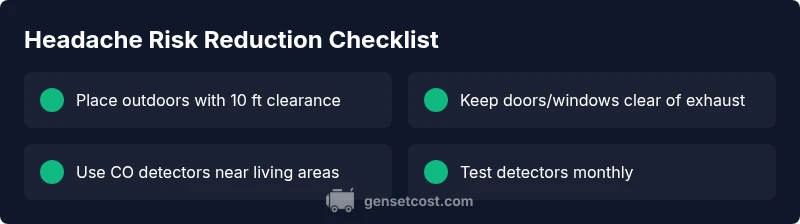
The safest approach is outdoor placement with clear space around the generator, and a clear path for fumes to dissipate. Maintain physical separation from doors, windows, and vents—aim for at least 10 feet or as local codes require. Install battery-powered or mains-connected CO detectors near living areas and sleeping spaces, and test them monthly. Good ventilation combined with detectors dramatically reduces headache risk and improves overall safety during outages.
Portable vs Standby Generators: Relative Risks
Portable generators are typically brought closer to inhabited spaces, which raises exposure risk if placed incorrectly. Standby generators are installed permanently and can be safer if equipped with proper exhaust routing and ventilation, but still require outdoor placement and regular maintenance. Regardless of type, never operate inside garages, sheds, or any enclosed area. Outdoors with proper clearance, CO detectors, and adequate fresh air is the safest setup.
Safe Usage, Maintenance, and Ventilation Practices
Adopt a routine safety checklist before each outage. Check fuel levels, ensure cords are rated for outdoor use, and confirm fan-assisted ventilation is unobstructed. Schedule annual professional servicing to inspect exhaust leaks, carburetor settings, and overall integrity of the cooling and intake paths. Keep children and pets away from the unit, and maintain clear access for ventilation paths at all times.
What to Do If You Suspect CO Poisoning
If anyone experiences headache, dizziness, confusion, or nausea while a generator is running, move to fresh air immediately and call emergency services if symptoms persist. Do not re-enter the area until detectors read safe levels. Seek medical evaluation for anyone with ongoing symptoms, and review your setup to identify ventilation gaps and CO source locations.
Quick-Start Do's and Don'ts for Your Family
- Do operate outdoors with ample clearance and away from entry points.
- Don’t run a generator in an enclosed space like a garage or shed.
- Do use CO detectors in sleeping areas and test them regularly.
- Don’t ignore dehydration or heat stress during outages.
- Do schedule professional maintenance and inspections annually.
Steps
Estimated time: 30-45 minutes
- 1
Identify symptoms and stop operation
If you notice headaches, dizziness, or nausea while the generator is running, stop the unit immediately and move to fresh air. Do not return until the area is ventilated and CO levels are verified safe. This is your first line of defense against potential CO exposure.
Tip: Act quickly and prioritize your family’s immediate safety. - 2
Move outdoors with clear space
Relocate the generator to an open, well-ventilated outdoor area away from doors, windows, and vents. Ensure there is a minimum safe clearance and that exhaust fumes can dissipate without re-entering the living space.
Tip: Use a stable, level surface and keep cords clear of walkways. - 3
Check ventilation and airflow
Inspect the area for air stagnation. Use fans to promote airflow if needed, and avoid placing the unit in crawlspaces or near air intakes. Adequate airflow reduces concentration of fumes.
Tip: Keep the area free of obstructions like stored items. - 4
Install or test CO detectors
Place detectors in living areas and bedrooms; test them monthly and replace batteries as needed. CO detectors provide early warning before symptoms develop, enabling faster response.
Tip: Follow manufacturer guidelines for mounting height and placement. - 5
Assess placement relative to living spaces
Ensure doors, windows, and vents are not drawing fumes back indoors. Reassess after any relocation to confirm fresh air exchange remains effective during outages.
Tip: Avoid running the generator near air-intake points. - 6
Schedule maintenance and professional checks
Arrange annual servicing to review exhaust routing, fuel lines, and overall unit integrity. A professional check can prevent leaks or blockages that raise headache risk.
Tip: Keep a maintenance log and follow recommended service intervals. - 7
Educate everyone in the household
Share safety guidelines with family and neighbors, so they know how to respond if symptoms appear and where to relocate the generator during outages.
Tip: Post a simple safety card near the generator. - 8
Document a safety plan for outages
Create a written plan detailing outdoor placement, CO detector locations, and emergency steps. Review and practice the plan at least annually.
Tip: Practice drills increase preparedness and reduce response time.
Diagnosis: Headache or migraine-like symptoms after generator operation, especially in enclosed or poorly ventilated spaces
Possible Causes
- highInadequate ventilation leading to carbon monoxide buildup
Fixes
- easyMove the generator outdoors to a well-ventilated area with at least 10 feet clearance from doors, windows, and vents
- easyVentilate the area with fans or open doors/windows; use an exhaust path to evacuate fumes
- easyInstall or check carbon monoxide detectors in living spaces and near sleeping areas; replace batteries regularly
- easyStop generator operation if headaches, dizziness, or nausea occur; seek fresh air and professional help if CO exposure is suspected
People Also Ask
Can running a generator indoors cause headaches?
Yes. Running a generator indoors can lead to headaches due to carbon monoxide buildup and poor air exchange. Always operate outdoors with proper ventilation and CO detectors.
Yes—operating a generator indoors is dangerous and can cause headaches from carbon monoxide; move it outdoors and use detectors.
What are the early symptoms of CO poisoning to watch for?
Early signs include headache, dizziness, nausea, confusion, and shortness of breath. Seek fresh air immediately and call for medical evaluation if symptoms persist.
Early CO poisoning symptoms are headache, dizziness, nausea, and confusion. Get to fresh air and seek help if they continue.
How far should I place a generator from the house?
Place the generator at least 10 feet away from doors, windows, and vents to prevent fumes from entering the home. Follow local code requirements.
Keep the generator at least 10 feet from your home to prevent fumes from getting inside.
Are portable generators safer than standby generators?
Standby generators are designed for long outages and can be safer when properly installed, but both require outdoor placement and maintenance. Always follow manufacturer guidelines.
Standby and portable units both have risks; safety depends on correct outdoor placement and maintenance.
What maintenance steps reduce headache risk?
Regular inspection of exhaust systems, fuel lines, and venting; test CO detectors; clean and store fuel properly; schedule annual professional service.
Regular maintenance helps prevent fumes and CO leaks that can cause headaches.
Watch Video
Key Takeaways
- Ventilate and position the generator correctly.
- CO detectors are essential near living spaces.
- Never operate indoors or in enclosed areas.
- Regular maintenance reduces exposure to fumes.
- Seek medical help if symptoms suggest poisoning.