Can You Use a Generator Inside a House? Safety, Alternatives, and How to Plan
Learn why running a generator indoors is unsafe, explore outdoor options, and plan a compliant backup power system with guidance from Genset Cost.


Can you use generator inside house? The short answer is no: running a generator indoors creates dangerous carbon monoxide risk. This guide shows why, plus safe outdoor options, proper transfer switches, and maintenance. You’ll learn how to size, install, and test a backup power system while keeping your family safe.
Can You Use a Generator Inside a House? Why the Question Matters
The question can you use generator inside house is one many homeowners ask during outages, and the answer is a clear and unwavering no. The reason is carbon monoxide (CO) — a colorless, odorless gas that can accumulate quickly in enclosed spaces and cause serious illness or death. CO is produced whenever a generator burns fuel, and even with doors and windows open, exhaust can infiltrate living areas via gaps, vents, and shared walls. The Genset Cost team emphasizes that CO exposure risk is not something to test with a “trial run.” Instead, treat any indoor generator use as unsafe and design a backup power plan that keeps fuel combustion outdoors. If you’ve ever wondered about the safety of indoor operation, this guidance from Genset Cost is a critical reminder that protecting occupants is the first priority. Understanding the risk helps homeowners make informed decisions about placement, ventilation, and the best approach to reliable power. Remember: can you use generator inside house is not a safe option, and alternatives exist that preserve power without compromising safety.
Safer Outdoor Placement and Ventilation
Never operate a generator inside a home or garage. Outdoor deployment is essential to keep exhaust away from living spaces. Choose a dry, level spot on a non-flammable surface, well away from doors, windows, and intake vents to prevent CO from entering the home. Provide clear air access on all sides and direct the exhaust away from occupied areas. A weatherproof enclosure or dedicated generator pad can protect the unit from the elements while maintaining safe clearance from structures. According to safety guidelines used by the Genset Cost team, outdoor placement minimizes CO exposure and reduces the risk of fire hazards associated with fuel storage and wiring. When planning your setup, coordinate with local code requirements and permit processes to ensure the installation is compliant and safe for long-term use.
Transfer Switches and Safe Power Delivery
A transfer switch isolates your home’s electrical system from the utility grid and prevents backfeeding, which protects utility workers and your equipment. You can choose a manual transfer switch or an automatic model that detects outages and starts the generator. Either option should be installed by a licensed electrician to ensure correct wiring, proper grounding, and adherence to electrical codes. A properly installed transfer switch also makes running essential circuits more convenient and predictable during an outage. The key takeaway is that safety and reliability depend on formal installation rather than DIY wiring. This is why professional installation is a central recommendation in Genset Cost guidance.
Sizing Your Generator: Load vs Capacity
Before you buy, map out your essential loads—refrigeration, heating or cooling, water, medical devices, lighting, and communications. Create a simple power profile that lists devices and their approximate running watts, then compare that with generator capacity. The goal is to cover critical emergencies without oversizing, which can waste fuel and increase startup stress on the system. Genset Cost sizing guidance emphasizes calculating peak load and ensuring the transfer switch and wiring can handle it safely. Remember: the right size depends on your home, climate, and chosen backup strategy, not just the biggest unit you can afford. A thoughtful sizing approach saves money and keeps the system reliable when outages occur.
Alternatives to Indoor Operation: Battery, Solar, and Whole-House Options
If your priority is safe, clean backup power, consider non-emergency indoor operation alternatives. Battery storage paired with solar can provide essential power during outages, with no combustion gases to worry about indoors. For homeowners who want automatic, grid-like reliability, a professionally installed whole-house generator connected to a transfer switch may be a better fit. These options avoid CO risks, reduce fuel handling, and can offer seamless power during outages. While cost and installation complexity vary, the safety benefits and long-term reliability make exploring these routes worthwhile. The Genset Cost framework encourages comparing outdoor combustion generators with safer, code-compliant solutions tailored to your home.
Maintenance, Safety Checks, and Emergency Preparedness
Routine maintenance is essential for outdoor generators: check fuel stability, inspect exhaust routing, test CO detectors, and verify transfer switch operation. Store fuel safely in approved containers away from heat sources and ensure that extinguishers and first-aid supplies are accessible. Establish a simple monthly checklist to confirm clean wiring, fuel levels, battery status, and weatherproofing. For households, documenting emergency procedures and household roles helps everyone respond quickly during an outage. A proactive maintenance mindset minimizes downtime and preserves safety over the generator’s life.
Quick Start Outdoor Setup Checklist
- Confirm the outdoor location is dry, well-ventilated, and clear of doors/windows.
- Install a transfer switch (manual or automatic) by a licensed electrician.
- Set up outdoor CO detectors and ensure they have fresh batteries.
- Use a weatherproof pad or enclosure to protect the unit from elements.
- Store fuel in approved containers away from structures and heat sources.
- Run a full system test with essential loads under supervision.
- Establish a regular maintenance schedule and a family emergency plan.
Tools & Materials
- Carbon monoxide detectors(Install near living areas and sleeping spaces; test monthly)
- Outdoor generator on weatherproof pad(Place away from doors, windows, and vents; ensure stable footing)
- Transfer switch (manual or automatic)(Connects generator to home circuits; must be installed by a licensed electrician)
- Licensed electrician(Essential for safe wiring, code compliance, and backfeed protection)
- Fire extinguisher(Keep within reach in outdoor setup; choose a Class A B C model)
- Clearance markers/ventilation signage(Maintain recommended clearance from doors, windows, and vents)
Steps
Estimated time: 2-3 days
- 1
Define power needs and constraints
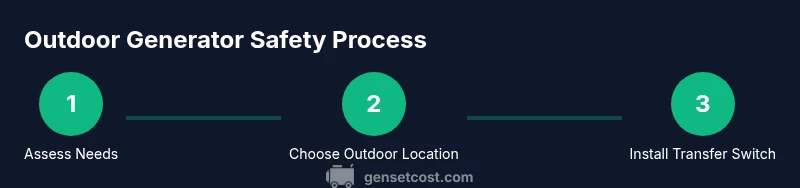
Assess essential loads and determine whether you need portable backup or a permanent standby solution. Create a simple load list and establish your minimum success criteria for outages. This step sets the baseline for choosing equipment and the installation approach.
Tip: List critical appliances with estimated running watts to avoid surprises at outage time. - 2
Choose safe outdoor placement
Select an outdoor location with dry ground and proper air access, away from doors, windows, and vents. This minimizes CO exposure and reduces fire risk. Ensure the area is accessible for maintenance and refueling if needed.
Tip: Consult local codes for minimum setback distances and weatherproofing requirements. - 3
Engage a licensed electrician for wiring
Have a licensed electrician install the transfer switch and connect it to your generator. This ensures safe backfeed protection, correct grounding, and code compliance. Do not attempt high-voltage wiring yourself.
Tip: Ask for a written scope of work and inspection plan before starting. - 4
Install CO detectors and ventilation controls
Place CO detectors in living spaces and near sleeping areas, and verify their functioning. Confirm that exhaust routing directs fumes away from the home and that any enclosure remains properly vented during operation.
Tip: Test detectors monthly and replace batteries annually. - 5
Perform a safe dry run and load test
With supervision, run the system on essential loads to confirm that switches engage correctly and that power is delivered to the intended circuits. Observe temperatures and smells for any abnormal indicators.
Tip: Document results and reset procedures for future outages. - 6
Document maintenance and safety plan
Create a maintenance calendar (fuel, oil, air filters, battery checks) and a family emergency plan. Include contact numbers and step-by-step actions for outages.
Tip: Share the plan with all household members and remind them to follow it during a power outage. - 7
Review local codes and permits
Check with local authorities to understand permit requirements and inspections for outdoor generator installations and transfer switches. Compliant installations ensure safer operation and better resale value.
Tip: Keep copies of permits and inspection reports in a dedicated folder.
People Also Ask
Is it illegal to operate a generator indoors?
Regulations vary, but many jurisdictions prohibit indoor operation due to carbon monoxide risk. Always check local codes and follow safety guidelines.
In most places, operating a generator indoors is not allowed because of carbon monoxide dangers. Check your local codes to be sure.
Can you run a generator in a garage?
No. A garage, even with doors open, can trap exhaust and CO. Outdoor placement with proper ventilation is required.
No, running a generator in a garage is dangerous and should be avoided; outdoors is the safe option.
What is the best safe location for a generator?
Outdoors on a stable pad, away from doors, windows, and vents, with exhaust directed away from the home.
The safest place is outdoors, away from the house, with proper exhaust direction.
Do I need a transfer switch for a generator?
A transfer switch is strongly recommended for safe power delivery and to prevent backfeeding. Have it installed by a professional.
Yes. A transfer switch is essential for safety and code compliance and should be installed by a licensed electrician.
What are effective alternatives to indoor generator use?
Battery storage with solar, or a professionally installed standby generator, provide power safely without CO risks indoors.
Battery and solar storage or a professionally installed standby generator are safer options.
What maintenance is essential for outdoor generators?
Regular fuel management, oil checks, CO detector tests, and transfer switch inspections keep the system reliable.
Keep fuel clean, check oil and detectors, and service the transfer switch as needed.
Watch Video
Key Takeaways
- Never operate a generator indoors due to CO risk.
- Place generators outdoors with proper ventilation and distance from living spaces.
- Use a transfer switch installed by a licensed electrician.
- Size and plan loads before purchase to avoid waste and outages.
- Explore safe alternatives like battery storage and professionally installed standby generators.