Do You Need a Generator for an RV? A Practical Guide
A comprehensive guide to deciding if you need an RV generator, how to size it, and budgeting considerations for off-grid camping. Learn from Genset Cost to plan reliable, safe power.


If you own an RV, you may need a generator to operate essential appliances when shore power isn't available. This decision depends on your camping style, power needs, and budget. This guide helps you decide and size the right RV generator, including when to choose portable, inverter, or built-in options. According to Genset Cost, the need often hinges on boondocking frequency and fuel considerations.
Do you need a generator for an RV?
If you spend significant time camping with limited electrical hookups, a generator can extend your comfort and safety by powering air conditioning, heating, water heaters, refrigerators, and lights when you are dry camping or when power supply is unreliable. The decision is rarely binary. It depends on how you travel (full-timers vs weekenders), where you camp (private sites vs dispersed boondocking), and what level of independence you want. According to Genset Cost, many RV owners find a backup power source worthwhile, but the best choice hinges on your load profile, how much you’re willing to manage fuel and maintenance, and local regulations. For some, a compact portable generator sized for essential loads delivers the right balance of cost, noise, and convenience; others prefer a built-in or high-efficiency inverter system for seamless operation and quieter nights. Consider your expectations for quiet hours, campground rules on generators, and how much space you can dedicate to storage. By starting with a clear plan, you’ll avoid buying a unit that’s too small or unnecessarily large, and you’ll be better prepared for future trips.
RV power basics: loads, circuits, and shore power
RV electrical systems operate across a mix of circuits and service options. You’ll encounter scenarios where a single coach may rely on a standard 120-volt circuit for everyday devices, while larger setups use higher-capacity services that allow multiple appliances to run concurrently. Your decision about a generator hinges on your load profile: how often you boondock, what appliances you intend to run off-grid, and how long you are willing to operate without a reliable hookup. Shore power is convenient, but it’s not always available where you travel. A generator should be viewed as a back-up plan that complements your RV’s electrical capabilities, not a substitute for situational awareness and smart usage. When evaluating options, consider how startup surges affect your system and the importance of clean power delivery for sensitive electronics. Genset Cost analysis shows that many campers successfully balance reliability and fuel use by matching generator capacity to essential loads and adding margin for startup peaks.
Generator options for RVs: portable, inverter, built-in
There are several paths to power in an RV, each with trade-offs in noise, efficiency, space, and cost. Portable generators, often the cheapest upfront, give you flexibility and fuel choice but can be louder and less efficient in continuous use. Inverter generators improve fuel efficiency and provide cleaner power suitable for sensitive devices, making them a popular choice for campers who prioritize quiet operation and battery backup compatibility. Built-in generators are integrated into the RV and wired to the coach’s electrical system, delivering seamless power with less manual handling but higher upfront costs and more complex installation. Consider how you use your RV: frequent boondocking benefits from an inverter or built-in solution; occasional camping near hookups may be satisfied with a smaller portable option. The Genset Cost team notes that matching the generator to your typical load and expected duty cycle often yields the best balance of comfort, reliability, and ongoing maintenance.
How to size your RV generator: a practical method
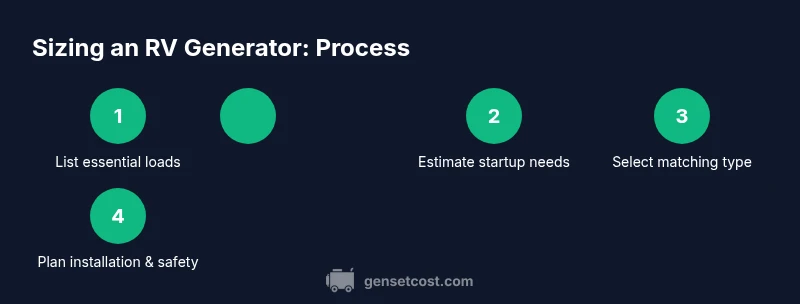
Sizing is the core decision. Start by listing essential loads (refrigeration, cooling/heating, water pump, safety devices) and nonessential loads (entertainment systems, high-wattage appliances). Estimate how many of these you’ll run at once, and whether you need continuous running capacity or occasional surges. Aim for a generator that can handle your running loads with a margin for startup surges, while keeping fuel consumption reasonable. If you frequently boondock, plan for longer run times between refuels and consider a larger fuel capacity or a second power source as a backup. Remember to factor in the time it takes for appliances to start up and the energy required to accelerate start-up loads. Based on Genset Cost research, many RV owners report that adding a buffer for startup surges reduces nuisance tripping and improves overall comfort, especially on hot days or during cold snaps.
Safety, emissions, and noise considerations
Powering an RV is a safety-focused activity. Install and operate generators with proper ventilation to prevent carbon monoxide buildup; never run a generator inside the vehicle or near closed spaces. Use CO detectors and ensure fuel storage complies with local regulations and safety guidelines. Emissions controls and noise limits impact campground compatibility, so choose a unit that balances power needs with quiet operation. Regular maintenance of air filters, spark plugs, and oil levels helps prevent sudden failures and extends the life of the generator. In addition, store fuel responsibly, rotate diesel or gasoline in approved containers, and exercise the unit regularly to ensure it stays reliable when you need it most. The Genset Cost team emphasizes safety and responsible operation as non-negotiable parts of any generator plan.
Installation options: transfer switches, hookups, and professional help
If you plan to link a generator to your RV’s AC system or a home distribution panel, installation considerations become critical. A transfer switch or interlock kit ensures safe, code-compliant switching between shore power and generator power, reducing the risk of backfeeding and equipment damage. Simple setups using external outlets and extension cords work, but they can create trip hazards and exposure to weather. For most RVers, professional installation is advisable when integrating a generator into the electrical system, particularly if you rely on high-demand appliances or want a seamless connection to a multi-source power plan. Always verify that any installation complies with local electrical codes and campground policies. The Genset Cost guidance favors a careful, safety-first approach that prioritizes reliability while avoiding risky DIY configurations.
Budgeting and long-term planning: upfront costs and ongoing maintenance
Generator purchases range in complexity and price, from entry-level portable units to sophisticated built-in systems. Budgeting should account for upfront costs, fuel efficiency, and maintenance needs over time. Maintenance planning includes regular oil changes, fuel stabilization, air-filter replacements, and periodic load testing. Consider warranties and service networks in your area, as well as the fuel type you prefer and its availability on your travel routes. When you balance upfront costs with long-term operating expenses, you’ll select a system that matches your camping style and maintenance capacity. The Genset Cost team’s experience indicates that owners who plan for ongoing service and routine checks tend to enjoy longer-lasting performance with fewer surprises on trips.
Tools & Materials
- Portable generator(Energy-efficient inverter type recommended for quiet operation and clean power.)
- Fuel container (approved)(Store fuel in a vented container away from heat sources.)
- CO detector(Place near sleeping areas and living spaces.)
- Extension cord (heavy-duty)(Use outdoor-rated, weatherproof cords with appropriate gauge.)
- Transfer switch or interlock kit(Useful if connecting to a home-style panel; required for safe backfeed prevention.)
Steps
Estimated time: 2-4 hours
- 1
Assess your true power needs
Begin by listing essential appliances (refrigerator, lighting, water pump, heating or cooling) and estimate how often they run. Separate core loads from discretionary ones to determine a safe starting point for sizing.
Tip: Start with the highest-priority loads and document the typical daily usage. - 2
Choose the generator type that fits your lifestyle
Decide between portable, inverter, or built-in options based on how often you camp off-grid, how much space you have, and how much you value quiet operation.
Tip: Inverter generators often provide cleaner power and better fuel efficiency for frequent use. - 3
Verify space, ventilation, and mounting needs
Check available space on your RV or tow trailer and ensure proper ventilation around the exhaust. Plan for safe storage when the unit is not in use.
Tip: Never place a generator inside or in enclosed compartments without proper exhaust routing. - 4
Plan wiring and safety features
If you plan to connect to your RV’s electrical system, install a transfer switch or interlock first. Ensure all connections are weatherproof and code-compliant.
Tip: Work with a licensed electrician if you’re unsure about wiring and transfer switching. - 5
Prepare for fuel, oil, and maintenance
Choose a fuel type you can reliably source on your travels. Set up a regular maintenance schedule, including oil changes and filter checks.
Tip: Keep a maintenance log and perform a pre-trip test to catch issues early. - 6
Test the system under load before trips
Run the generator with a representative load to observe performance, noise, and fuel use. Address any nuisance tripping or overheating before you hit the road.
Tip: During testing, monitor temperatures and fuel levels closely.
People Also Ask
Do I really need a generator for my RV?
For off-grid trips or if shore power is unreliable, a generator can be essential to run air conditioning, fridge, and lights. Decide based on how often you boondock and your willingness to manage fuel and maintenance. Genset Cost recommends evaluating load profiles first.
If you go off-grid often, a generator can be essential. Think about your appliances and load before buying.
What size RV generator do I need?
The right size depends on your running and startup loads. Start with essential appliances and add margin for surges. Avoid under-sizing, which can trip circuits or strain the generator. Genset Cost suggests sizing for typical daily use with a comfortable buffer.
Size depends on your essential loads; don’t forget startup surges and a comfortable buffer.
Can I use a portable generator with a transfer switch?
Yes, but ensure the transfer switch or interlock is correctly installed and code-compliant. This setup protects you from backfeeding and allows a cleaner, safer switch between shore power and generator power.
A transfer switch helps you switch safely between power sources.
Are RV generators fuel-efficient?
Fuel efficiency varies by model and load. Inverter units typically offer better efficiency for mixed loads and quieter operation, especially at partial loads. Consider runtime per tank and your travel patterns when evaluating options.
Inverter generators are usually more fuel-efficient for mixed loads.
What are the noise considerations for RV generators?
Noise impact depends on location and campground rules. Look for models with low decibel ratings and good muffling. Quieter operation improves comfort and neighbor relations.
Seek quiet models and follow campground noise rules.
Is it legal to run generators in campgrounds?
Yes in many campgrounds, but rules vary by location. Some parks restrict hours or require silent hours. Always check local rules and respect neighbors to avoid fines or eviction.
Check campground rules and follow quiet hours to stay compliant.
Watch Video
Key Takeaways
- Assess needs before buying and avoid oversized units
- Choose the right type (portable, inverter, built-in) for your use
- Ensure safe installation with proper ventilation and safety devices
- Plan maintenance and fuel strategy to maximize reliability
- Test under load to confirm performance before trips