How to Make a Self-Generating Generator: Realistic Backup Power Solutions
Explore why a true self-generating generator is not feasible and learn practical, safe approaches to backup power using generators, energy storage, and renewables for homeowners and property managers.


Short answer: a true self generating generator cannot exist due to the conservation of energy. Any system that appears self sustaining will eventually rely on an external energy source such as fuel sunlight or wind. For homeowners the practical path is a reliable backup power setup that combines a generator with energy storage and renewable inputs to minimize outages.
Why a true self-generating generator isn't feasible
Energy conservation and system losses rule out any device that can create energy on its own. Every real world machine converts inputs to outputs with waste heat and friction. Over time the energy produced by any system will be less than the energy required to keep it running. In practice this means a self generating generator is not physically possible, but you can build resilient backup power using a mix of generation storage and renewables to cover outages.
What most people mean by self generating in home power
When homeowners say self generating they usually mean a device that keeps itself charged during outages without refueling. In reality all practical systems require an energy source to replace losses. The goal is not perpetual energy but reliable operation, reduced outages, and quick restoration of critical loads through intelligent design.
Practical architecture for reliable backup power
A robust backup power system generally combines three elements: a primary generator, energy storage such as a battery bank, and renewable inputs like solar. An automatic transfer switch connects the generator to the home panel during an outage while charging storage. Together these parts deliver power when the grid fails without claiming to run forever.
How to size and plan a backup system without claiming perpetual motion
Begin with a loads assessment that lists essential loads and estimate daily energy needs. Add safety margins to cover startup surges and weather related outages. Decide on a generator size first then plan for storage and renewables that can top up energy during daylight. Use professional sizing tools and follow local codes to ensure a safe install.
Components and connection architecture
Key components include a standby generator, automatic transfer switch, inverter or charger, battery storage, solar panels or wind if available, proper wiring and a service disconnect. The connection design should keep the utility grid safe while allowing rapid return to normal operation after an outage.
Installation safety and compliance
Work with a licensed electrician and follow local building codes. Verify permits, clearances and ventilation requirements. Regular testing and documented maintenance reduce the risk of failure when you need power most.
Alternatives and optimization strategies
Focus on energy efficiency and smart load management. Use high efficiency appliances, shift loads to daylight, and combine renewables with storage. A well designed system improves reliability while staying within physical limits.
Tools & Materials
- Automatic Transfer Switch (ATS)(Residential 100A or 200A rated; connects generator to main panel automatically)
- Standby generator(Gas propane or diesel powered; sized to load)
- Battery storage system(Lithium or lead acid; choose chemistry suitable for cycles)
- Inverter/charger(Manages charging from solar and generator)
- Solar panels or wind turbine(Optional renewables to supplement charging)
- Charge controller(Controls solar charge to batteries)
- Wiring, conduit and electrical hardware(Copper wiring sized for loads; suitable conduit)
- Permits and professional permitting fees(Local approvals required for electrical work)
Steps
Estimated time: 4-12 hours
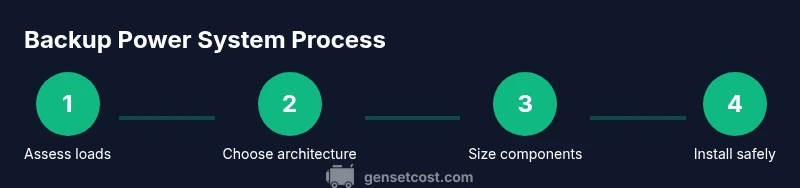
- 1
Assess loads and goals
Create a list of critical loads and estimate daily energy needs. Identify must run appliances and the hours they run. This sets the baseline for all sizing decisions.
Tip: Document critical circuits first to avoid oversizing beyond needs - 2
Decide system architecture
Choose how much of your energy will come from a generator storage and renewables. Plan for automatic switching to ensure seamless power during outages.
Tip: Consider future expansion like adding additional solar or storage - 3
Size the components
Select a generator and battery bank that cover the calculated loads with a comfortable margin. Ensure wiring and devices meet code requirements.
Tip: Have a professional verify the proposed sizes before purchase - 4
Install the transfer switch and wiring
Have the ATS wired to your main panel with proper grounding and ventilation. Do not bypass safety devices.
Tip: Use a licensed electrician for all electrical work - 5
Test and establish maintenance
Run a full system test monthly and after any major component change. Maintain batteries and clean generator components as recommended.
Tip: Keep a log of tests and maintenance dates
People Also Ask
Is it possible to build a perpetual motion generator?
No the laws of thermodynamics prevent energy creation from nothing and all devices lose energy to friction.
No perpetual motion is not possible.
What is a realistic alternative to a self generating device?
A balanced backup power system uses a generator storage and renewables to handle outages safely.
Use a backup system with generator storage and renewables.
How should I size a backup generator?
List essential loads estimate surge and plan for future needs with professional sizing.
Size by listing essential loads and surges with professional help.
Do fuel types affect generator reliability?
Fuel choice affects availability emissions and maintenance; pick a source that matches your home and climate.
Choose a fuel type that suits your home and climate.
What about cost and maintenance?
Costs vary with capacity and storage; schedule regular service and battery checks to extend lifespan.
Costs vary; maintain system regularly to extend life.
Is DIY installation safe?
Electrical work and permits come with risk; hire licensed professionals for safety and compliance.
Don't DIY; hire licensed pros for safety.
Watch Video
Key Takeaways
- Design for reliability not perpetuity
- Use a generator with storage and renewables
- Professional installation is essential
- Regular maintenance reduces outages