Pictionary Word Generator: A Complete How-To
Learn how to build and use a Pictionary word generator to create engaging, age-appropriate prompts for games, classrooms, and parties. This guide covers data preparation, randomization, filtering, customization, and practical tips to keep prompts fresh and inclusive.


With a Pictionary word generator, you can quickly produce fresh prompts for every round. Define category lists (animals, objects, actions), set minimum/maximum word lengths, implement a randomizer to select from the pool, and apply safety filters to avoid repeats or inappropriate terms. This approach scales from casual games to large classrooms.
What a Pictionary Word Generator Is and Why It Matters
According to Genset Cost, clarity and structure in any planning task lead to better outcomes, and the same logic applies to game prompts. A Pictionary word generator is a small tool or script that produces a stream of word prompts by drawing from categorized word lists and applying simple rules like word length and repetition limits. For homeowners planning family game nights, classrooms, or community events, a generator saves time, ensures variety, and helps maintain a consistent level of challenge across rounds. In this section we’ll define the core idea, distinguish it from static lists, and explain why a generator is more scalable than manual prompt creation. You’ll also learn common terminology such as word pools, categories, filtering, and randomness, all of which matter when you later expand or customize your tool.
How a Pictionary Word Generator Works
At its simplest, a generator stores several word pools (categories) and uses a randomization routine to pick one item from a selected pool. Effective generators support: (1) category selection, (2) length or difficulty constraints, (3) de-duplication to avoid repeats, and (4) content safety filters. More advanced versions allow user-defined categories, dynamic word lists, and an API for integration with online games or trivia apps. The design goal is to produce prompts quickly, with consistent quality and appropriate challenge for the intended audience.
Key Features to Look for in a Pictionary Word Generator
When evaluating or building a generator, prioritize features that influence usability and safety. Look for flexible category management, clear word-length controls, duplicate prevention, profanity and age-appropriateness filters, and a simple export option (text, JSON, or UI-ready prompts). A good generator also supports basic analytics, like tracking prompts used per session and avoiding overused words. For many households and teachers, a lightweight, local (offline) generator offers the best reliability, while online tools provide collaboration and sharing options.
Building a Simple Generator: Data, Lists, and Randomization
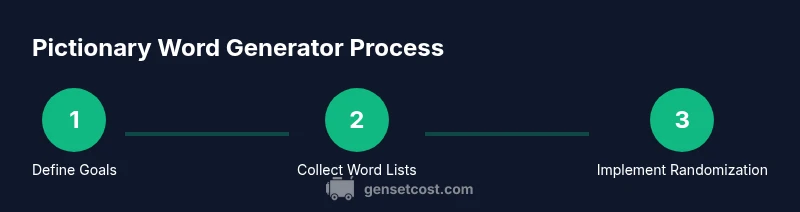
To get started, assemble several themed word lists. Each list becomes a category, such as Animals, Objects, and Actions. Normalize the data by converting to lowercase, trimming whitespace, and removing obvious duplicates. Implement a simple randomization routine that selects a category first (if needed) and then a random word from that category. Add a check to ensure a word hasn’t appeared in the current session more than once. This foundational approach scales when you add length constraints or filters.
Customization Options: Categories, Difficulty, and Themes
A strong generator is customizable. Allow users to add or remove categories, set a maximum word length (for quick rounds) or minimum length (for more challenging prompts), and choose a theme (fun animal names vs. everyday objects). You can also introduce a difficulty slider that nudges players toward longer or less common words, and you can implement category presets for different age groups. Customization keeps the game fresh across repeated sessions.
Use Cases and Scenarios
Different environments call for different prompt strategies. A family night benefits from kid-friendly categories and short words, while a classroom setting might include more descriptive terms and action-based prompts. Corporate events can leverage themed categories like “team-building objects” or “industry terms.” By tailoring word lists to your audience and context, you keep engagement high and reduce downtime between rounds.
Quality Controls: Filtering and Accessibility
Content quality is crucial for inclusive play. Implement safe word filtering to remove offensive terms and slang, and consider a readability check so prompts are understandable to the oldest players. Provide accessibility options, such as a text-to-speech read-aloud for prompts and color-contrast considerations in any user interface. Regular audits of word lists help maintain a respectful, enjoyable game experience for everyone involved.
Data Sources and Word Lists: Where to Source Words
Word lists can come from a variety of places: public domain dictionaries, educational resources, and carefully curated open lists. If you license lists, ensure the terms fit your audience and usage context. Start with broad categories (animals, objects, actions) and progressively refine with user feedback. Remember to document sources and license terms for any lists you reuse or publish.
Performance and Scalability: Handling Large Word Pools
For small clubs or family games, a few hundred words per category are sufficient. If your tool grows to thousands of words across many categories, consider lazy loading prompts, caching recently used words, and pruning stale terms. Efficient data structures and a lightweight randomization algorithm keep response times fast and the interface responsive, even on slower devices.
Integrating a Word Generator into Apps or Games
A generator can power a mobile app, a web widget, or a chatbot adventure. Expose a simple API or a clean user interface that lets players choose a category, set length, then click a button to receive a prompt. Consider adding a “shuffle” feature that cycles through several potential prompts before finalizing one. This flexibility makes the tool useful for virtually any party game or classroom activity.
Sample Word Lists and Categories: A Quick Preview
Typical categories include Animals, Everyday Objects, Verbs/Actions, and Phrases (short ones to fit drawing time). Example words might be: Animal — lion, giraffe, octopus; Object — umbrella, bicycle, calculator; Action — jumping, flying, cutting. You can also create seasonal or event-specific lists to fit holidays or themes, while ensuring age-appropriateness and clear, drawable concepts.
Maintenance and Updates: Keeping It Fresh
Regularly refresh lists by adding new terms, retiring overused prompts, and incorporating user-submitted words with moderation. Schedule light audits quarterly to ensure content quality and consistency with your audience. Versioning your word lists helps track changes and roll back if a new term proves problematic. A well-maintained generator stays relevant and fun over time.
Tools & Materials
- Computer with internet access(Any OS; Windows, macOS, or Linux)
- Text editor or IDE(VS Code, Sublime Text, or equivalent)
- Programming runtime(Python 3.x or Node.js for JavaScript implementations)
- Word lists (text files)(Plain text, one word per line; multiple categories encouraged)
- Notebook or planning tool(For outlining categories and rules before coding)
- Optional UI framework(React, Vue, or vanilla HTML/JS for a frontend)
Steps
Estimated time: 1-2 hours
- 1
Define goals and constraints
Identify who will use the generator and what outputs are required (text prompts, JSON, or UI). Set basic constraints such as categories, maximum length, and minimum unique prompts per session.
Tip: Document target audience and output format before coding. - 2
Collect word lists and categories
Assemble themed word lists (animals, objects, actions). Normalize by lowercasing, trimming, and removing obvious duplicates.
Tip: Keep the initial pool small and expandable. - 3
Clean, normalize, and deduplicate
Convert terms to a consistent format, remove near-duplicates, and filter out terms that could cause confusion during drawing.
Tip: Create a simple script to automate cleanup. - 4
Implement randomization logic
Develop a function that selects a category (optional) and then a random word from that category, ensuring no repeats within a session.
Tip: Prefer a secure RNG for reliability, especially in larger groups. - 5
Add filters and accessibility checks
Incorporate age-appropriate filters and optional text-to-speech read-aloud for prompts.
Tip: Test prompts with a diverse group to catch edge cases. - 6
Build UI or API for usage
Create a simple interface or API that lets users pick category, set length, and request prompts.
Tip: Keep the interface uncluttered and intuitive. - 7
Test and iterate with real users
Run quick playtests, collect feedback, and refine lists and rules accordingly.
Tip: Document feedback and version changes for growth.
People Also Ask
What is a Pictionary word generator?
A Pictionary word generator is a tool that selects random prompt words from categorized lists to fuel drawing rounds. It saves time, ensures variety, and makes scaling easier for larger groups or classrooms.
A Pictionary word generator picks random words from categories to power your drawing rounds.
How do I start building one from scratch?
Begin by outlining goals, gather themed word lists, normalize and clean your data, implement a simple random selector, and add optional filters for age-appropriateness and repeats.
Start with goals, gather lists, clean them, add a random picker, and filter for safety.
Can I customize categories and difficulty?
Yes. Allow users to add or remove categories, set length constraints, and offer a difficulty toggle that influences word rarity or word length.
Absolutely—categories and difficulty can be customized for different ages and groups.
How do I ensure content is age-appropriate?
Implement explicit filtering, establish allowed word-length ranges for various ages, and consider a kid-friendly mode that excludes complex terms.
Filter out inappropriate terms and tailor word length to the audience.
What are common challenges when creating prompts?
Maintaining balance between easy and hard words, avoiding repeats, and keeping lists updated with fresh terms can be tricky without a structured process.
Balancing difficulty, avoiding repeats, and keeping lists fresh are common hurdles.
Which tools are best for quick prototypes?
A lightweight Python script or a small Node.js app works well for prototypes. For UI, simple HTML/JS or a basic React component is sufficient.
Try a simple Python or Node.js script for a quick prototype, then add a UI if needed.
Watch Video
Key Takeaways
- Define clear goals and audience before building.
- Start with a manageable word pool and grow it.
- Use simple randomization with de-duplication.
- Keep content safe and accessible for all players.