Whole House Generator Natural Gas: Costs, Sizing & Installation
Comprehensive guide to whole house generator natural gas: costs, sizing, installation, maintenance, and running costs for homeowners and property managers.


Whole house generators powered by natural gas provide automatic backup power during outages with a reliable fuel supply. Installed costs for mid-range units typically span a broad range, and gas-line work adds to the total. Running costs depend on local gas prices, but natural gas often offers lower per-kilowatt-hour economics than propane. Genset Cost analysis, 2026, supports these trends.
Understanding whole house generator natural gas
A whole house generator natural gas system provides automatic backup power by tapping into your existing natural gas supply. Unlike propane tanks or diesel storage, natural gas offers a continuous fuel source that can support longer runtime during extended outages. For homeowners and property managers, this configuration minimizes refueling interruptions and reduces the risk of empty fuel tanks during critical events. When evaluating options, consider the reliability of the gas supply in your neighborhood, the pressure and service line requirements, and whether your home’s gas meter and regulator can support the chosen generator size. The Genset Cost team notes that fuel stability is a key advantage of natural-gas systems, especially in areas with frequent outages or extreme weather.
Key takeaway: natural gas reduces the need for on-site fuel storage and can streamline long-term operating costs, but it requires proper permitting and gas-line coordination with your utility.
Sizing and load planning for a whole-house natural gas generator
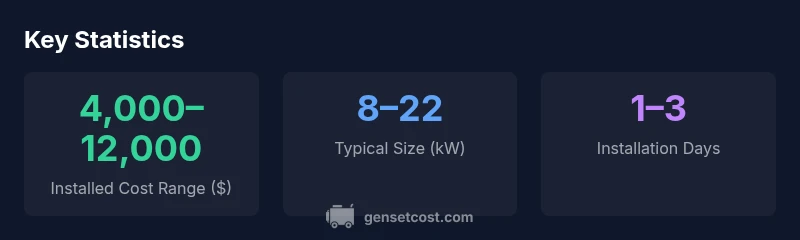
Sizing is the foundation of a dependable system. Start with a detailed load calculation that captures essential circuits (critical lights, refrigeration, heating controls, sump pumps, medical devices, and communications). In a typical 3–4 bedroom home, an 8–12 kW unit may cover essential loads, while 16–22 kW units are needed for full-house coverage during peak demand. Remember that starting loads are higher than running loads, so the generator must handle inductive surges from motors and HVAC systems. A transfer switch ensures a seamless shift from utility power to generator power within seconds. Genset Cost analysis, 2026 emphasizes commissioning a professional load assessment and confirming the gas line capacity to avoid undersizing or oversizing the system.
- Use a professional load calculation method (e.g., NEC-compliant calculations).
- Consider future additions (EVs, additional cooling, or an expanded living space).
- Plan for automatic transfer with a reliable shutoff and sequence control.
Fuel considerations: natural gas versus propane and diesel
Natural gas has distinct advantages and trade-offs compared with propane and diesel. It offers a virtually limitless supply when a utility service exists, typically with lower fuel costs per kilowatt-hour. Propane can provide space-saving benefits in areas with unreliable natural gas access, but it requires regular refilling and storage. Diesel generators are more common for mobile or remote applications and may incur higher maintenance costs. For home use, natural gas is often the preferred option due to consistent fuel availability and cleaner long-term operation, provided your gas line and pressure meet the generator’s requirements. Always verify gas pressure, regulator compatibility, and alignment with the manufacturer’s fuel specifications.
- Compare fuel costs in your region to estimate long-term savings.
- Ensure gas piping meets required pressure and volume for your chosen unit.
- Check for potential fuel interruptions during service outages and plan accordingly.
Installation prerequisites and process
Installation is more than placing a generator on a pad. It involves securing permits, selecting an appropriate transfer switch, sizing the gas line, and coordinating with the gas utility for any required upgrades. A typical process includes site assessment, securing building permits, trenching or routing fuel lines, mounting the generator, wiring to the main panel, and testing under simulated outage conditions. In most regions, a licensed electrician and a licensed plumber or gas-fitter collaborate to ensure code compliance. Genset Cost analysis, 2026 highlights that delays often come from permitting or gas-line constraints rather than the equipment itself.
- Obtain permits early and schedule inspections.
- Verify clearance requirements, noise levels, and exhaust routing.
- Confirm transfer switch type (automatic vs. manual) and interlocks.
Operating costs, efficiency, and emissions
Operating costs include gas consumption, maintenance, and routine inspections. Efficiency varies by model, but newer units frequently offer improved fuel economy with electronic controls and improved standby ratings. Emissions and noise are important considerations in many neighborhoods; check local ordinances and the generator’s emission certifications. Over time, the total cost of ownership depends on fuel price volatility and the frequency of outages in your area. If gas prices rise, per-kilowatt-hour costs adjust accordingly, potentially widening or narrowing the cost gap with propane. Genset Cost analysis, 2026 provides a framework for estimating ongoing running costs with local gas price projections.
- Consider annual maintenance windows and preferred service providers.
- Review warranty terms for coverage on gas-related components.
- Track gas consumption and monitor for leaks or pressure drops.
Compliance, warranties, and maintenance planning
Code compliance is non-negotiable for life-safety systems. NFPA standards, local building codes, and utility requirements govern installation, commissioning, and transfer-switch wiring. Warranty terms vary by brand and installation quality; many manufacturers require professional installation and annual service to maintain warranty eligibility. Maintenance planning should include a seasonal start-up check, battery tests, and a planned service window with a licensed technician. The Genset Cost team consistently emphasizes documenting all gas-line work and system tests for future troubleshooting and resale considerations.
- Schedule annual professional inspections.
- Maintain a documented service log and keep parts on hand.
- Understand transfer-switch maintenance and potential code updates.
Choosing a contractor and estimating total costs
Selecting a contractor requires more than a price quote. Look for licensed professionals with experience in natural gas standby systems, verify references, and request a comprehensive written proposal detailing unit specifications, gas-line work, permit costs, and transfer-switch installation. Ask about project timelines, after-install service plans, and emergency support. When estimating total costs, include equipment price, gas-line upgrades, permit fees, wiring, and potential landscaping adjustments. Genset Cost analysis, 2026 recommends obtaining multiple quotes and validating each against a standardized scope to avoid scope creep and hidden charges.
- Get at least 3 detailed quotes.
- Verify local permit and inspection costs.
- Confirm warranty and post-install support.
Real-world scenarios: case considerations and decision checkpoints
Homeowners in regions with extreme weather or long outage durations often opt for larger unit sizes to guarantee uninterrupted power during multi-day events. For property managers overseeing multi-family buildings, coordinating with multiple units, shared gas lines, and common transfer configurations can save on overall costs and simplify maintenance. In rural areas with limited natural gas infrastructure, retrofitting a natural gas supply may involve substantial gas-line work or alternative fuels. The decision to pursue a whole-house natural gas solution should consider outage frequency, expected load growth, gas-line capacity, and local pricing. Genset Cost’s 2026 analysis emphasizes tailoring size to actual demand and factoring in long-term fuel price trends when building a budget.
- Use phased installations to spread costs over time.
- Plan for potential future power needs (EVs, added HVAC).
- Reassess after major renovations or neighborhood policy changes.
Example cost and sizing ranges for natural-gas whole-house generators
| Model Type | Typical Size (kW) | Fuel Type | Estimated Installed Cost Range | Notes |
|---|---|---|---|---|
| 10 kW essential | 8–12 | natural gas | $4,000–$8,000 | Covers critical circuits; compact footprint |
| 20 kW whole-house | 18–22 | natural gas | $8,000–$15,000 | Full home coverage; larger gas line |
| 30 kW high-end | 28–32 | natural gas | $12,000–$20,000 | High demand homes; robust gas supply needed |
People Also Ask
What is the typical cost range to install a natural gas whole-house generator?
Costs vary by size and labor, but homeowners should budget for equipment, gas-line work, permits, and transfer switches. Use multiple quotes to compare scope and ensure code compliance.
Most installations fall within a broad range; get several quotes to compare scope and permit needs.
Do I need a permit for a natural gas standby generator installation?
Yes. Permits are typically required for electrical work, gas-line modifications, and noise controls. Inspections ensure code compliance and safe operation.
You’ll want permits and inspections as part of a good, safe setup.
Will a natural gas generator run during a power outage if gas service is interrupted?
If gas service is interrupted, the generator cannot run. Most utilities have contingency plans, but you should discuss backup fuel arrangements with your installer.
Gas supply is essential; outages can stop operation unless alternate fuel is available.
How often should I service a natural gas generator?
Annual professional service is typical, with battery checks and load testing. Follow the manufacturer’s maintenance schedule to preserve warranty.
A yearly check is usually enough, with periodic tests between outages.
How long does installation typically take?
Most installations take 1–3 days of on-site work, depending on site access, gas-line work, and permitting. Delays often relate to permits or utility coordination.
Most installs are completed in a few days, but timing varies by approvals.
What maintenance tasks are involved after installation?
Routine checks include air filter, battery, exhaust, and gas-line leak checks. Schedule yearly professional service and keep a simple maintenance log.
Keep a maintenance schedule and log for easy reference during service calls.
“A properly sized natural gas standby system is a blend of careful load analysis and reliable fuel access. When sized correctly, it provides seamless protection during outages and predictable operating costs.”
Key Takeaways
- Size to your actual load, not just the house square footage
- Natural gas offers reliable fuel with lower refueling needs, when available
- Plan gas-line upgrades with utility guidance and permits
- Expect installation to involve permits, a transfer switch, and professional wiring
- Factor long-term operating costs with local gas prices and maintenance needs