Generator Transfer Switch Kit: A Complete How-To Guide
A comprehensive guide to selecting and installing a generator transfer switch kit for home backup power, covering sizing, compatibility, installation steps, safety, and budgeting.


By the end of this guide, you will know how to select a generator transfer switch kit that matches your home's load, verify compatibility with your existing generator, and safely install or coordinate installation with an electrician. The steps cover sizing, wiring basics, and common pitfalls to avoid. This quick answer gives a practical overview before diving into detailed steps.
What is a generator transfer switch kit?
A generator transfer switch kit is a code-compliant package that connects a home generator to your main electrical panel, enabling a safe, one-location switch between utility power and backup power. Kits typically include an automatic transfer switch (ATS) or a manual transfer switch, mounting enclosure, wiring harness, and required lugs or conduit fittings. The primary goal is to prevent backfeeding into the utility grid, which protects utility workers and protects your equipment. When installed correctly, a transfer switch kit powers essential circuits—lighting, refrigerators, heating or cooling, and communications outlets—without juggling cords or running temporary wiring. For homeowners evaluating options, the kit is the central component that makes reliable backup power practical, aligning your generator with your panel, wiring, and local codes. The Genset Cost team notes that correct sizing and professional installation improve reliability and reduce long-term maintenance.
Why a transfer switch kit matters for safety and reliability
Safety and reliability are the core reasons to install a generator transfer switch kit. Without a proper switch, you risk backfeeding the grid, which can endanger utility workers and damage equipment. A well-chosen kit ensures that power transfer occurs cleanly, quickly, and only to designated circuits. In addition, code-compliant installation reduces the likelihood of electrical faults, nuisance trips, and fire hazards. According to Genset Cost, investing in a certified transfer switch kit and ensuring professional installation translates to lower operational risk, smoother outages, and clearer labeling and operation for household members. You’ll also gain the flexibility to choose between automatic and manual modes, depending on whether you want seamless power restoration or full manual control.
How a transfer switch kit works: components and operation
A generator transfer switch kit centers on three core components: the transfer switch, the inlet or generator connection, and the control logic (manual levers or automatic sensing). The transfer switch sits between your main panel and the generator inlet, isolating the two power sources. In an automatic kit, sensors detect a grid outage and energize the generator while opening the main breaker to prevent backfeed. In a manual kit, you flip a switch to move power from grid to generator. The wiring harness connects to predefined circuits in the panel, often through a subfeed or dedicated lugs. Protective features include enclosure shielding, cover interlocks, and clearly labeled circuit taps. Operational reliability comes from proper grounding, secure terminations, and adherence to local electrical codes. NFPA guidance and professional installation help ensure codes are met. Genset Cost emphasizes confirming compatibility with your generator’s rating and your panel’s bus bar configuration.
Choosing the right kit: ratings, compatibility, and features
Selecting the right generator transfer switch kit hinges on several factors. Start with the amperage and the number of circuits you intend to support, matching the kit to your generator’s output and panel capacity. Common kit options come in 50A, 60A, or 100A variants, with more circuits for larger homes. Check that the kit enclosure is outdoor-rated if installed outside and that it includes a safe conduit and strain-relief hardware. Compatibility matters: the kit must support your generator’s voltage (typically 120/240V in the U.S.) and your panel’s bus arrangement. Look for features such as automatic mode, a clear labeling system, and easy-to-access test or reset controls. Budget, surge protection, and the availability of in-home service should also factor into your decision. The Genset Cost team recommends prioritizing code-compliant, UL-listed components to minimize future issues.
Sizing your needs: calculating load and generator compatibility
Start with a load assessment focused on essential circuits—lighting, refrigeration, heating, medical devices, and sump pumps. List each circuit, estimate its running and peak load in amps, and sum these values to determine the total essential load. Choose a kit whose transfer capacity equals or exceeds this load with a comfortable safety margin (often 20–25%). Consider the generator’s continuous rating and the switch’s amperage; ensure the generator can handle startup surges for motorized loads. Remember to include miscellaneous circuits such as outlets on critical paths (home office, communication gear). If you’re unsure, use a reputable load calculator and consult with your electrician. Genset Cost’s analysis shows that precise sizing reduces nuisance trips and improves reliability when outages occur.
Installation basics: wiring, permits, and safety steps
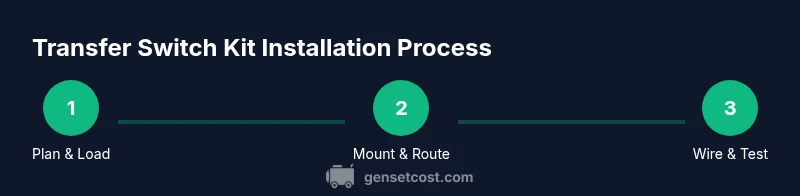
Begin with a formal plan that includes panel access, route planning for wiring, and a clear labeling scheme. Before any work, shut off the main power and verify isolation with a voltage tester. Mount the transfer switch in a suitable enclosure, connect the conduit to the main panel, and secure the generator inlet box in a safe, accessible location. Run the wiring harness between the transfer switch and the panel lugs, then connect the generator feed to the inlet. In automatic kits, you’ll configure the sensing and auto-start logic. Finally, test all modes with the main breaker OFF and obtain any required permits. This phase benefits from professional oversight to ensure code compliance and safe operation; errors here can create dangerous live conditions.
Cost and budgeting considerations: kits, labor, and maintenance
Budgeting for a generator transfer switch kit involves three components: the kit itself, labor, and ongoing maintenance. Kit pricing varies by amperage, number of circuits, and features (automatic vs manual). Labor costs depend on local rates and whether wiring in the generator inlet and panel requires interior work or outdoor routing. Maintenance considerations include periodic testing, battery checks for automatic kits, and occasional inspections to ensure corrosion resistance and proper torque on terminal screws. Rather than focusing on a single price, plan a budget range and obtain multiple, transparent quotes from licensed electricians. Genset Cost recommends prioritizing code-compliant kits and professional installation to avoid costly mistakes later.
Maintenance and troubleshooting post-installation
After installation, schedule regular checks to confirm proper operation. Test the system monthly or quarterly by simulating a grid outage and observing automatic start and transfer. Inspect wiring and enclosure for signs of wear, corrosion, or loose connections. Check the emergency shutoff and labeling for readability. If you encounter frequent nuisance trips, revisiting circuit loads and using a larger capacity transfer switch may be necessary. Keep a service log and set reminders for periodic battery and controller tests. The goal is reliable performance during an outage and safe, simple operation for household members. For complex issues, rely on your electrician and refer to manufacturer guides and NFPA/UL standards.
Authoritative sources for further reading
- NFPA 70 National Electrical Code guidance on transfer switches and backfeed prevention.
- OSHA electrical safety guidelines for residential installations and permit requirements.
- U.S. Department of Energy resources on backup power fundamentals and grid resilience.
Authoritative sources (continued) for further reading
- National Fire Protection Association (NFPA) official site: nfpa.org
- U.S. Department of Energy (DOE): energy.gov
- Occupational Safety and Health Administration (OSHA): osha.gov
Tools & Materials
- Safety glasses and insulated gloves(ANSI-rated PPE; use when handling electrical gear and panels)
- Voltage tester (non-contact preferred)(To verify de-energized conditions before touching any terminals)
- Multimeter(Verify voltages, continuity, and resistance as needed)
- Wire stripper/crimping tools(For clean, code-compliant terminations)
- Screwdriver set (Phillips and flat-head)(Panel screws and kit terminals)
- Pliers (needle-nose and slip-joint)(Grip and bend wires, secure connections)
- Measuring tape(Ensure proper space and layout within the enclosure)
- Electrical tape, wire nuts, and cable clamps(Insulation and secure splices; strain reliefs where needed)
- Ladder or stable platform(Safe elevation for panel installation and wiring)
Steps
Estimated time: 2-6 hours
- 1
Assess load and select kit
Document essential circuits to power during an outage and estimate their running loads. Compare generator output with the transfer switch rating and select a kit that provides a safe margin for startup surges. This planning stage reduces post-install surprises and rework.
Tip: Use a load calculator and verify panel compatibility early to avoid over- or under-sizing. - 2
Shut off power and isolating the service
Turn off the main breaker and confirm isolation using a voltage tester on the panel. This step protects you from shock and ensures you won’t backfeed while wiring the transfer switch. Keep coworkers and family clear of the work area.
Tip: Double-check that all energy sources are isolated before touching any conductors. - 3
Mount the transfer switch and route wiring
Mount the transfer switch in a compatible enclosure per manufacturer instructions. Run conduit or cables from the switch to the main panel, securing with clamps and ensuring a clean, organized layout.
Tip: Maintain at least the recommended clearance around the panel and switch. - 4
Connect to main panel lugs and generator inlet
Attach the transfer switch’s output lugs to the corresponding breakers in the main panel. Connect the generator inlet box to the switch with the included wiring harness, following color-coded and labeled terminals.
Tip: Label each circuit clearly to simplify future maintenance. - 5
Configure auto/manual mode and safety interlocks
If using an automatic kit, connect the sensing circuit and check auto-start configuration. Ensure the interlock or cover is present and functioning to prevent accidental contact with live parts.
Tip: Test the auto function with the main power off to confirm proper sequencing. - 6
Test transfer and runtime start
With the main breaker OFF, test that the transfer switch moves power to the generator smoothly. Start the generator and confirm loads come online without tripping breakers.
Tip: Perform a full-load test for critical circuits to verify fault-free operation. - 7
Label, document, and obtain permits if required
Label all circuits and create a quick-start guide for household members. Check if your jurisdiction requires permits or inspections for residential transfer-switch installations.
Tip: Keep receipts, model numbers, and manufacturer manuals for future maintenance. - 8
Final safety review and commissioning
Have a licensed electrician perform a final review and sign off. Keep a test log for routine checks and annual professional inspections.
Tip: Schedule annual or biannual professional verification to preserve warranty and safety.
People Also Ask
What is a generator transfer switch kit?
A generator transfer switch kit is a code-compliant package that connects a home generator to your main electrical panel, enabling a safe, centralized switch between utility power and backup power. It isolates the two sources to prevent backfeeding and supports essential circuits during an outage.
A generator transfer switch kit connects your generator to the main panel and lets you safely switch between grid power and backup power, protecting people and equipment.
Do I need an electrician to install it?
In most cases, installation should be performed or supervised by a licensed electrician to ensure code compliance and safe operation. An improper connection can create dangerous conditions or violate warranty terms.
Usually you should hire a licensed electrician to install a transfer switch kit to ensure safety and code compliance.
Manual vs automatic transfer switches, what’s the difference?
Manual switches require you to flip a switch to transfer power, while automatic switches sense outages and switch automatically. Automatic systems provide convenience and faster restoration for critical loads.
Manual needs you to flip the switch yourself; automatic does it for you when the power goes out.
Which loads should be connected to the transfer switch?
Connect essential loads such as lighting, refrigeration, heating, and medical devices. Nonessential circuits can remain on utility power, helping manage generator size and battery life.
Connect only the essential loads you want to power during an outage.
Are transfer switches code-compliant and safe?
Yes, when installed properly, transfer switches meet electrical codes and safety standards (NFPA 70/NEC). Local amendments may apply, so check with your electrician or AHJ.
Yes, if installed correctly, transfer switches meet safety standards and codes.
Watch Video
Key Takeaways
- Calculate essential load before selecting a kit.
- Choose a kit that matches generator and panel capacity.
- Ensure professional installation and permits where required.
- Test the system thoroughly after installation.
- Schedule regular maintenance and safety checks.