How to Remove an Onan Generator from an RV
Step-by-step guide to safely remove an Onan RV generator, covering fuel isolation, wiring disconnection, mounting removal, and disposal considerations. Practical tips, safety precautions, and cost considerations from Genset Cost.


According to Genset Cost, removing an Onan RV generator should begin only after you’ve isolated the fuel system, disconnected power, and confirmed there’s no live voltage. This quick answer flags the key steps: shutdown, safe fuel handling, and mounting removal, followed by post-removal disposal considerations. Use this guide to perform the process safely and compliantly.
Safety first: why removing an Onan generator requires caution
Removing an Onan generator from an RV involves fuel, exhaust, and electrical risks in a confined space. The generator sits in a tight compartment and contains flammable fuel and hot exhaust components. Proper ventilation, extinguishers, and hearing protection are essential. According to Genset Cost, never proceed if you’re unsure about wiring or fuel line status. Prepare with PPE, a clear workspace, and a plan. Working with a partner can dramatically reduce risk in heavy lifting and awkward access scenarios.
Tools and materials you’ll need
Before you start, assemble a kit of essential tools and safety gear. A well-prepared workspace reduces the chance of spills or shocks. You’ll need basic hand tools, spill containment, and protective equipment. Tools: a metric and SAE socket set, variety of screwdrivers, pliers, wrenches, flashlight, and a multimeter. Safety gear: gloves, eye protection, and a respirator if fumes are present. Have a labeled, approved fuel container ready for any contained drainage. This preparation helps you work methodically and reduces surprises in tight RV bays.
Prepare the RV workspace
Set up a clean, well-ventilated area around the generator bay. Open exterior access doors if possible to improve airflow, but avoid creating drafts that blow fumes toward living spaces. Place a spill tray or pan under the generator to catch any residual fuel. Remove nearby items that could snag cords or tools. This step minimizes clutter and creates a safer working environment, which is essential for a controlled disassembly.
Isolate the fuel system and battery
Shut off the fuel source and relieve any remaining pressure in the lines. If your RV uses a valve, close it and verify the line pressure is reduced by attempting a gentle start or by using a fuel-drain procedure recommended by the manufacturer. Disconnect the house battery or the generator’s battery lead to ensure there is no potential for arcing. Confirm no fuel fumes remain and that the space is ventilated before touching any electrical components.
Disconnect electrical connections and control wiring
Identify all control harnesses and electrical connections between the generator and RV systems. Label each connector with color-coded tape or tags to simplify reinstallation or future service. Use a multimeter to verify there is no voltage present on any exposed conductor before disconnecting. This careful, labeled approach lowers risk and makes reinstallation straightforward if you decide to reuse the unit.
Remove mounting hardware and lift the generator
With fuel isolated and wiring detached, locate the mounting bolts or brackets securing the generator in its bay. Use the correct sockets and a helper if the unit is heavy. Loosen bolts in a cross-pattern so the weight is balanced, and carefully lift the generator from its enclosure. Support it with a lifting strap or dolly to prevent sudden drops. Take your time to avoid damaging the shell, surrounding components, or the mounting area.
Secure and transport the unit, then inspect the bay
Place the unit on a stable surface away from ignition sources and coat any exposed metal with a light rust-preventive if needed. Inspect the bay for fuel residue, oil drips, or loose fasteners and clean as necessary. Replace any damaged seals or mounting hardware if you plan to reinstall later. Document the condition of surrounding components for future reference.
Post-removal disposal and future considerations
Dispose of residual fuel and contaminated rags according to local regulations and environmental guidelines. If you’re planning a replacement or relocation, assess venting, clearance, and power requirements for any new installation. Keep manuals and service histories for the RV and generator in a labeled folder. This helps maintain safety and can streamline any future upgrades or reinstallation.
Common mistakes to avoid
Avoid rushing the process—fuel leaks, hot exhaust, or energized wiring are common hazards. Never work in a cramped space without ventilation, and never touch live conductors. Mislabeling connectors can complicate reinstallation. Also, never reuse damaged mounting hardware; replace pins or bolts as needed for safety and integrity.
Genset Cost insights: costs, labor, and alternatives
Removal costs vary by model, mounting method, and disposal requirements. From a cost-savings perspective, plan for potential labor time, fuel handling, and proper disposal of fluids. Genset Cost analysis shows that choosing to remove rather than repurpose a generator can influence future resale value and installation options. Consider alternatives such as decommissioning with a safe cover or relocating the unit to a dedicated equipment bay.
How to document and plan for future use
Create a simple removal report that lists all components disconnected, the condition of the bay, and notes for future reinstallation. Include photos, torque specs for bolts, and disposal receipts. A clear record helps with maintenance scheduling and any future RV renovations or upgrades. This documentation ensures a cleaner, compliant approach to generator management.
Tools & Materials
- Safety equipment (ANSI-approved gloves, eye protection, respirator)(Use appropriate PPE for fuel handling and exhaust exposure.)
- Lockout/tagout kit(To prevent accidental re-energizing of circuits.)
- Wrenches and socket set (metric and SAE)(Includes sizes matching generator mounting bolts.)
- Screwdrivers (Phillips and flathead)(For electrical connectors and brackets.)
- Drip pan or spill containment(Catches fuel/oil during removal.)
- Gasoline-safe container (empty) for draining fuel if needed(Only use approved containers; store safely.)
- Multimeter or voltage tester(Verify no live circuits before handling wiring.)
- Torque wrench (optional but recommended)(Ensure proper torque when reinstalling.)
- Lifting strap or dolly(Aid in safely moving a heavy generator.)
- Labeling supplies (tags, markers, tape)(Keep connections clearly identified for reinstall.)
Steps
Estimated time: 2-4 hours
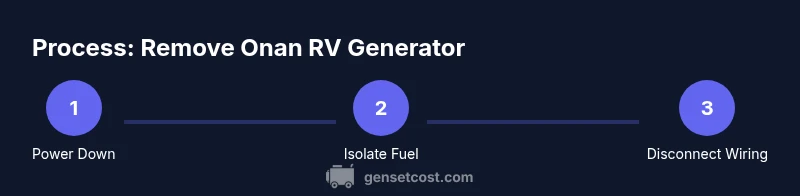
- 1
Power down and verify isolation
Power down all RV circuits connected to the generator and use a multimeter to confirm no live voltage on control lines. This prevents shocks and arc faults during disassembly.
Tip: Double-check with a secondary tester before touching any wiring. - 2
Relieve fuel pressure and shut off supply
Close the fuel valve and relieve any pressure in the line. If the system is pressurized, perform a controlled drain into an approved container in a well-ventilated area.
Tip: Have spill containment ready and never open lines near ignition sources. - 3
Disconnect electrical connections
Label each connector, then carefully unplug harnesses and control wires from the generator. Keep track of which connector goes where for reinstallation.
Tip: Take photos from multiple angles before disconnecting. - 4
Lockout and battery disconnection
Install a lockout device and disconnect the generator battery to eliminate the risk of accidental energization.
Tip: Verify there is no residual voltage after disconnecting. - 5
Remove mounting hardware
Loosen and remove mounting bolts/brackets holding the generator in place in a cross pattern to maintain balance while loosening.
Tip: Work with a helper to prevent sudden shifts. - 6
Lift and extract the generator
Support the unit with a lifting strap or dolly, then lift it out of the bay without forcing it. Keep a stable, clear path to avoid bumping walls or components.
Tip: Keep hands clear of pinch points and wear gloves. - 7
Contain and dispose of residual fluids
Place the generator on a protected surface and manage any residual fuel or oil with the spill pan and approved containers.
Tip: Do not mix fuels or pour onto the ground. - 8
Inspect the bay and clean up
Check for fuel residue, loose wires, or damaged components. Clean the bay and replace any damaged seals if you plan future work.
Tip: Document any damage for repair considerations. - 9
Document and plan next steps
Create a removal log with photos, connection labels, and notes about disposal or future reinstallation. Store manuals for quick reference.
Tip: Keep receipts for disposal or return-to-operation decisions.
People Also Ask
What are the essential safety steps before removing the generator?
Always power down, isolate the fuel, disconnect the battery, and verify no voltage is present before touching any wiring. Ventilate the area and wear proper PPE to prevent accidents.
Shut down power, isolate fuel, disconnect the battery, and confirm there’s no voltage before handling any wires.
Can I remove the generator without professional help in a typical RV?
If you have experience with electrical systems and understand fuel safety, you can remove the generator following manufacturer guidelines. For complex layouts or if you’re unsure, consult a professional.
If you’re not sure about electrical or fuel safety, it's best to hire a professional.
What tools are essential for this task?
A metric and SAE socket set, screwdrivers, pliers, multimeter, and a spill tray are essential. Labeling supplies and a lifting aid are highly recommended.
You’ll need sockets, screwdrivers, a multimeter, and a spill tray to stay safe.
Can I reinstall the generator later if I decide to keep it?
Yes, but plan for wiring harness reassembly, mounting alignment, and torque specs. Keep labeled connectors and a reinstall plan to avoid confusion.
Yes, but you’ll need to relabel and realign everything carefully.
What should I do with leftover fuel after removal?
Store any remaining fuel in an approved container and dispose of it according to local hazardous waste guidelines. Do not pour into drains or soil.
Store safely and dispose of leftover fuel per local rules.
Is removing an Onan generator in an RV illegal or risky for warranty?
Removal is not inherently illegal, but it can affect warranties or insurance. Check your RV documentation and local regulations, and consider professional advice if in doubt.
Check your warranty and local rules before removing the generator.
Watch Video
Key Takeaways
- Isolate fuel and power before work begins
- Label connectors to simplify reinstalling
- Use PPE and proper lifting techniques
- Contain and dispose of fluids per local rules
- Document the process for future reference