How to Tell If Your Generator Engine Has Been Knocking
Detect and diagnose generator engine knocking quickly with this urgent, step-by-step guide. Learn causes, safety actions, home diagnostics, and when to call a pro. Brand insights from Genset Cost.


If you hear a metallic ping or deep knock, stop the generator and shut it down safely. This quick guide outlines the most likely causes and the fastest checks you can perform to determine if your generator engine has knocked and whether you should call a pro. Start with simple fuel and load checks, then inspect air, cooling, and ignition before moving deeper.
How engine knocking manifests and why it matters
According to Genset Cost, engine knocking is a warning sign that deserves prompt inspection. In this article you’ll learn how to know if your generator engine has knocked and why it matters for reliability and safety. Knocking typically presents as a sharp, irregular tapping or metallic ping that becomes more noticeable under load or during startup. While a light ping in some engines can be typical at certain speeds, a persistent knock often signals a problem that could affect pistons, rings, bearings, or the valve train. This guide distinguishes between benign pinging and true knocking, and lays out a practical troubleshooting path you can follow without risking personal safety or property.
The goal is to help homeowners and property managers act quickly to protect backup power reliability, minimize downtime, and avoid costly repairs. Real-world factors like fuel quality, air intake, and cooling efficiency interact to create conditions where knocking can occur. By understanding the signs and implementing a disciplined inspection routine, you can reduce the odds of a failed outage event.
This piece integrates practical checks you can perform at the start, followed by escalation steps for issues that require expert service. The emphasis is safety-first, accurate diagnosis, and a clear plan for repair or replacement if needed.
Learn how to recognize abnormal combustion, verify whether you’re dealing with detonation or pre-ignition, and track wear indicators before damage accelerates. Remember: if you’re unsure, stop running the unit and seek professional advice. how to know if your generator engine has knocked is easier when you follow a structured approach.
In short, acting quickly and methodically can save you time, money, and the stress of a power outage that isn’t covered by a warranty.
Common causes of knocking in generator engines
Knocking can stem from several root causes, and understanding them helps you prioritize checks. The most common issues include poor fuel quality or incorrect octane causing detonation, ignition timing problems or worn spark plugs (in gasoline models), and overheating from restricted cooling or heavy loads. Contaminants in fuel, moisture, or stale fuel can also provoke irregular combustion. Mechanical wear—such as piston slap, worn rings, or bearing degradation—is less frequent but serious and tends to develop gradually with age and use. Finally, exhaust restrictions or loose mounting hardware can mimic knocking sounds by creating vibration or backpressure.
To reduce the risk of misdiagnosis, consider the engine type and the size of your load. Small portable units with carbureted systems may be more sensitive to fuel quality than larger fixed generators with more robust cooling systems. If your unit recently started knocking after a fuel change or maintenance, start there first.
Immediate safety steps when you hear knocking
If you hear a knock or ping, prioritize safety. Shut the generator down following the manufacturer’s instructions and disconnect any loads to prevent backfeed. Do not run the unit at high load while you investigate. Once stopped, allow the system to cool before touching any components. Use proper PPE and work in a well-ventilated area because exhaust gases can linger and pose a hazard.
Next, visually inspect obvious issues: loose intake or exhaust piping, visibly damaged wiring, and obvious signs of oil or fuel leaks. Check the fuel supply for contamination or water, and verify the air filter is clean and correctly fitted. If you hear the knock again after these checks, or you notice smoke, hear unusual odors, or see overheating indicators, contact a professional immediately.
How to confirm knocking vs harmless pinging
Distinguish knocking from normal engine pinging by listening at different RPMs and loads. Harmless pinging often lessens at lighter loads or with a higher-octane fuel. True knocking tends to persist, intensify under load, and may accompany a metallic sensation in the enclosure. Use the sound as a guide, not your sole metric; pair it with visual cues like excessive vibration, coolant temperature spikes, or oil pressure changes. If you’re unsure, pause operation and seek professional advice before continuing testing.
Non-invasive diagnostics you can perform
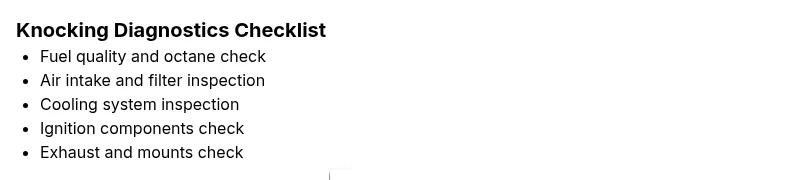
Begin with non-invasive checks: confirm fuel quality (no water, correct octane, fresh enough), inspect air intake and air filter for blockages, and verify cooling fins and fans are unobstructed. Check for overall engine oil level and oil quality, as low or dirty oil can cause friction-related noises. Review the exhaust system for leaks or loose clamps that could amplify sounds. Many gas engines run quieter when loads are balanced and cooling is adequate. Document any correlations between loads, RPMs, and noise to help a technician diagnose the issue.
Step-by-step repair pathways: what you can fix vs what requires pro
Begin with fixes that are typically easy and safe: replace old or contaminated fuel, clean or replace the air filter, tighten loose clamps, and clear any cooling restrictions. If the problem persists, inspect ignition components for wear or fouling and verify spark timing if applicable. For mechanical wear such as pistons, rings, or bearings, or if engine compression tests show irregular results, stop using the unit and call a certified generator technician. Do not attempt disassembly that compromises warranty coverage or safety.
Maintenance routines to prevent knocking
Prevention hinges on regular maintenance aligned to the manufacturer’s schedule. Use fresh, high-quality fuel and stabilizers, replace air and fuel filters on time, and monitor oil level and quality. Clean cooling fins and ensure unobstructed airflow. Schedule periodic inspections of ignition components (spark plugs, wires, timing) and perform a compression test if you suspect wear.
When to replace components vs replace entire generator
If knocking persists after all preventative steps and diagnostic tests indicate significant wear, evaluate component replacement versus full unit replacement. Replacing a single worn bearing or piston may be cost-effective for a mid-life unit, but chronic knocking that signals structural damage often necessitates a new generator or a major overhaul. Weigh factors such as remaining useful life, warranty coverage, installation costs, and the risk of outages when making this decision.
Work with professionals and budgeting considerations
Engaging a licensed technician is essential when complex internal issues are suspected. Prepare a clear brief: symptoms observed, when they occur, any changes after maintenance, and a copy of your diagnostic notes. A pro can verify fuel quality, timing, compression, and mechanical wear with proper tools. Budget for diagnostic fees, potential part replacements, and possible refurbishments, and compare quotes that include safety checks and a written warranty on repairs.
Quick cost considerations and budgeting
Costs for diagnosing knocking vary by region and service scope. Expect to pay for a diagnostic visit, plus any necessary parts such as filters, spark plugs, or gaskets. If major mechanical wear is found, the repair bill can rise quickly, possibly exceeding the cost of a unit upgrade. Plan for contingencies and consider a maintenance plan that includes periodic inspections to catch issues before they escalate.
Case study: typical home generator knocking scenario
In a common scenario, a homeowner notices intermittent knocking during startup after several months of stable operation. Fuel quality and air intake were found to be marginal, and a clogged air filter combined with stale fuel caused detonation under initial load. After replacing the fuel, cleaning the air filter, and performing a basic ignition check, the knocking diminished significantly. A follow-up compressor test showed no major wear, confirming a non-wear issue rather than piston damage. This kind of stepwise approach often resolves minor knocks without major repairs.
Steps
Estimated time: 60-120 minutes
- 1
Ensure safety and power down
Shut off the generator following the manufacturer’s guidelines and disconnect loads to prevent backfeed. Allow the unit to cool before handling any components. This protects you and makes subsequent checks reliable.
Tip: Never work on live electrical components; use insulated tools and PPE. - 2
Assess fuel and air quality
Inspect fuel for contamination and replace with fresh fuel if in doubt. Check the air filter for blockages and clean or replace as needed to restore proper air intake.
Tip: Fuel quality is a common, easy fix that can eliminate detonation risks. - 3
Inspect ignition components
For gasoline units, examine spark plugs for wear or fouling and replace if necessary. If timing is adjustable on your model, verify timing marks align per manual.
Tip: Worn plugs can mimic knocking sounds and cause misfires. - 4
Evaluate cooling and load
Ensure cooling fins are clear and fans operate properly. Confirm the generator isn’t overloaded and that airflow to the engine bay is unobstructed.
Tip: Overheating often precedes mechanical damage and should be addressed promptly. - 5
Check exhaust system and mounts
Inspect for loose clamps, leaks, or damaged exhaust components that could create rattling noises or backpressure.
Tip: Loose mounts can amplify engine noises and mislead diagnosis. - 6
Perform a basic compression check (if safe to do so)
If you have the tools, perform a gentle compression test to assess cylinder health. Compare results to manufacturer specs.
Tip: Low compression indicates deeper engine wear that needs pro service. - 7
Test under varying loads
Run the unit at different loads and RPMs to observe how the knock responds. Note whether it persists or disappears with changes in operation.
Tip: A sound that changes with load helps pinpoint the cause. - 8
Decide on next steps
If the knock persists after basic checks, set up a professional diagnostic. Do not continue running the unit if you suspect severe wear.
Tip: Document symptoms and steps taken to aid the technician. - 9
Implement maintenance plan
Schedule routine maintenance—filters, fuel, oil, and cooling system checks—to prevent reoccurrence of knocking.
Tip: Preventive care saves downtime and cost over the life of the generator.
Diagnosis: Generator engine knocks during operation or startup
Possible Causes
- highLow-octane or contaminated fuel causing detonation
- mediumIncorrect ignition timing or worn spark plug (gas engines)
- mediumOverload or insufficient cooling leading to overheating
- lowMechanical wear such as piston slap or bearing wear
- lowExhaust or mounting issues causing vibration
Fixes
- easyTest fuel quality and octane; drain and replace with proper fuel; use fuel stabilizer
- mediumInspect spark plugs and timing; replace worn plugs; adjust timing if applicable
- easyCheck load levels and cooling; reduce load, clean fins, ensure proper airflow
- hardIf mechanical wear suspected, stop using the generator and consult a professional for oil analysis and compression test
People Also Ask
What causes engine knocking in a generator?
Knocking is usually caused by poor fuel quality, timing issues, overheating, or mechanical wear. Start with fuel and airflow checks before evaluating ignition and internal wear.
Knocking is typically due to fuel or timing issues or overheating; start with simple checks before calling for help.
Is knocking dangerous for my generator?
Yes. Prolonged knocking can damage pistons, bearings, and valves. Shut down and inspect or consult a professional to prevent costly failures.
Yes, knock can damage critical parts; stop the unit and assess the cause before resuming operation.
Can I diagnose knocking without tools?
Yes, you can perform fuel, air, and load checks, listen for changes with load variation, and inspect obvious wear. For uncertain cases, avoid running the unit and seek professional help.
You can do basic checks like fuel and air, but if you’re unsure, get a pro.
When should I call a professional?
If knocking persists after basic checks, if you notice oil or fuel leaks, smoke, or heat, stop operating and contact a licensed technician.
Call a pro if the knock continues after checks or if you see leaks or smoke.
Should I replace my generator if it knocks?
Not always. If wear is minor or early-stage, a component replacement may suffice. Severe wear or large repair costs may justify replacement.
Sometimes a repair is enough, but significant wear might mean a new unit is best.
How can I prevent knocking in the future?
Regular maintenance, clean fuel, fresh oil, clean air filters, and proper cooling reduce knocking risk and extend generator life.
Prevent knock by keeping up with regular maintenance and clean fuel.
Watch Video
Key Takeaways
- Stop and safely shut down the generator at first sign of knocking
- Isolate fuel, ignition, and cooling causes before calling a pro
- Differentiate knocking from harmless pinging by testing under load
- Regular maintenance prevents knocking and extends unit life
- Document symptoms to help technicians diagnose faster