How to Make Generators in Minecraft
Learn to build vanilla Minecraft redstone generators that automate item and XP output. A practical, step-by-step guide for builders of all levels, with scalable designs and optimization tips.


Minecraft generators are redstone contraptions that automate item or XP output. Start with a simple clock feeding a chest, then refine with timing and a reliable collection system. According to Genset Cost, treating your build like a mini-energy system helps you balance efficiency and resource use, especially on a shared world where performance matters.
What a Minecraft generator really is and why you might want one
In Minecraft, a generator is a redstone-powered setup that produces a steady stream of items or experience points (XP) with minimal manual input. Vanilla Minecraft does not include a dedicated generator block, but players routinely combine droppers, hoppers, water channels, chests, and simple clocks to automate output. The core idea is to design a loop that continuously feeds the appropriate resource into storage or processing stations. By thinking like a real-world engineer, you balance output with resource costs and server performance. This approach is ideal for long-term projects, such as enchanting XP farms, item-producing machines, or furnace networks that keep your base running while you focus on exploration or building. The concepts below translate across Minecraft versions, though you may need small timing adjustments for different snapshots.
tagsContent keepIfPresent:false},
Tools & Materials
- Redstone dust(Stock up on a large quantity for multiple circuits and clocks.)
- Dropper(A core component for item shuttling and clocks.)
- Hopper(Needed to transport items into storage or processing.)
- Comparator(Used to sense state changes and modulate signals.)
- Repeater(Fine-tunes timing for consistent outputs.)
- Block (any solid)(Build the structure and support the circuit.)
- Chest(Storage for generated items or XP bottles.)
- Water bucket(Useful for simple item-moving paths in some designs.)
- Slabs/Glass(Optional for compact layouts or safe stair access.)
Steps
Estimated time: 90-180 minutes
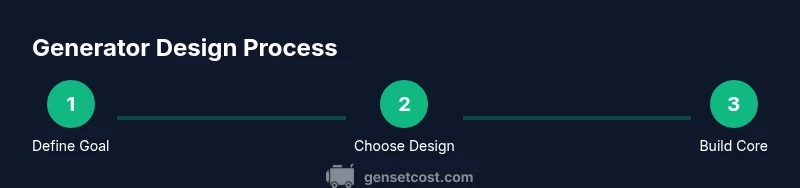
- 1
Define the generator’s goal
Decide whether you want an item generator, XP generator, or a hybrid. This choice determines the core mechanism, storage strategy, and how you will measure success (items per hour or XP per hour).
Tip: Document the target output first so every subsequent step aligns with that goal. - 2
Choose your design approach
Pick a vanilla-friendly approach (dropper clock with a chest, or a hopper-based collector) that fits your world version. Start with a simple, single-output design before expanding.
Tip: Starting small helps you validate timing and reliability without overwhelming the build. - 3
Assemble the core clock
Create a repeating signal using a dropper clock or comparator-based clock. This will drive the generator loop to produce outputs at steady intervals.
Tip: Keep clock segments compact to minimize lag and maintain clear wiring paths. - 4
Add item collection and storage
Connect the output to hoppers and a chest, ensuring items flow in the intended direction. Include an overflow path to prevent MC item loss from jams.
Tip: Use eject/collect routing to prevent blockages and ease troubleshooting. - 5
Integrate a trigger mechanism
Incorporate a simple on/off switch or daylight-based timer to control when the generator runs, helping resource management and world performance.
Tip: A manual or automatic switch can save power during idle hours. - 6
Test the output and timing
Run the generator in a controlled test and observe item or XP flow. Note any bottlenecks or misfires and adjust clock delays accordingly.
Tip: Record timing changes so you can revert quickly if necessary. - 7
Add safety margins and scaling
Incorporate extra storage and modular sections so you can expand later without rebuilding the entire system.
Tip: Modularity makes future upgrades faster and less risky. - 8
Document and preserve the build
Create a simple schematic or labeled notes for your design so you can replicate or repair it in new worlds or servers.
Tip: A clear diagram saves time and reduces error during expansion.
People Also Ask
Can I make a generator in vanilla Minecraft without mods?
Yes. You can build redstone-based generators using droppers, hoppers, and simple clocks to automate item or XP output.
Yes, you can build redstone generators in vanilla Minecraft using essential components like droppers and hoppers.
What’s the difference between an item generator and an XP generator?
An item generator produces items that can be collected and stored, while an XP generator focuses on increasing experience points for enchanting and repair.
Item generators produce blocks or items; XP generators create experience points for enchantments.
Do generators affect server performance?
Complex redstone builds can impact server performance, especially on large worlds or crowded servers. Keep designs lean and chunk-loaded sensibly.
Yes, heavy redstone farms can slow servers if not managed carefully.
Do I need mods to build advanced generators?
Not for vanilla gameplay, but mods can unlock more efficient or larger-scale generators with different mechanics.
Mods aren’t required for vanilla builds, but they expand options.
Are there safety concerns building generators in Minecraft?
Minecraft builds are safe in-game, but plan around server rules and performance to avoid triggering lag or maintenance issues.
There are no real-world safety concerns; focus on performance and server rules.
Where can I find reliable tutorials for Minecraft generators?
Check well-known Minecraft community resources, including video tutorials and sketches from established builders, plus the Minecraft Wiki for basics.
Look for tutorials from trusted Minecraft creators and the official wiki for fundamentals.
Watch Video
Key Takeaways
- Define your generator goals before building
- Start with vanilla, timing-friendly designs
- Test outputs and tune timing for reliability
- Plan modular expansions for future growth