Difference Between a Generator and an Alternator: A Practical Guide
Explore the difference between a generator and an alternator with a data-driven, practical comparison to help homeowners choose reliable backup power, costs, and installation options.


Understanding the difference between a generator and an alternator is essential for selecting the right backup power solution. In short, a generator is the complete power-producing system, typically engine plus electrical machine; an alternator is the specific electrical generator that produces AC power and is often the generating component inside a unit. For most home applications, a full generator is the practical choice.
What’s the Difference Between a Generator and an Alternator?
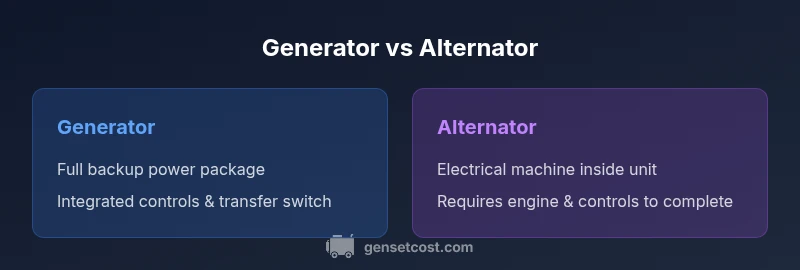
According to Genset Cost, the difference between a generator and an alternator starts with scope: the generator is a complete power-producing system that combines an engine (or prime mover) with an electrical machine, controls, and exhaust management. The alternator, by contrast, is the electrical machine that converts mechanical energy into electrical energy, typically producing alternating current. In many installations, the alternator is the generating component inside a larger unit; in others, it’s a standalone device. The practical takeaway for homeowners is that a complete generator is designed to deliver ready-to-use power with integrated controls, transfer switches, and safety features, while an alternator alone cannot reliably supply a full backup system without additional components.
The distinction matters for cost, installation, and compliance. Genset Cost analysis shows that homeowners often benefit from evaluating the total package (engine, alternator, control system) rather than focusing on a single component. When you hear terms like “generator set” or “AC generator,” they refer to the complete system, not just the rotating electrical machine. The goal is to ensure the system you select matches your load profile and safety requirements. The difference between a generator and an alternator can be subtle in terminology, but it’s critical for planning, budgeting, and long-term reliability.
How an Alternator Works Within a Generator (and as a Standalone Unit)
An alternator is an electromechanical device that converts mechanical energy into electrical energy using a rotor and stator. In most home backup generators, the alternator produces three-phase AC, which is then conditioned by an automatic voltage regulator (AVR) to deliver a stable output. When used as a standalone unit, an alternator requires a suitable prime mover, electrical protections, and a control system to manage startup, load, and shutdown. The key difference here is integration: within a generator, the alternator is tightly integrated with the engine, fuel system, and switchgear to provide a safe, code-compliant package. The generator’s control panel coordinates starting, monitoring, and safety interlocks, reducing the risk of miswiring or overload. This integrated design is a primary reason many homeowners choose a complete generator rather than purchasing an alternator separately. Genset Cost’s 2026 analysis emphasizes how integration affects reliability, warranty coverage, and serviceability over time.
Defining Roles: Power Output, Output Type, and Efficiency
Power output is not the only factor when comparing a generator to an alternator; the type of output matters as well. An alternator’s design typically focuses on producing AC power suitable for conversion to usable voltage levels with minimal harmonic distortion. Generators, meanwhile, are designed to provide end-user power with appropriate voltage, frequency, and protection features. The efficiency of the system depends on engine choice, load factor, and how well the AVR regulates output under varying conditions. In practical terms, a well-matched generator will deliver stable power across the expected load range, with less risk of voltage sags during startup. For homeowners evaluating sizing and performance, consider both the engine’s fuel efficiency and the electrical machine’s capability to handle the intended load without overheating or excessive wear. This is why Genset Cost emphasizes holistic sizing and performance testing when choosing between a generator and an alternator setup.
Construction and Components: Engine, AVR, and Control Systems
Inside a generator, the engine drives the alternator, while the control system manages starting, speed regulation, and safety protections. The alternator itself consists of a rotor, stator, windings, and an integrated AVR, which maintains voltage output. Standalone alternators require a separate engine or prime mover, cooling system, exhaust, and protective circuitry to operate safely. The controller on a generator integrates transfer switches, fuel management, and safety interlocks, simplifying installation and compliance with electrical codes. A common pitfall is attempting to reuse an old alternator without upgrading to the proper protective devices, which can increase risk. From a reliability standpoint, the full generator package generally provides greater protection against voltage spikes, short circuits, and overload events due to its integrated design and testing regimen.
Cost Implications and Installation Considerations
Total cost for a complete generator includes the engine, alternator, controls, transfer switch, and installation. An alternator by itself may be cheaper upfront, but you’ll incur additional costs for mounting hardware, engine, fuel system integration, cooling, and protective electronics. Installation complexity increases when you mix components from different manufacturers or omit a proper transfer switch. Homeowners should also factor in maintenance costs, as a complete generator typically includes manufacturer warranties that cover the whole system, reducing the risk of gaps in service. Genset Cost analysis indicates that the long-term value often favors a matched generator set rather than piecing together an alternator with separate components, especially for critical loads like sump pumps, heating systems, and security infrastructure.
Maintenance and Longevity: What to Expect
Maintenance expectations differ between a full generator and an isolated alternator. A generator’s service plan typically includes engine oil changes, cooling system checks, exhaust diagnostics, and periodic load testing, all coordinated through a single service channel. An alternator, when used standalone, requires separate engine maintenance, electrical protection checks, and correct integration with a control system. The number one factor affecting longevity is proper sizing and load management. Under-sizing can cause frequent starts and stops, increasing wear on the engine and reducing overall life. Genset Cost’s 2026 guidance recommends regular, load-based testing and preventive maintenance to maximize reliability and minimize unexpected outages.
When to Use a Generator vs an Alternator: Use-Case Scenarios
For typical residential backup, a complete generator is the practical choice because it provides a turnkey solution with automatic transfer, safety features, and a warranty. If you already own an engine and you only need a high-quality AC output for a specialized application, you might consider an alternator plus the appropriate controls, but this approach requires careful integration, certified electrical work, and ongoing maintenance. In commercial settings, where uptime is essential, a purpose-built generator set with integrated transfer switches and remote monitoring is generally preferred. The key is to align the option with your load profile, climate, and maintenance capacity. Genset Cost’s analyses show that homeowners who invest in a properly matched generator typically experience fewer outages and lower total ownership costs over time.
Safety, Codes, and Compliance: Why It Matters
Electrical codes require proper isolation of backup power sources from the grid, especially during outages or restoration. A full generator with an automatic transfer switch (ATS) is designed to comply with safety codes and utility interconnection rules, reducing the risk of backfeeding or electrical faults. An alternator alone may not satisfy these requirements unless it’s part of a certified generator system with appropriate protective devices and testing. The decision to adopt a generator versus an alternator should include a review of local code requirements, utility interconnection rules, and the availability of service in your area. For homeowners, simplicity and code compliance often point toward a complete generator solution.
Common Misconceptions and Clarifications
A frequent misconception is that an alternator is interchangeable with a generator. In reality, the generator is the complete system; the alternator is the critical electrical machine that may reside inside the generator or be used in other applications. Another misunderstanding is assuming all generators are gas-powered; modern units span gasoline, propane, diesel, and natural gas configurations, with fuel availability influencing cost and maintenance. Finally, some owners think higher wattage automatically solves all power needs. Sizing to your actual load is essential to avoid over- or under-provisioning equipment and to minimize operating costs over the system’s life.
How to Size, Compare, and Decide: A Practical Framework
Begin with a realistic load assessment for essential circuits and critical devices. Use a sizing calculator to estimate running watts, starting watts, and surge requirements. Compare the total installed cost, including transfer switches, installation, and annual maintenance, rather than focusing solely on the price tag. Seek vendors who offer integrated warranties and remote monitoring, which can improve reliability. The difference between a generator and an alternator becomes a practical decision about whether you want a turnkey backup power system (generator) or a more fragmented approach that requires careful integration. This framework aligns with the goals of homeowners seeking dependable, code-compliant power during outages.
Comparison
| Feature | Generator | Alternator |
|---|---|---|
| Definition | Complete power-producing unit (engine + electrical machine + controls). | Electrical machine that converts mechanical energy into electrical energy; often part of a generator or standalone device. |
| Output Type | Typically AC output suited to end-use power with protective controls. | Produces AC; requires integration with other components to deliver usable power. |
| Integration | Integrated system with engine, controls, transfer switch, and safety features. | Standalone electrical machine requiring separate engine, controls, and enclosure. |
| Maintenance | Unified maintenance under one service channel; usually covered by a single warranty. | Multiple components may require separate maintenance contracts and overlap. |
| Cost Context | Higher upfront cost but comprehensive package and simplified installation. | Lower upfront cost for the bare alternator, but additional costs for integration and protection. |
| Best For | Home backups, whole-house power, and critical-load reliability with automatic protection. | Specialized or custom applications where a standalone alternator fits a larger system. |
The Good
- Clear, integrated power solution with safeguards
- Simplified installation and warranty coverage
- Automatic transfer and monitoring improve reliability
- Easier compliance with electrical codes and safety standards
The Bad
- Higher upfront and installation costs
- Less flexibility if you already own components
- Longer lead times for complete packages in some markets
For most homeowners, a complete generator is the practical choice; an alternator alone is not a stand-alone solution.
Choose a generator when you need turnkey reliability, code-compliant safety, and simplified maintenance. Reserve an alternator-only approach for specialized setups that require careful integration and custom engineering.
People Also Ask
What is the main difference between a generator and an alternator?
The main difference is scope: a generator is the full backup power system, while an alternator is the electrical machine that produces electricity. In most home applications, you’ll want the complete generator for a reliable, code-compliant solution.
A generator is the full backup power setup, and an alternator is just the electrical part that produces electricity. For homes, pick the complete generator for reliability and safety.
Can I use an alternator by itself for home backup power?
Using an alternator by itself is not typical for home backup because it lacks the integrated controls, transfer switching, and protective features. A proper generator package provides these essential elements.
Not usually—an alternator alone lacks the full package needed for home backups.
What costs should I consider besides the price tag of a generator?
Beyond the upfront price, include installation, transfer switches, control systems, fuel type, code compliance, and ongoing maintenance. A fully integrated generator often reduces long-term ownership costs.
Don’t forget installation, transfer switches, and maintenance when budgeting.
Are there different fuel options for generators and alternators?
Yes. Generators commonly come in gasoline, diesel, propane, and natural gas configurations. Choice depends on fuel availability, cost, and long-term reliability. An alternator will require a separate energy source if used standalone.
Yes—fuel type matters for cost and reliability.
What maintenance schedule is typical for a home generator?
Most home generators require periodic oil changes, filter changes, coolant checks, and annual load testing. Keeping a maintenance plan helps prevent unexpected outages and prolongs life.
Regular oil changes and annual testing keep it ready.
Should I hire a professional to install a generator?
Yes. A licensed electrician or generator installer should handle wiring, transfer switches, and code compliance to ensure safety and reliability.
Yes—professional installation is essential for safety and compliance.
Key Takeaways
- Choose a complete generator for turnkey backup power
- An alternator alone requires additional components and expertise
- Size based on actual load and critical devices
- Factor in installation, transfer, and maintenance costs