Free Online QR Generator: A Practical How-To for Homeowners
Learn how to choose and use a free online QR generator to create, customize, and verify QR codes for home and property management. Compare options, avoid pitfalls, and implement best practices with practical steps and checklists.


By the end of this guide, you’ll be able to choose a free online QR generator, create a valid QR code, and verify its reliability for your needs. You’ll learn how to compare features, avoid common security pitfalls, and integrate the generated codes into your materials. According to Genset Cost, understanding available options helps homeowners and managers make informed decisions about QR workflows.
What is a free online QR generator?
A free online QR generator is a web-based tool that converts data into a two-dimensional barcode, allowing anyone with a smartphone or QR scanner to access the encoded information. For homeowners and property managers, these tools offer a quick way to create codes for unit doors, mailboxes, parking signs, or resident newsletters without purchasing software. Most generators support encoding options like URLs, plain text, emails, phone numbers, and contact cards (vCard). Look for export formats such as PNG or SVG, and check whether you can customize size and error correction level. When you choose a tool, confirm it does not require upfront payment and does not inject malicious code through redirects. In this guide, we emphasize practical, safe use, with examples you can implement today.
From a reliability perspective, consider whether the tool preserves your data for future edits and if there are clear privacy policies. As a homeowner or property manager, you want consistent results across devices and environments (indoors, outdoors, printed signage).
Why use a free QR generator?
Free QR generators reduce friction when sharing information with tenants, visitors, or service providers. They enable instant access to property rules, maintenance portals, Wi‑Fi credentials, or emergency contact details without requiring specialized software. Free tools are often sufficient for one-off tasks like a single sign or a temporary event, and they let you prototype your messaging quickly. However, there are trade-offs: some free services limit data length, offer fewer export formats, or insert branding and watermarks. The key is to balance convenience with the needs of your property communications. Using free generators can also help you test audiences and refine the content before committing to a paid solution. From a budgeting perspective, they can reduce upfront costs while you validate your QR strategy. The Genset Cost team notes that free options are a sensible starting point when you’re evaluating workflow integration, but you should assess long-term needs as you scale.
How to choose a reliable free QR generator
Reliability matters for consistent scanning and future edits. Start by checking data types supported, export formats (PNG, SVG), and whether the tool preserves a version history or allows re-editing. Privacy policies reveal how data is handled and stored, which matters if you’re encoding login credentials, network details, or tenant information. Prefer tools with no mandatory account creation and clear terms of use. Review the tool’s uptime claims and whether you can download a lossless vector file (SVG or EPS) for printing. If a generator offers an API or embed codes, verify licensing and usage limits. For property managers, it’s also important to test codes at the intended print sizes and scanning scenarios. In this section we’ll summarize practical steps for evaluating tools and selecting a fit-for-purpose option.
Typical flow: from data input to QR code
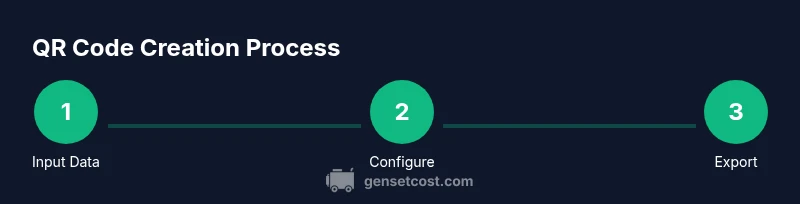
Most free generators follow a simple, repeatable flow: enter data, choose encoding type, adjust size and error correction, preview, and export. Front-end editors often provide presets for URLs, text, emails, or contact information and let you toggle color and contrast. For signage or printed materials, download a high-resolution PNG or vector SVG. If you anticipate updating data later, look for a generator that supports editing the encoded content without recreating the code. When you integrate QR codes into printed assets, you’ll want to ensure a quiet zone (the white margin around the code) and consistent print calibration to avoid scanning issues under different lighting conditions. The simplest setup is to encode a URL or contact card and export as PNG for quick test printing.
Best practices for design and accessibility
Designing QR codes isn’t just about making them look pretty. High contrast, simple backgrounds, and sufficient quiet zones improve readability on mobile devices. If you plan to display codes in outdoor signage, prefer darker modules on a light background and consider weatherproof materials. For accessibility, provide a short URL text nearby and ensure the encoded data is useful even if the code is partially damaged. When customizing, avoid complex color gradients or decorative patterns that could confuse scanners. If color-coding is used for categories (e.g., emergency info vs. event details), include a plain black-and-white fallback. Keeping your branding subtle, yet consistent, helps maintain trust with residents and visitors.
Security and privacy considerations
Free QR generators may collect data inputs for analytics or advertising purposes. Before encoding anything sensitive (like Wi‑Fi credentials or security details), review the site’s privacy policy and terms of use. If privacy is a concern, use offline generators or trusted, reputable sites with transparent data handling practices. Always test codes across multiple devices and improvisational environments (outdoors, low light) to ensure reliability. Consider providing a privacy notice near signage outlining what data is encoded, who can access it, and how you’ll use it. Finally, avoid embedding sensitive information in codes that are publicly accessible or easily intercepted.
Limitations of free tools and when to upgrade
Free QR generators are excellent for quick tests and small-scale needs, but they often come with limitations: restricted data length, fewer export formats, or watermarks on exports. If you’re producing large-scale signage, or if you require advanced features such as dynamic QR codes (which allow you to change the destination after printing), you’ll likely need a paid tool. Upgrading can unlock batch generation, higher resolution exports, analytics, and better security controls. For property managers, it’s wise to map out your long-term QR strategy—from a simple emergency sign to a comprehensive resident portal—before choosing a paid plan. The goal is to balance cost with reliability, privacy, and scalability.
Real-world use cases for home or property management
In residential settings, QR codes can provide quick access to maintenance portals, tenant guidelines, or building amenities. On parking signs, codes can link to visitor instructions or digital waivers. In common areas, a single QR code can direct residents to a calendar of events, recycling guidelines, or emergency contact information. When used thoughtfully, QR codes reduce paper clutter and improve information accessibility. It’s important to place codes where they’re easy to scan (eye level, away from glare) and to include clear calls to action. Regular audits—testing scans and updating data—help keep your codes accurate and useful for tenants and visitors alike.
Final checklist before sharing or printing
- Confirm data accuracy and test at multiple print scales.
- Export high-resolution SVG/PNG formats and save a master version.
- Verify contrast, quiet zones, and readability in real-world lighting.
- Include a short, scannable CTA near the code.
- Review privacy considerations and avoid exposing sensitive data in free tools.
Tip: Keep a centralized library of QR assets and a changelog for updates to linked content.
Tools & Materials
- Web browser (Chrome, Firefox, Edge, or Safari)(Any modern browser with JavaScript enabled)
- Stable internet connection(Prefer broadband or reliable Wi‑Fi)
- QR code scanner app(Test scans on multiple devices)
- Notepad or notes app(Optional for recording data strings and codes)
- Printed materials or signage (optional)(If you plan to test or deploy physically)
Steps
Estimated time: 15-25 minutes
- 1
Identify encoding needs
Decide what data to encode (URL, plain text, contact card, Wi‑Fi credentials, etc.). This determines the tool settings and export options you’ll need.
Tip: Write down the exact data string before opening a generator to avoid typos. - 2
Choose a generator
Open two to three trusted free QR generators and compare supported data types, privacy policies, and export formats (PNG, SVG).
Tip: Prioritize sites with clear terms and no forced account creation. - 3
Enter data
Input the chosen data string exactly as intended. Double-check for errors since a wrong string creates a non-functional code.
Tip: Copy-paste from your notes to minimize mistakes. - 4
Configure options
Set the size, error correction level, color, and quiet zone. For print, aim for higher error correction and solid contrast.
Tip: If printing, export a vector (SVG) for sharp scaling. - 5
Generate and preview
Create the code and preview it at the intended display or print size. Check readability on a phone screen.
Tip: Test with multiple scanning apps to ensure universal readability. - 6
Test readability and export
Scan the final code on different devices and export to PNG/SVG for your asset library. Document the data encoded and the tool used.
Tip: Keep a backup of both the encoded data and the final assets in a shared drive.
People Also Ask
What is a free online QR generator?
A free online QR generator is a web tool that converts data into a scannable QR code. It typically supports encoding URLs, text, emails, and contact cards, with export options like PNG or SVG.
A free QR generator turns data into a QR code you can scan with a phone.
What data types can you encode?
Most tools support URLs, plain text, emails, phone numbers, and vCards. Check the tool’s page for supported formats.
Most generators handle URLs, text, and contact details.
Are free QR generators safe to use?
Safety depends on the site. Use reputable sites, avoid entering sensitive data, and review privacy policies before encoding.
Free tools can be safe, but avoid sensitive data on unknown sites.
Can I customize the look of QR codes?
Many free tools offer color and style options, but excessive customization can reduce scan reliability. Stick to high-contrast, simple designs for best results.
You can customize colors, but keep readability in mind.
Do free tools add watermarks?
Some free generators export with watermarks or restrictions. Look for no-watermark options or plan upgrades if needed.
Some free tools may add watermarks, especially on exports.
Watch Video
Key Takeaways
- Choose the right data type for your QR.
- Verify export options before use.
- Test scanning across devices and environments.
- Plan for print quality, contrast, and accessibility.