Online Generator QR Codes: Create, Customize, and Verify
Learn how to choose a safe online generator QR code, create reliable codes, customize data and appearance, and test scan reliability for URLs, contact info, Wi‑Fi, and more. Practical tips, safety guidance, and step‑by‑step instructions.


This quick guide shows you how to create an online generator QR code from a trusted service, customize its data and appearance, and verify that it scans correctly. You’ll learn how to compare generators, avoid common pitfalls, and ensure your QR codes remain reliable across devices and print formats. By the end you’ll know how to generate, test, and deploy QR codes confidently.
What is an online generator QR code?
An online generator QR code is a two‑dimensional barcode created by a web service that encodes data you specify—such as a URL, text, contact information, or Wi‑Fi credentials—into a scannable image. The service handles how to translate complex data into the QR matrix and often offers features like size control, error correction, and branding options. When you search for an online generator QR code, you’re looking for a reliable tool that keeps your data safe and produces codes that reliably scan across devices. For homeowners and property managers, this means you can quickly share Wi‑Fi credentials or building links on signage, flyers, or maintenance forms without printing errors or broken scans.
Why use an online QR code generator?
Using an online generator provides convenience, consistency, and scalability. You can create many codes quickly, reuse data patterns, and tailor visuals to fit branding or signage requirements. For example, a QR code on a building directory might include a URL to the property’s contact page, a vCard for residents, or a Wi‑Fi access string for guests. The advantage of a reputable online generator is automated formatting, built‑in error correction, and the ability to test scans before distribution. When you search for an online generator QR code, you should prioritize services with clear privacy policies, no injected tracking, and responsive support if you encounter issues.
Data types and how they affect the QR code
QR codes encode data in different formats, and the chosen data type affects density and readability. Common types include URLs, plain text, email or phone, vCard for contact cards, and Wi‑Fi credentials. Each type influences how much error correction you need and how large the finished code will be. Longer URLs may require compression or pre‑encoding strategies; some generators offer URL shortening as an option, but this can impact reliability if the shortened target changes. When evaluating an online generator, verify it preserves data integrity and does not alter or strip important fields.
Key features to evaluate in an online generator
- Data compatibility: URL, text, contact cards, Wi‑Fi, calendar events.
- Error correction level (L, M, Q, H) to balance density and resilience.
- Size and resolution controls for print and screen displays.
- Customization options: colors, logo insertion, quiet zones, and format (PNG, SVG, EPS).
- Security and privacy: clear data handling policies and no third‑party data retention.
- Accessibility: alt text generation for assistive tech and screen readers.
- Output reliability: scan tests across popular smartphone cameras and readers.
- Dynamic codes: the ability to update the underlying data after creation.
When you review these features, especially for a setting like a property lobby or wayfinding signage, you can choose a generator that fits both your data needs and your branding constraints.
Safety and privacy considerations when using online generators
Your data lives in the cloud for the duration of code creation. Choose generators with transparent privacy policies, no data resale, and secure HTTPS connections. Avoid generators that request unnecessary permissions or prompt you to sign in to gain basic features. For sensitive data, consider local or offline generation options or use trusted vendors with established security reviews. Always test the final code on multiple devices to ensure no data leakage or misinterpretation occurs.
Step-by-step: create a QR code with an online generator
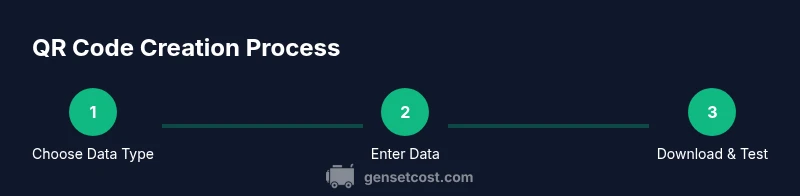
- Pick a trusted online generator with a good privacy track record and a clear policy. 2) Select the data type you need (URL, text, contact, Wi‑Fi). 3) Enter your data precisely and avoid trailing spaces. 4) Choose the error correction level and code size appropriate for your printing or display medium. 5) Add optional branding, such as a logo, and adjust colors if needed while maintaining high contrast. 6) Download the code in a scalable vector format if possible, then test by scanning with multiple devices.
Customize: sizing, color, and branding considerations
- Size: Ensure the code is large enough to scan at the intended distance; test at the actual print size.
- Contrast: High contrast (dark on light) improves reliability in varied lighting.
- Logo placement: Keep the center area free from critical data; many generators allow a small centered logo without breaking readability.
- Color: If using color, maintain readability; black and white remains the most robust choice for universal compatibility.
- Format: SVG is preferred for print; PNG is common for digital use. Consider exporting multiple formats for flexibility.
- Quiet zone: Maintain a quiet zone around the code to prevent distortion during scanning.
Test and verify: scanning across devices and formats
After generating the QR code, test with at least three different devices (iOS and Android) and multiple scanning apps. Check that the code resolves to the intended URL or data without errors. Test in the final use context (on signage, posters, or packaging) and at the final size. If a link is dynamic, confirm changes propagate correctly and timing aligns with your campaign.
Common use cases and best practices
- URLs: Point guests to a landing page, policy document, or registration form.
- vCard: Share contact details for property management offices.
- Wi‑Fi: Provide guest network access securely.
- Text or phone: Quick emergency numbers or building hours.
- Calendar events: Schedule move‑in appointments or maintenance windows.
- Analytics: Prefer codes that do not log user data when privacy is important.
Troubleshooting: when a QR code won’t scan
- Check data accuracy: a single character error breaks the scan. Recheck the input field.
- Adjust sizing: very small codes or codes with insufficient quiet zone fail to scan.
- Verify contrast: ensure colors provide high contrast in the actual environment.
- Consider error correction: increase to a higher level (e.g., from M to H) if the code will be partially obscured.
- Ensure file integrity: use lossless formats (SVG, PNG) and avoid compression artifacts for print.
Security best practices for QR codes in marketing
- Use reputable generators with transparent privacy policies.
- Avoid embedding sensitive data directly in the code when possible; use dynamic codes for critical data.
- Provide a clear call to action and a visibly accessible link destination.
- Monitor usage and refresh codes periodically to minimize stale or misrouted data.
The future of QR codes: dynamic codes and analytics
Dynamic QR codes offer data that can be updated after printing, enabling maintenance updates and long‑term campaigns without reprinting. Analytics can track scans while respecting user privacy; consider implementing privacy‑by‑design approaches and providing opt‑out options when collecting data. As mobile workflows evolve, expect more seamless integrations with marketing platforms and signage systems.
Tools & Materials
- Internet-enabled device (desktop or mobile)(With a modern browser (Chrome, Safari, Edge) to access the generator.)
- Active data to encode (URL, text, contact card, Wi‑Fi credentials)(Prepare data in advance to reduce encoding errors.)
- Stable internet connection(For consistent generation and testing.)
- Optional branding assets (logo in PNG/SVG)(If adding a logo, ensure it fits the center of the code without obscuring data.)
- Screens/print materials for testing(Test how the code looks on signage, flyers, or screens.)
Steps
Estimated time: 15-30 minutes
- 1
Choose a trusted online generator
Select a generator with a clear privacy policy and HTTPS. Compare reviews and verify no hidden data collection beyond what is necessary to create the code.
Tip: Prioritize services with no data resale and transparent terms. - 2
Select the data type
Decide whether you’re encoding a URL, text, contact (vCard), Wi‑Fi, or calendar event. The type determines length and error correction needs.
Tip: If you’re unsure, start with a URL and test multiple devices. - 3
Enter the data accurately
Copy and paste the exact data into the generator’s field. Double‑check for stray spaces or typos.
Tip: Use copy/paste without auto‑formatting to avoid hidden characters. - 4
Set size and error correction
Choose the output size suitable for your print or screen usage and select an appropriate error correction level (L, M, Q, H).
Tip: Higher error correction helps with damage but increases code size. - 5
Add branding and color (optional)
If allowed, add a logo and color scheme, ensuring high contrast and no obstruction of the central area.
Tip: Keep the center area free of important data to avoid scanning issues. - 6
Download and test the code
Save in a vector format (SVG) for printing and test scans on multiple devices and in real‑world lighting.
Tip: Test at final size and in the context it will be used.
People Also Ask
What data can I encode in a QR code with an online generator?
Most online generators support URLs, plain text, emails/phone numbers, vCards for contacts, Wi‑Fi credentials, and calendar events. Some services also support geolocation or SMS data. Always verify the data type compatibility before encoding.
You can encode URLs, text, contact details, Wi‑Fi passwords, or calendar events. Just pick the data type first, then enter your content.
Are online QR code generators safe to use for business use?
Safety depends on the generator’s privacy policy, data handling practices, and whether data is retained or shared. Prefer generators with strong HTTPS, clear terms, and no data resale. For sensitive data, consider offline generation or dynamic codes with limited data exposure.
Choose generators with clear privacy policies and secure connections; avoid sharing sensitive data on unknown sites.
Can I customize colors and add a logo to a QR code?
Many generators offer color customization and logo overlay options. Ensure the enhancements don’t compromise contrast or central patterns, which could reduce scan reliability. Always test the final design.
Yes, you can customize colors and add a small logo, but keep readability. Test the result on several devices.
What is a dynamic QR code and when should I use one?
A dynamic QR code links to data that can be updated after printing. This is useful for campaigns, menus, or contact pages where the destination may change. It may require a subscription or higher service tier.
Dynamic codes let you update the destination without reprinting, ideal for changing information.
How do I test QR code reliability after generation?
Scan the code with multiple devices (iPhone, Android) and apps. Check at final print size and in varied lighting. If it fails, adjust size, contrast, or error correction level and re‑test.
Test with several devices and lighting to ensure reliable scanning.
Why is error correction important for QR codes?
Error correction preserves scannability when the code is partially obscured or damaged. Higher levels (H) mean bigger codes but better resilience for signage or worn boards.
Higher error correction helps codes scan when part of the code is damaged or obscured.
Watch Video
Key Takeaways
- Create QR codes with trusted online tools only.
- Test across devices and printing environments.
- Choose appropriate data type, size, and error correction.
- Avoid embedding sensitive data in public generators.
- Use vector formats for scalable print quality.