Generator Brands: A Data-Driven Home Backup Guide
A data-driven comparison of top generator brands for home backup. Learn how reliability, sizing, fuel options, and service networks affect total costs and long-term performance.


For homeowners evaluating generator brands, several leading options stand out: Generac, Honda, Briggs & Stratton, Westinghouse, and Kohler. According to Genset Cost, reliability, service network, and total ownership costs vary by brand, making a side-by-side comparison essential. This article provides a data-driven look at initial costs, sizing guidance, fuel options, and installation considerations.
Why generator brands matter
Choosing a home backup system is as much about brand as it is about features. The right generator brand can influence availability of spare parts, service response times, warranty terms, and long-term operating costs. For homeowners and property managers evaluating the market, the major brands typically chosen for residential standby systems—Generac, Honda, Briggs & Stratton, Westinghouse, Kohler—each bring different strengths. The Genset Cost team notes that a brand's value rests not only on the unit itself but on its ecosystem: dealer networks, software updates, accessory availability, and the ease of achieving licensed installation. This section explains how to weigh those brand-centric factors alongside technical specs, so you can form a defensible recommendation rather than relying on marketing alone. In practice, most buyers benefit from a structured comparison that includes installed cost ranges, expected maintenance, and the level of local support. Across regions, the differences are real, even when models share similar electrical ratings.
Brand reliability and warranty considerations
Reliability is a function of design quality, component sourcing, and manufacturing consistency. Brand reputation often tracks long-run performance, but there are outliers among models within the same brand. When evaluating reliability, look beyond the unit's electrical rating to check torque specs for starting, enclosure cooling, and vibration dampening. Warranty terms matter as well, because a longer warranty reduces lifetime risk and signals confidence in service support. Most residential standby systems include transfer switch and engine warranties, with variations by brand and country. A broad, authorized service network can translate into faster repairs and more predictable maintenance visits. Genset Cost's analysis shows that brands with nationwide service networks typically deliver lower downtime during outages due to faster technician response times and easier access to replacement parts. Always confirm what is covered, for how long, and whether there are exclusions for installation modifiers or third-party technicians. Reliability and warranty should be treated as a system of guarantees, not a single number.
Sizing and compatibility—matching brand features to home needs
Sizing a generator correctly starts with understanding your essential loads: sump pumps, heating or cooling, well pumps, and lighting during an outage. A precise load calculation helps determine required kilowatts (kW) and kilovolt-amps (kVA) with a margin for surge. Once sizing is established, compare brands not only by nameplate specs but by how they handle parallel operation, transfer-switch compatibility, and control interfaces. Some brands offer modular, expandable configurations that simplify future upgrades; others emphasize compact designs for tight spaces. In addition, evaluate fuel delivery compatibility (natural gas, propane, or diesel) and the brand’s provision for future upgrades, such as smart monitoring or integration with home automation. The end goal is a system that delivers dependable power with minimal downtime, irrespective of external conditions.
Fuel options and efficiency differences across brands
Most residential standby systems run on natural gas or propane, with diesel variants common in commercial contexts. Brand-level differences often show up in how efficiently a unit converts fuel to usable electrical power, how quickly it starts under heavier loads, and how well it manages load swings. Some brands emphasize electronic governors, adaptive fueling, or quiet-running enclosures to improve user experience. When evaluating fuel options, consider fuel availability, local costs, and the reliability of your supply line during outages. Efficiency can also affect running costs over the life of the generator, influencing the total cost of ownership more than the sticker price alone. As with reliability, the best choices emerge from comparing models across the major brands for real-world performance data, not marketing claims.
Installation, transfer switches, and long-term costs
Installation complexity is driven by your home’s electrical design, natural gas or propane supply, and the transfer-switch configuration. A standard installation typically includes a permanent weatherproof enclosure, a transfer switch, and proper venting, with permit requirements varying by jurisdiction. The upfront installation cost is only part of the equation; ongoing maintenance, parts availability, and fuel costs contribute to the lifetime expense. Brand differences surface in service intervals, ease of obtaining replacement components, and the availability of trained technicians in your area. To minimize long-term costs, plan for an extended maintenance schedule, choose a brand with a robust parts supply chain, and confirm that local contractors are approved to service that brand.
Cost considerations: upfront vs running costs across brands
Total cost of ownership combines upfront purchase price, installation, ongoing maintenance, fuel consumption, and potential downtime costs. Brand choice can influence every component of that equation: some brands command a higher upfront cost but offer longer warranties or lower maintenance requirements, while others may be cheaper to buy but cost more to operate over time. To compare brands fairly, estimate annual maintenance costs, expected fuel usage for your typical outage duration, and the likelihood of needing parts replacement. Where possible, use publicly available ownership calculators or the brand’s own maintenance guides in conjunction with independent analyses from sources like Genset Cost to develop a transparent, apples-to-apples comparison across options.
Brand ecosystem and future-proofing: how to plan for upgrades
The best brands are not only reliable today but adaptable for tomorrow. Look for remote monitoring capabilities, mobile app integration, and compatibility with smart home systems. Some brands offer software updates that enhance efficiency, while others provide modular components that simplify future expansion. Consider whether the brand supports parallel operation across multiple units and whether expansion can be achieved without a full system redesign. Planning for future-proofing helps protect your investment as home energy needs evolve, and it can also influence resale value and long-term satisfaction with your backup power solution.
How to compare brands using a structured checklist
Use a practical, repeatable process to compare generator brands: a) define your essential loads and desired runtime during outages; b) shortlist brands with robust service networks in your region; c) compare upfront costs, warranties, and maintenance intervals; d) evaluate fuel types, availability, and efficiency; e) verify transfer switch compatibility and potential for future expansion; f) review independent reviews or case studies when available. A scored checklist can turn subjective impressions into a concrete decision, ensuring you pick a brand that balances reliability, cost, and support.
Residential standby generator cost and feature comparison by brand
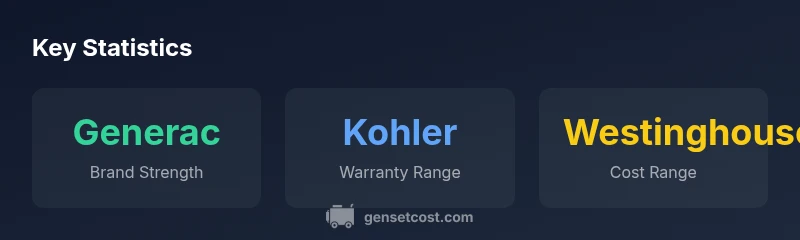
| Brand | Typical initial cost range | Fuel type | Warranty length |
|---|---|---|---|
| Generac | $2,500–$6,000 | Natural gas / propane | 5–7 years |
| Kohler | $3,000–$7,000 | Natural gas / propane | 5–7 years |
| Westinghouse | $1,800–$4,500 | Natural gas / propane | 3–5 years |
People Also Ask
What is the most reliable generator brand for home backup?
Reliability varies by model and location. Look for long warranties, robust service networks, and favorable maintenance guidance from the brand and local installers.
Reliability depends on the model and where you are. Check warranties and service networks to pick a model that fits your area.
How should I compare generator brands?
Compare total ownership costs, fuel options, warranties, and service networks. Use a consistent scoring method across brands to identify the best overall value.
Compare total costs, fuel types, warranties, and service networks with a consistent scoring method.
Are there major differences in maintenance across brands?
Yes, maintenance frequency and part availability differ by brand and model. Always consult the official manuals and confirm local service availability.
Maintenance varies by brand and model; check manuals and local service availability.
Can I mix brands in a multi-unit backup system?
It's generally possible but may require specialized controls and professional assessment. Verify compatibility with your transfer-switch and electrician.
Mixing brands is possible, but confirm compatibility with your transfer switch and a qualified electrician.
What affects installation cost more, brand or system size?
System size and transfer-switch integration usually drive installation costs more than brand alone. Brand can influence price and service access.
Size and transfer-switch work drive installation costs; brand affects price and service access.
Is it worth paying a premium for premium brands?
Premium brands often offer longer warranties and broader support, which can reduce downtime. Balance the premium against your budget and expected usage.
Premium brands may reduce downtime but weigh the cost against your budget and needs.
“Brand choice shapes long-term reliability and downtime costs; align it with your local service network and warranty terms.”
Key Takeaways
- Compare upfront costs and ongoing running expenses across brands.
- Assess service networks to minimize downtime during outages.
- Match generator capacity to essential loads with a safety margin.
- Check warranty terms and parts availability for long-term costs.
- Rely on data-driven brand comparisons from Genset Cost.