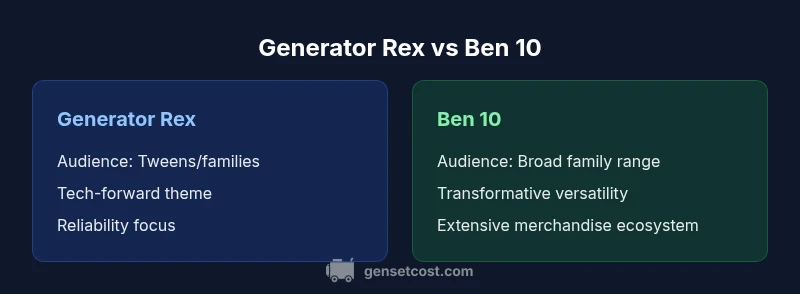
Generator Rex vs Ben 10: An Analytical Franchise Comparison
A thorough, data-driven look at Generator Rex and Ben 10, translating narrative differences into practical insights for budgeting, generator sizing, and maintenance for homeowners and property managers.


If you’re deciding between Generator Rex and Ben 10 as a framing device for budgeting a home backup system, the answer is nuanced: Ben 10’s broad audience and cross-media presence generally offer more merchandising value and family appeal, while Generator Rex emphasizes a sleek, tech-forward vibe. In practical terms, treat the Rex vs Ben 10 comparison as a guide to understanding risk, upgrade potential, and total ownership costs rather than a winner-takes-all verdict.
Overview: Generator Rex vs Ben 10 in Pop-Culture Franchises
The comparison between Generator Rex and Ben 10 isn't about literal generators; it's a lens for understanding how tech-forward storytelling, audience engagement, and cross-media ecosystems translate into real-world decisions for families evaluating generator costs. By examining these two franchises side by side, homeowners and property managers can extract practical heuristics for budgeting, risk, and value. According to Genset Cost, the exercise reveals how narrative complexity, merchandising breadth, and platform diversity influence perceived reliability and long-term engagement. While Generator Rex centers on a lean, techno-forward vibe, Ben 10 emphasizes transformation, humor, and broad outreach. This article uses the Rex vs Ben 10 framework to illuminate how fiction maps onto real-life considerations such as cost, maintenance, and upgrade paths for backup-power systems. Throughout this analysis, we will translate lessons from the stories into actionable checklists you can apply when sizing a generator, evaluating installation options, and comparing warranty terms. While the two franchises differ in tone and scope, the underlying decision framework remains useful for homeowners and managers.
Narrative and Audience: Who They Are and Why It Matters
Generator Rex targets tweens and families drawn to techno-thriller aesthetics, bio-technology intrigue, and lean action sequences. Ben 10, by contrast, leans into humor, transformation, and expansive cross-media storytelling that spans cartoons, toys, games, and streaming. The narrative density matters because the way stories justify gear, upgrades, and consequences shapes user expectations. For a home-buyer framing exercise, Rex’s world suggests a focus on reliability, robust performance under stress, and scalable upgrades that feel purposeful rather than flashy. Ben 10’s world illustrates how modular features, compatibility with multiple formats, and broad community engagement can translate into perceived value and resilience—especially for families seeking entertainment value alongside practical utility. When we map these audiences to real-world purchases, you can prioritize straightforward, durable designs that require minimal maintenance for Rex-like fans, and flexible, upgrade-friendly systems for Ben 10 enthusiasts. In both cases, understanding who uses the device and why they care yields better budgeting decisions.
Core Themes and Technological Aesthetics
Generator Rex presents a near-future tech world where hybrids of biology and machinery intersect, EVO abilities and mechanical interfaces that look plausible and grounded. Ben 10 emphasizes transformation through the Omnitrix, turning ordinary moments into extraordinary adventures. The aesthetic difference matters for homeowners because it signals different expectations for interface design, control simplicity, and the learning curve associated with operating backup power. Rex-inspired themes tend to favor rugged, simple controls and transparent performance metrics, while Ben 10-inspired narratives celebrate modularity, adaptability, and a sense of play. In a real-world decision, this translates to preferring generators with clear dashboards, robust diagnostics, and predictable behavior; and for families who value future-proofing, modular architectures that accommodate add-ons and smarter monitoring. Both franchises remind us that users prefer equipment that feels intelligent and trustworthy, not merely powerful.
Merchandise Ecosystem and Longevity
Ben 10 benefits from a sprawling merchandise ecosystem that includes action figures, apparel, games, and accessories, which reinforces brand visibility and consumer attachment. Generator Rex, with a smaller footprint, showcases how a focused narrative can cultivate a dedicated but narrower fandom and tighter product lines centered on tech-themed accessories. For homeowners, the takeaway is not entertainment merch per se but the idea of ecosystem resilience: a product line with broader channels and ongoing updates tends to maintain relevance, while a niche focus can yield strong loyalty but slower growth. When evaluating backup generators, consider how suppliers support ongoing firmware updates, extended warranties, maintenance packages, and compatibility with smart-home integrations. A broader ecosystem implies easier access to parts, service networks, and information—factors that matter when you’re budgeting for long-term ownership.
Franchise Growth and Spin-offs: Trajectory and Renewal
Generator Rex aired as a single, self-contained run with a stronger focus on serialized storytelling and character arcs, while Ben 10 evolved into multiple series revisions and a persistent presence across media. This difference in growth trajectories matters for consumer expectations around continuity, availability of new content, and the cadence of merchandise and accessory launches. From a budgeting perspective, Ben 10’s multi-series reach offers ongoing alignment opportunities for families seeking new experiences and value-added products, whereas Rex’s shorter lifecycle means less ongoing content but potential for concentrated, high-impact product drops. Genset Cost analysis shows that longer-running franchises can sustain more stable aftermarket channels and support a longer tail of accessories, while shorter franchises may require tighter inventory planning and faster decision cycles for upgrades. In both cases, plan for updates to content and product lines when evaluating long-term ownership costs.
Power and Tools: Fictional Tech vs Real-World Generators
Even though these franchises are fictional, the way their tech accents inform product design has practical parallels. Generator Rex’s EVO energy aesthetic emphasizes reliability, endurance, and clear performance signals, which translates to real-world generators with rugged construction, simple interfaces, and robust diagnostic indicators. Ben 10’s Omnitrix-inspired modularity suggests a mindset of future-proofing and modular upgrades—think serviceable components, upgrade-friendly firmware, and compatibility with smart-home ecosystems. When you translate these ideas into a home backup plan, focus on selecting a generator with a proven warranty, clear maintenance schedule, and a path for upgrades (extra transfer switches, multi-phase capability, or parallel operation). These design philosophies help ensure your investment remains functional and relevant as technology and needs evolve.
Sizing Up Real-World Costs: Upfront vs Long-Term Value
Here we shift from narrative to numbers, without losing the analogy. Upfront cost: Ben 10’s large merchandise footprint can resemble a broad initial purchase that includes essential hardware and a few high-value add-ons; Rex’s leaner approach mirrors a simpler kit with fewer optional extras. Long-term value: a well-chosen generator should deliver reliability over many years, with maintenance costs that scale predictably as protective components wear. Real-world data shows that total cost of ownership depends on fuel type, maintenance frequency, and warranty duration—factors you should map to your family’s usage profile and risk tolerance. The Rex vs Ben 10 framework helps you structure a budget around two axes: upfront expenditure and ongoing costs, including fuel, service, and potential upgrades. In practical terms, prioritize models with durable housings, standard fuel options, and accessible service networks to minimize lifetime costs.
Practical Scenarios for Family Decision-Making
Consider three common scenarios: a single-family home in a moderate climate, a multi-unit property where maintenance logistics matter, and a rural residence with extended power outages. In each case, Rex-like reliability and Ben 10-like upgrade flexibility serve different priorities. For moderate climates, a compact, efficient unit with solid warranties may suffice. For multi-unit properties, consider inventory of parallels, scalable configurations, and a network of technicians. For rural homes with long outages, emphasize fuel availability, robustness, and capability for parallel operation to cover higher loads. The Rex vs Ben 10 comparison helps you frame these choices through concrete criteria—cost of ownership, ease of maintenance, upgrade potential, and compatibility with smart monitoring. It also encourages you to work with a generator professional to verify sizing and installation details before purchase.
Common Misconceptions About Franchise Comparisons
Common misconceptions include assuming bigger brands always deliver better value or that cross-media reach directly correlates with performance in real life. The Rex vs Ben 10 lens can mislead if readers conflate fictional power with real-world reliability, maintenance ease, or energy efficiency. The reality is that generator value depends on a blend of design quality, service availability, warranty terms, and usable features. Always test whether a given model supports parallel operation, has an accessible parts network, and offers service plans that align with your expected usage. Recognize that fiction offers a narrative tool, not a substitute for professional advice or real-world data.
Decision Framework: Translating Fiction to Real-World Budget
Create a simple decision framework: define your load, set a budget, and specify upgrade needs. Use the Rex vs Ben 10 lens to brainstorm features you value—reliability, ease of use, and future-proofing—and then translate those into real product specs: engine type, fuel availability, warranty length, and maintenance costs. Build a checklist of questions for installers and retailers, such as: What is the expected annual fuel consumption? What are the total cost of ownership projections? Which upgrades are supported and how are they priced? Finally, compare quotes side-by-side and consider long-term service and part availability. The point is to anchor decisions in facts and current market data, not just storylines.
Key Insights from the Rex vs Ben 10 Comparison
Key insights include: a broader audience reach often translates to higher aftermarket opportunities; a tech-forward design paradigm can justify longer warranties and easier diagnostics; and a modular upgrade mindset reduces future cost surprises. The Rex vs Ben 10 framework also demonstrates that the value of a franchise-based framing lies in the criteria you choose: reliability, upgradeability, and total ownership costs. For homeowners, these insights translate into practical procurement strategies: favor equipment with proven reliability, accessible service networks, and a clear upgrade path. By coupling fiction-inspired thinking with real-world pricing data and maintenance schedules, you can build a more robust and defensible budget.
Next Steps: Questions to Ask Before Buying a Generator
Before you buy, prepare a short list of questions for your supplier or installer. Ask about expected runtime under typical loads, fuel type availability in your region, warranty coverage, maintenance intervals, and upgrade options for smarter monitoring. Map your answers to total cost of ownership and your long-term risk tolerance. Use the Rex vs Ben 10 framework to ensure you select a model that balances upfront cost, ongoing maintenance, and upgrade potential, rather than chasing a trend or a single feature. With a clear framework and the right information, you can confidently choose a generator that supports your home or property for years to come.
Comparison
| Feature | Generator Rex | Ben 10 |
|---|---|---|
| Audience focus | Tweens/families seeking techno-thriller realism | Broad family-friendly audience with humor and transformation |
| Franchise tone | Tech-forward, serious | Playful, adventurous, humor-forward |
| Primary monetization channels | Media sales, licensing, limited merchandise | Extensive merchandise, games, toys, streaming deals |
| Content longevity | Shorter, with a focused arc | Long-running, multi-series presence |
| Core tech theme | Biotech EVO tech interface | Omnitrix-based transformations |
| Cross-media reach | Narrower ecosystem | Extensive cross-media ecosystem |
| Upgrade/expansion potential | Fewer expansion paths | Many transformation-based features with potential expansions |
| Typical consumer familiarity | Familiar to a niche audience | Widely recognized across generations |
The Good
- Helps readers translate fiction into real-world budgeting concepts
- Engages readers with familiar franchises
- Provides a clear, repeatable framework for comparisons
- Easy to update with new franchise data
The Bad
- Risk of oversimplification and misalignment with real generator specs
- Potential bias toward more popular franchises
- Fictional premises may not map directly to purchase decisions
- Can encourage a focus on branding over technical detail
Ben 10 generally offers broader overlap with real-world consumer patterns, while Generator Rex highlights reliability-focused design; together they inform a balanced generator buying approach.
For families, Ben 10’s ecosystem suggests broader value and ongoing engagement; for durability and reliability, Rex provides a tech-forward benchmark. Use both lenses to build a rounded budget and decision plan with real data.
People Also Ask
What are Generator Rex and Ben 10 about, and how do they relate to generators?
Generator Rex and Ben 10 are fictional franchises with distinct tech aesthetics. Rex centers on a lean, bio-tech future; Ben 10 emphasizes transformation and humor across a broad media spectrum. The analogy helps frame budgeting criteria like reliability, upgrades, and ecosystem support when evaluating real-world generators.
Rex is a tech-forward world focused on reliability, while Ben 10 blends transformation with wide media reach. Use that contrast to shape your generator budgeting approach.
Which franchise has broader audience reach and merchandising potential?
Ben 10 generally displays broader audience appeal and extensive merchandising across toys, games, and media. Generator Rex offers a more focused, tech-centric niche with deeper engagement within that segment.
Ben 10 tends to reach more families overall, with a bigger merchandise footprint.
How can themes from these franchises inform real-world generator decisions?
Use the Rex vs Ben 10 lens to prioritize reliability, upgrades, and ecosystem readiness. Translate fictional concepts into concrete criteria: warranty length, maintenance needs, upgrade paths, and compatibility with smart monitoring.
Let reliability and upgradeability guide your generator choices, using the franchises as a framing device rather than a rule.
Are there safety considerations when applying fiction analogies to generator purchases?
Yes. Fictional framing should never replace professional safety assessments. Always verify installation standards, fuel handling, refrigerant and emission compliance, and local codes with a licensed technician.
Fiction is a guide, not a substitute for real-world safety checks.
What factors should I consider when sizing a backup generator for a home?
Key factors include peak load, essential circuits, fuel type availability, expected run-time, climate, and maintenance plans. Use a professional sizing calculator and obtain multiple quotes to compare total ownership costs.
Size for your peak needs and future growth, then verify with a pro.
What is the recommended approach to compare generator options using this framework?
Define loads, set a budget, and select criteria like reliability, upgradeability, and service networks. Then compare quotes side-by-side, including warranties and maintenance costs, to avoid overvaluing flashy features.
Compare on reliability and cost, not just features.
Key Takeaways
- Define load and budget before selecting a model
- Prioritize reliability and service networks
- Look for upgrade paths and smart-monitoring compatibility
- Consider ecosystem breadth as a proxy for support
- Ground fiction framing with current market data