How to AI Voice Generator: A Practical Step-by-Step Guide
Learn how to use an AI voice generator to convert text into natural, expressive speech. This guide covers platform selection, prompt design, voice customization, quality checks, and ethical considerations for home and professional projects.


With this guide, you'll learn how to use an AI voice generator to convert text into natural, expressive speech. You'll cover selecting a platform, preparing prompts, choosing voices, adjusting speed and tone, and evaluating outputs for consistency and clarity. By the end, you'll be able to generate high-quality voiceovers for videos, podcasts, or accessibility projects.
What is an AI voice generator and how it works
AI voice generators convert text to speech using neural networks that model human speech patterns. They analyze input text for pronunciation, intonation, pacing, and emotion, then synthesize audio with a chosen voice persona. Modern systems combine text normalization, linguistic rules, and deep learning to render speech that sounds natural yet customizable. Core components include a text normalizer, a voice model, and an output engine. When you input text, the system tokenizes it, applies prosodic patterns, and produces audio that can be exported as MP3 or WAV. This section explains the fundamentals behind how to ai voice generator work and why these tools are transforming content creation for video scripts, podcasts, and accessibility projects. A practical takeaway is learning how to evaluate voice output early so you can iterate toward realism.
How AI voice generators fit into everyday workflows
For content creators, educators, and business teams, AI voice generators save time and enable rapid iteration. You can draft scripts, generate multiple voice options, and test tone in minutes rather than hours of studio recording. The key is to treat AI voices as a tool in a broader production pipeline: script writing, voice generation, audio editing, and final mixing. When used correctly, these tools can improve accessibility, reduce production costs, and expand language reach. The goal is to select features that scale with your needs while protecting brand voice and audience expectations. As you begin, keep a simple test script to compare outputs across voices and adjust prompts accordingly.
Prompt design basics: crafting effective inputs for natural speech
Prompts are the fuel that drives AI voices. Start with a clear script and layer in cues for tone, pace, and emphasis. Use punctuation as intent signals—commas for brief pauses, dashes or brackets for breath or emotion, and capitalized words for emphasis. For multilingual projects, provide language tags and verify pronunciation of names or technical terms. If you’re wondering how to ai voice generator effectively, begin with short paragraphs, then progressively test longer passages to observe consistency in intonation and pacing. Keep prompts modular: separate narration from dialogue or stakeholder quotes so the system can manage shifts smoothly.
Voice customization: selecting voices, tone, and pacing
Most platforms offer a library of voices with distinct genders, accents, and timbres. Start by auditioning 2–3 voices for your target audience and brand personality. Adjust speed to improve comprehension without sacrificing natural cadence; slower playback helps with tutorials and accessibility, while faster pacing suits promotional content. Tone selection matters as it shapes perceived authority, warmth, and enthusiasm. Maintain a record of chosen combinations so you can reproduce results later and maintain consistency across episodes or videos.
Quality checks: pronunciation, emotion, and consistency
Quality control begins with listening for mispronunciations, overly robotic cadence, and abrupt shifts in tone. Test tricky terms and brand names; if needed, add phonetic hints or adjust spelling to guide pronunciation. Assess emotional conveyance—speech should mirror the intended mood without sounding insincere or exaggerated. For long-form content, verify consistent pacing across sections and ensure transitions feel natural. Produce multiple takes and compare until you find a balance between realism and clarity. Document the criteria you used to judge quality for future iterations.
Ethical and legal considerations: consent, licensing, and representation
Ethics matter in AI voice work. Always use voices you have rights to, especially for commercial content. Check licensing terms for commercial use, redistribution rights, and any attribution requirements. Avoid imitating real individuals without explicit permission. Be transparent with your audience when synthetic voices are used, and respect privacy and consent in data handling. Regularly review terms of service, regional laws, and accessibility guidelines to ensure compliant and responsible use of AI voice generation technology.
Integrating AI voice generation into your production workflow
In practice, integrate voice generation into a broader pipeline: script preparation, voice synthesis, audio editing, mastering, and distribution. Use version control for prompts and output files, and establish naming schemes that support collaboration. Incorporate accessibility checks, such as providing transcripts and captions alongside audio content. When scaling, consider automation for batch processing, voice switching for different language variants, and archiving of approved voices and prompts for governance.
Common pitfalls and how to avoid them
Common issues include overreliance on a single voice, neglecting pronunciation challenges, and failing to verify licensing terms. Always test outputs with real listeners on multiple devices and in different environments. Don’t ignore accessibility concerns like pacing and loudness. Keep in mind that AI voices can reflect biases present in training data, so use diverse voices and scripts to mitigate such effects. Finally, maintain backups of prompts, settings, and final audio files to prevent data loss.
End-to-end example: from script to final audio
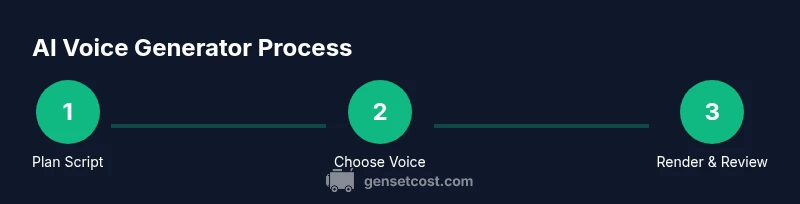
Imagine a 150-word product tutorial script. You paste the script into the platform, select a warm, friendly voice, and generate two takes. You compare pronunciation, pacing, and mood; you adjust a few phrases for clarity and then re-render. After choosing the best take, you export the audio in WAV for editing and MP3 for distribution. This concrete walkthrough illustrates the iterative loop from script to publish-ready audio.
Data privacy, security, and reliability
Data handling matters when you upload text or voice samples. Review how inputs are stored, whether data is used to train models, and which regions data resides in. Ensure encryption in transit and at rest, and check retention periods. Reliability matters too: uptime, support, and clear service level agreements help you plan production schedules without interruptions. If you’re dealing with sensitive content, prioritize platforms with robust privacy commitments and transparent data policies.
On-device versus cloud-based generation: trade-offs you should know
On-device generation reduces latency and improves privacy but may limit voice variety and model sophistication. Cloud-based solutions offer a broader set of voices and up-to-date models at the cost of data transmission. Your choice depends on privacy needs, target audience, and project scope. Consider a hybrid approach: use cloud generation for diverse voices during planning, then deploy on-device for localized or offline workflows when needed.
Getting started: a practical 24-hour plan
Kick off with a simple 24-hour plan: day 1, explore platforms and try a few voices; day 2, write prompts and test scripts; day 3, run an end-to-end draft in a project; day 4, review, refine, and document licensing and accessibility guidelines. This structured schedule helps you build confidence quickly while maintaining governance and quality control.
Tools & Materials
- Computer or mobile device with internet(Stable connection; recommended 5 Mbps+ for streaming voice samples)
- Account on an AI voice generator platform(Free trials exist; upgrade for commercial rights and higher quotas)
- Your script or text content(Editable document with clear punctuation and terminology)
- Optional microphone for recording prompts(Useful if you plan to add custom prompts or annotate prompts verbally)
- Headphones for reviewing audio(Closed-back headphones recommended for accurate listening)
Steps
Estimated time: 60-90 minutes
- 1
Set up your platform account
Create or log into your AI voice generator platform. Configure basic settings such as preferred language, output format, and default voice. This step establishes your workspace and ensures you can access the features needed for the rest of the workflow.
Tip: Use a dedicated project folder to keep prompts, scripts, and outputs organized. - 2
Choose target language(s) and voices
Browse available voices and select 2–3 candidates for testing. Consider audience language needs, regional accents, and brand personality. Save your top choices for quick comparison in later steps.
Tip: Label voices by mood (friendly, authoritative, energetic) to speed future decisions. - 3
Prepare a clean script
Rewrite your script for clear pronunciation and natural cadence. Add punctuation cues (commas, periods, ellipses) to guide pauses and emphasis. Include any unusual terms with intended pronunciation notes.
Tip: Keep sentences concise to reduce processing errors and improve intelligibility. - 4
Generate an initial draft
Paste the script and render a first take using one voice. Listen critically for pronunciation, tone, and pacing. Export as WAV for detailed reviews.
Tip: Generate 2–3 different takes to compare tonal variations easily. - 5
Review and refine pronunciation
Identify mispronounced names or technical terms. If the platform supports phonetic hints, apply them. Re-render until terms are accurate.
Tip: Maintain a glossary of terms with preferred pronunciations for future projects. - 6
Tune speed, pitch, and emphasis
Adjust speed and pitch to achieve readability without sounding artificial. Use emphasis markers for important phrases and ensure consistent pacing across sections.
Tip: Record short test snippets to validate changes without committing to full-length renders. - 7
Produce final render and formats
Once you’re satisfied, export final audio in multiple formats (e.g., WAV for editing, MP3 for distribution). Save versioned files with descriptive names.
Tip: Create a master track and separate per-scene files for easier editing. - 8
Document licensing and usage rights
Review platform terms to ensure commercial use, redistribution, and brand usage align with your project goals. Record the license details for future reference.
Tip: Keep a quick-reference license card in your project folder.
People Also Ask
What is an AI voice generator?
An AI voice generator converts text into spoken audio using neural networks. It offers multiple voices, languages, and styles to match your project needs.
AI voice generators turn text into speech using neural networks, offering multiple voices and languages for your project.
Do I need programming skills to use AI voice generators?
Many platforms provide user-friendly web interfaces that require no coding. Some advanced features may involve API access or scripting for automation.
Most tools are click-and-use, but you can also script them if you want to automate tasks.
What licensing considerations are there?
Check each platform’s terms for commercial use, redistribution rights, and any attribution requirements. Ensure your use aligns with the license.
Licensing determines what you can do with the output; read terms carefully before publishing.
Can I customize voices for a brand?
Yes, many platforms support custom voices or voice presets that reflect your brand tone. You can save and reuse brand-specific configurations.
Brand-specific voices are often available and can be saved for consistent use.
How do I ensure accurate pronunciation?
Provide phonetic hints or spelling guides for difficult terms. Test pronunciations on target audiences and adjust prompts accordingly.
Phonetic hints and careful wording help ensure correct pronunciation.
Is AI voice generation suitable for accessibility?
Yes. It can provide narration for videos, screen readers, and captions, improving accessibility when used thoughtfully.
AI voices can enhance accessibility when used with transcripts and captions.
Watch Video
Key Takeaways
- Choose voices that align with your brand and audience.
- Design prompts that cue natural prosody and clear pronunciation.
- Validate outputs with real listeners across devices.
- Document licenses and data handling practices before publishing.