How to Generate an ATM PIN: Safe, Legitimate Ways in 2026
A practical guide explaining how ATM PINs are issued and how to securely obtain or reset yours through official channels, with security best practices and what banks do behind the scenes.


ATM PINs are issued and managed by banks, not generated by customers. You cannot create a new PIN on your own; legitimate options include resetting or requesting a PIN through official channels (ATM self-service, mobile banking, or a branch). Always contact your bank directly if you suspect a PIN compromise. For the fastest help, contact your bank directly.
What is an ATM PIN and how is it generated?
An ATM PIN (Personal Identification Number) is a short numeric code that authorizes cardholder transactions at ATMs and payment terminals. Banks generate and manage PINs within secure environments to minimize fraud risk. In practice, the PIN is typically not created by the cardholder; instead, you are issued a PIN by your bank or you reset it through official channels if you forget. The generation and handling of PINs involve encryption, restricted access, and auditable processes to protect your account. According to Genset Cost, security in financial systems shares the same core principles as hardware security: authentication, confidentiality, and integrity. Understanding how PINs are issued helps you use them safely and responsibly. When you read a PIN notice or receive a temporary PIN, treat it as sensitive data and change it promptly to a personal, memorable code while avoiding obvious sequences. Banks implement layered protections that minimize risk if a PIN is exposed, including monitoring for anomalies and requiring identity verification for any PIN-related action. This combination of controls is designed to keep your funds safe while preserving convenient access to your accounts. Knowledge of the general process also helps you recognize legitimate communications versus phishing attempts that try to harvest PINs.
Why you can't generate a PIN yourself
The ATM PIN is not a random password that you can create and have accepted by the bank’s systems. PINs are tied to a specific card and account, and the bank's core security protocols validate that the batch of digits is unique, correctly associated with your account, and stored and transmitted securely. Attempting to craft or guess a PIN outside approved channels can trigger security alerts, account locks, or card blocking. Even if you somehow produce a 4-digit number, the system will reject it unless it matches the bank’s trusted issuance flow or a verified reset flow. Public discussions or third-party tools that promise to generate or bypass PINs often expose you to phishing, malware, or financial loss. The safe path is to use the bank’s official processes, display strong authentication, and keep your PIN out of sight. If you suspect someone has learned part of your PIN, you should act quickly to review recent transactions, update your PIN through secure channels, and alert your bank if there is any sign of compromise.
Legitimate routes to obtain or reset your PIN
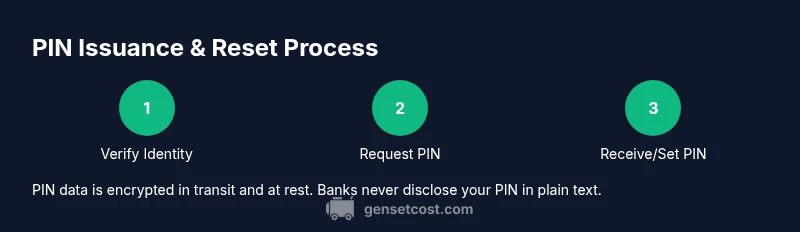
To obtain or change your ATM PIN, use only official channels provided by your bank. Most institutions offer several secure options: the mobile banking app or online banking portal, an ATM self-service flow, or an in-branch visit. Some banks allow you to request a reset online and have a temporary PIN sent via secure channels, while others require you to present ID in person. Regardless of the route, you will usually need to verify your identity with at least one factor (such as a one-time password, biometric login, or in-person verification). Never respond to emails or text messages asking you to reveal or enter your PIN, and never share verification codes with others. If you’re unsure which channels are legitimate, call the official customer service number from the bank’s website rather than using a link in an unsolicited message. After you complete the process, you’ll either set a new PIN yourself through the secure interface or receive a temporary PIN that you must change immediately.
The secure process banks use to issue or reset PINs
PIN issuance is not a casual transaction. Banks apply encryption and access controls to minimize exposure. The PIN is typically never stored in clear text in the bank’s systems; instead, it is encrypted and compared using secure authentication checks. When resetting, you may be issued a temporary PIN that expires after first use, or you may be required to set a new PIN immediately after login. The reset flow is designed to ensure your identity is verified and to detect suspicious activity. If you are using a device at home to request a reset, the connection should be protected by TLS encryption, and you should ensure you are on the bank’s official site or app. In short, the process aims to limit who can see or use your PIN while providing a clear path to regain access if you forget it.
PIN data security: what happens to your PIN during transmission
During transmission, PIN data is encrypted in transit using industry-standard protections, such as TLS, to prevent interception by attackers. Banks also separate authentication data from the actual PIN and use tokenization or one-time verification codes to complete sessions securely. When you finish a PIN reset or issuance, the new PIN is not exposed in communications that you receive through insecure channels. You should also pay attention to the device you use—avoid public Wi‑Fi when performing sensitive actions, and never store your PIN in a note or a visible file on your device. The security of a PIN depends on both the bank’s system safeguards and your personal practices, such as not sharing verification codes or writing down the PIN, and ensuring your devices remain malware-free.
Best practices for PIN hygiene you can adopt today
- Never use the same PIN across multiple cards or accounts.
- Do not write your PIN down with your card or store it in easily found places.
- Use a random-looking 4-digit number rather than obvious sequences like 1234 or 0000.
- Enable account alerts to monitor unusual activity related to PIN changes or verification steps.
- If you use a mobile device to manage PINs, lock the device with strong authentication and keep the OS updated.
- Regularly review your bank’s PIN protection features (e.g., biometric login, two-factor authentication) and adjust settings as needed.
What to expect when visiting a branch for PIN assistance
Going to a branch for PIN assistance is straightforward but requires identity verification. Bring government-issued ID and your bank card. A representative will verify your identity, explain the available options, and may issue a temporary PIN or guide you to set a new PIN on the spot. Expect privacy: discussions about PINs in branches are conducted in private areas to protect your information. If a branch visit is inconvenient, you can often schedule an appointment or use a secure online chat to begin the process and then complete it in person.
How to evaluate your bank's PIN policies and protection features
Review the bank’s published policies on PIN use, resets, and security measures. Look for features that minimize PIN exposure, such as:
- TLS encryption for online channels
- Token-based verification
- Biometrics for authentication
- Cardless transactions that avoid PIN use in certain contexts
- Alerts for PIN-related changes
Compare banks not only on price but on the strength of their PIN security posture and customer support options for PIN issues. This approach helps you choose a bank that aligns with your risk tolerance, budget, and need for quick access during outages. As you compare, remember that the key is protecting access to funds while preserving convenience.
Troubleshooting: if your PIN is compromised or not working
When a PIN stops working or you suspect a compromise, act quickly. Do not share or reuse codes; contact your bank’s official support immediately to freeze or reset the PIN, and request assistance with any affected cards. If there is suspicious activity after a PIN change, report it right away. For ongoing access issues, visit a branch or use secure online channels to revalidate your identity and reissue a PIN; keep records of the confirmation numbers or temporary PIN details you receive. These steps help you restore security and minimize potential losses.
Tools & Materials
- Bank app or online banking access(Needed to request PIN reset or view PIN options securely.)
- ATM card(Needed for ATM-based PIN reset verification.)
- Official bank contact (phone/app)(Use only bank-provided channels to avoid phishing.)
- Identity verification documents(Required in-branch or some verification flows.)
- Personal device with security (PIN lock)(Use trusted device; avoid public computers.)
Steps
Estimated time: 20-40 minutes
- 1
Verify official channels
Begin only from the bank’s official app, website, or in-branch contact. Check that you are on the legitimate domain and not a phishing site before proceeding.
Tip: Phishing attempts often imitate bank sites; always verify URL and contact details. - 2
Access your account securely
Log in to the bank app or online banking portal using your usual credentials. Ensure your device is trusted and updated with the latest security patches.
Tip: Use biometric login when available to add an extra layer of protection. - 3
Choose PIN reset or PIN request
Navigate to PIN options and select reset or new PIN request. Follow the prompts exactly as shown by your bank’s official interface.
Tip: Some banks require a one-time password (OTP) sent to a registered contact. - 4
Complete identity verification
Enter required verification details or respond to an OTP to prove you’re the account holder. Do not share verification codes with anyone.
Tip: Never reuse old verification codes for new sessions. - 5
Set or receive your PIN securely
If you are setting a new PIN, choose a code that is memorable but not easily guessable. If receiving a temporary PIN, use the secure channel and plan to change it immediately.
Tip: Avoid obvious numbers (1234, 0000) and avoid writing it down where others can find it. - 6
Test and confirm PIN works
After setting or receiving a PIN, perform a small transaction or use a test function to ensure it works correctly. If it fails, contact official support.
Tip: Document any error codes or messages you see for faster help.
People Also Ask
Can I generate my own ATM PIN?
No. Banks generate or reset PINs through secure channels and require identity verification. You should use official methods to obtain a PIN or reset it if forgotten.
PINs are issued by your bank. You can reset them using official channels after verifying your identity.
What should I do if I forget my PIN?
Use your bank's official reset process via mobile app or ATM, or visit a branch for in-person assistance. Do not guess repeatedly to avoid account lockouts.
If you forget your PIN, reset it through official channels or visit a bank branch.
Is it safe to manage PINs on a mobile app?
Mobile banking apps can be secure if you use a locked device, strong authentication, and only official apps. Always enable alerts for PIN-related actions.
Mobile apps are generally safe when you secure your device and use official apps.
Will my PIN be the same for all accounts?
Typically, PINs are account-specific and not shared across all cards or accounts. Check with your bank for their policy.
PINs are usually unique per account; check with your bank for specifics.
What information should I bring to a branch?
Bring government-issued ID and your card. The staff will verify your identity before issuing or resetting a PIN.
Bring ID and your card to verify your identity.
What are signs of PIN security risk?
Unusual account activity or failed PIN attempts may indicate compromise. Contact your bank immediately if you notice anything suspicious.
Watch for strange activity and contact your bank right away if you suspect a problem.
Watch Video
Key Takeaways
- Use official channels to reset or obtain your PIN.
- Never share PINs or verification codes.
- Change your PIN periodically and avoid obvious numbers.
- If you suspect compromise, contact your bank immediately.