How to generate with ai photoshop: A practical guide
Learn how to generate with ai photoshop through a structured, step-by-step process. This educational guide covers setup, prompts, ethics, workflows, and optimization for homeowners and designers using AI-powered image generation.


How to generate with ai photoshop: According to Genset Cost, you will learn to enable AI features in Photoshop, craft prompts, refine results, and save outputs for reuse. This guide covers setup, best practices, and safety tips to help homeowners and designers harness AI-powered image generation ethically and efficiently. By following these steps, you’ll unlock creative workflows without sacrificing control or quality.
how AI generation in Photoshop works today
Photoshop’s AI features rely on neural networks to analyze content, generate new imagery from prompts, and apply intelligent edits. When you know how to prompt effectively, you can create complex composites, textures, or stylistic variations in minutes rather than hours. This section explains the core concepts and how they translate into practical workflows for designers and homeowners using Photoshop for the first time. We will cover not just the how, but also the why behind Generative Fill, Neural Filters, and related tools, so you can decide when AI makes sense for your project. By the end, you’ll have a mental map of when to use AI generation versus traditional editing, and how to evaluate results for quality and consistency.
Key ideas include prompt inputs, model capabilities, and the balance between automated outputs and manual refinements. You’ll also learn how AI can accelerate asset creation while preserving control over composition, lighting, and color fidelity. Early planning helps prevent over-reliance on automation and keeps your final deliverables aligned with client expectations.
Preparing your Photoshop setup for AI generation
To start generating with AI in Photoshop, ensure you are on a recent version of Photoshop that includes Generative Fill and Neural Filters. Update graphic drivers and verify that your system meets recommended requirements (8–16 GB RAM minimum for simple tasks; more for large composites). Turn on cloud-based features if you plan to use online prompts, and configure your workspace so you can quickly access layers, masks, and history. It’s helpful to enable a dedicated scratch disk for large renders and to set up a neutral workspace with consistent lighting when using client-approved color workflows. Having a clear project brief and reference materials handy saves time during iteration and reduces reruns.
The anatomy of a good prompt for image generation
A strong prompt is specific yet flexible. Start with a clear subject, then specify style, mood, lighting, color palette, and composition. Include constraints (e.g., “photorealistic, 300 ppi, 4k canvas”) and any reference imagery you want the model to consider. For Photoshop prompts, you can combine natural-language descriptions with model controls such as EGL/NeRF equivalents embedded in Neural Filters or Generative Fill prompts. Practice by building a prompt bank: simple prompts first, then gradually add constraints to influence texture, brushwork, and realism. This section includes practical examples like: “a sunlit kitchen poster in a retro style, high contrast, warm tones.”
Iteration strategies: refining results with prompts and masks
Generation is iterative by design. Start with a broad concept and refine with successive prompts, adjusting attributes such as lighting, texture, and edge sharpness. Use masks and selections to constrain AI outputs to specific areas of your composition, then blend with traditional edits for seamless integration. Create variations quickly by generating multiple options and compare them side by side. Keeping a log of prompts and settings helps reproduce successful results and informs future projects.
Practical workflow: from concept to export
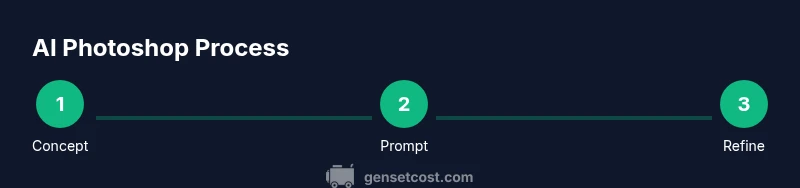
- Conceptualize the idea and gather references. Create a rough draft in Photoshop to establish composition.
- Generate initial AI outputs using Generative Fill or Neural Filters.
- Refine results with masks, blend modes, and color grading.
- Integrate AI assets into the broader design, ensuring consistency with typography and branding.
- Finalize with non-destructive edits and export in appropriate color profiles for print or web.
This workflow emphasizes non-destructive editing, version control, and clear handoffs so clients or team members can review changes.
Quality control: evaluating outputs and avoiding bias
Assess AI-generated elements for alignment with the brief, realism, and artifacts. Watch for color shifts, inconsistent reflections, and texture anomalies. Consider potential biases in generated content and avoid stereotypes or misrepresentations. Establish a review rubric and use peer feedback to catch issues you might miss when working solo. Remember to verify licensing and usage rights for AI-generated assets.
Safety, licensing, and ethics
Understand licensing considerations for AI-generated imagery and any client or platform requirements. Keep records of prompts and outputs for accountability and attribution. Use AI content responsibly, ensuring it does not infringe on copyrighted styles or impersonate real individuals. When in doubt, opt for clear disclaimers and obtain client approval for AI-assisted elements.
Tools, plugins, and enhancements
Beyond the built-in Photoshop AI features, explore plugins and asset libraries that complement AI workflows. Use color management tools to preserve consistency across devices and print. Integrate stock imagery and vector assets to enhance AI-generated results where appropriate. Keep software updated to access the latest capabilities and security updates.
Real-world examples and case studies
A marketing team used AI generation in Photoshop to quickly prototype social media visuals for a product launch, iterating on a dozen concepts in a day while maintaining brand consistency. A photographer created a stylized portrait series by blending AI-generated textures with manual retouching, achieving a distinctive aesthetic with careful masking. These examples illustrate how AI can accelerate ideation without sacrificing artistic control.
Tools & Materials
- A computer with modern specs(16 GB RAM minimum; dedicated GPU recommended for large renders)
- Adobe Photoshop with AI features(Ensure you’re on a recent version that includes Generative Fill and Neural Filters)
- Stable internet connection(Needed for cloud-based features and prompts)
- Reference images or prompts library(Optional for inspiration and consistency)
- Graphics tablet (optional)(Helpful for precise masking and brushwork)
Steps
Estimated time: 90-120 minutes
- 1
Prepare your canvas and brief
Define the project scope, gather references, and set up a neutral canvas with the correct color profile. This ensures your AI outputs align with the intended look and print requirements.
Tip: Write a clear brief and collect 3-5 reference images before generation. - 2
Enable AI tools in Photoshop
Open Generative Fill and Neural Filters, make sure the features are activated, and set any global preferences (color space, resolution). This sets the stage for smooth generation.
Tip: Test a small area first to confirm prompts behave as expected. - 3
Craft your first prompts
Create concise prompts that describe subject, style, mood, lighting, and composition. Include constraints such as resolution or realism level to guide the AI.
Tip: Start with a simple prompt, then add constraints to steer results. - 4
Generate and evaluate variations
Run multiple generations to produce a set of options. Compare them against your brief and select the strongest candidate for further refinement.
Tip: Save each variation with a descriptive name for easy comparison. - 5
Refine with masks and edits
Use layer masks to blend AI outputs into the scene. Apply non-destructive adjustments and color grading to match lighting and mood.
Tip: Use the blend-if controls to fine-tune edge integration. - 6
Export and document
Export the final asset in the required formats and color profiles. Document prompts and steps used for future reproducibility.
Tip: Create a prompt log for future iterations or reuse.
People Also Ask
What are AI features in Photoshop and how do they work?
Photoshop’s AI features use neural networks to analyze content, generate imagery from prompts, and apply edits automatically. They assist with tasks like object removal, texture synthesis, and stylistic changes, but results require human oversight for quality and brand alignment.
Photoshop uses AI to help you generate and edit images, but you still guide the result and review it for quality.
Is AI generation in Photoshop safe for commercial use?
AI-generated assets can be used commercially when you follow licensing terms and keep records of prompts and outputs. Always verify rights for any referenced assets and ensure compliance with client requirements.
Yes, but follow licensing terms and keep records of outputs for commercial work.
Do I need special hardware for AI image generation in Photoshop?
A modern computer with a capable GPU and ample RAM helps, especially for large or complex projects. For many tasks, 16 GB RAM and a recent GPU provide a smooth experience, though smaller projects can run on modest setups.
A recent computer with a good GPU helps, but you can start with modest specs for simpler tasks.
What is the best workflow to integrate AI content into a design?
Start with a clear concept, generate variations, refine with masks, integrate with traditional edits, and finalize with non-destructive adjustments. Document prompts and settings for consistency across future projects.
Outline a concept, generate options, refine with masks, and finalize non-destructively.
Can AI-generated images replace traditional editing entirely?
AI can speed up many steps, but it rarely replaces the need for human judgment. Use AI as a tool to handle repetitive or creative tasks, then apply expert retouching for final polish.
AI speeds up work, but human expertise remains essential for final polish.
Where can I learn more about prompts and techniques for AI in Photoshop?
Explore official Photoshop tutorials, community prompts repositories, and hands-on practice. Building a personal prompt library accelerates future projects and reduces trial-and-error time.
Check official tutorials and practice to build a prompt library.
Watch Video
Key Takeaways
- Define a clear brief before starting.
- Prompts guide AI, but masks ensure integration.
- Iterate with multiple variations for best results.
- Maintain non-destructive edits for safety.
- Document prompts for reproducibility and compliance.