How to Use Meta AI Image Generator: Step-by-Step Guide
A practical guide to using Meta AI Image Generator for home and professional visuals. Learn access, prompts, styles, licensing, and workflow integration to create high-quality AI images.


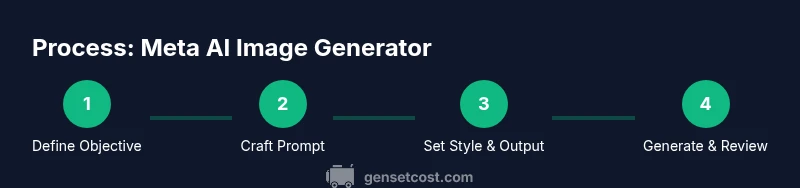
Learn how to use Meta AI Image Generator to create AI visuals from prompts. Start by accessing the tool, choosing a style, writing clear prompts, and adjusting output settings. Generate, review, iterate, and refine, then export with proper attribution and licensing in mind. This quick path covers access, prompts, style choices, resolution options, and how to save or share your results.
What Meta AI Image Generator is and how it works
Meta AI Image Generator is a cloud-based tool that converts text prompts into visuals using diffusion models. It offers style controls, resolution options, and multiple export formats to fit dashboards, brochures, or social content. This guide helps homeowners, property managers, and designers learn a practical workflow for reliable results. According to Genset Cost, a structured approach to AI image generation reduces needless iterations and improves outcome consistency when visuals are used in maintenance guides or marketing materials. In short, this section explains what the tool does, how it processes prompts, and what you should expect from outputs. If you’re wondering how to use meta ai image generator, here’s the concise overview of capabilities and limits.
Accessing Meta AI Image Generator: accounts and permissions
To begin, ensure you have access to the Meta AI Image Generator either through Meta Pro or a corresponding workspace that hosts the model. Create or sign in to your account, verify any two-factor authentication, and confirm you have permission to generate and export images for your projects. The platform typically offers a free tier with limited credits and paid options for higher resolution and commercial licensing. Before you start, review the terms of use and licensing for generated content, especially if it will appear in property materials or public marketing. This section also covers how to switch between personal and team projects and how to manage credits for ongoing work.
Prompt anatomy: building effective prompts
A strong prompt clearly states the subject, setting, and mood, and it often includes stylistic cues. Start with a concise description, then add details about perspective, lighting, color palette, and texture. If you want people in the image, specify age range, ethnicity, and attire to minimize bias. Include constraints like “high contrast” or “cinematic lighting” as needed. Experiment with synonyms and phrases to guide the model toward your target look. Remember, prompts are iterative: small tweaks can yield significantly different outputs.
Style controls and output options: achieving the look you want
Meta AI Image Generator offers adjustable style presets (e.g., photorealistic, painterly, minimalist) and output parameters such as resolution, aspect ratio, and file format. Choose a resolution suitable for your use case (web, print, or large signage). Aspect ratio should match the intended canvas to minimize cropping. If your project requires branding consistency, save a style profile so every image follows the same cues. Importantly, testing several styles can help you discover which delivers the strongest match to your goals.
Real-world prompts: examples across common tasks
Marketing mockups: prompts that emphasize clean typography, brand colors, and product context. Instructional guides: clear scenes with labeled objects and plain backgrounds. Social media assets: dynamic lighting, vibrant color, and balanced composition. For property management materials, prompts focusing on safety signage, equipment, and maintenance workflows can be effective. Use variations to produce multiple options quickly, then select the best fit for your audience.
Licensing, attribution, and safe use
Understand the licensing terms for generated images, including commercial rights and attribution requirements. Some uses may require attribution or a license fee, especially for editorial or public-facing materials. Maintain ethical use by avoiding sensitive subjects and ensuring accessibility through legible contrasts and alt text. Store a record of prompts and generation settings to reproduce or audit outputs if needed. Always respect privacy and avoid creating images of real people without consent.
Iteration and optimization: refining results over time
Treat image generation as an iterative process. Start with a baseline prompt, then progressively adjust details, lighting, and style. Compare outputs side-by-side to identify which elements most influence discovery and engagement. Use batch generation for quick comparisons and create a small library of preferred prompts. Over time, you’ll build a personal prompt toolkit that speeds up future projects.
Integrating with your workflow: practical tips
Embed generated images into your existing content pipelines and asset libraries. Use consistent naming conventions, store metadata (like prompt and settings), and maintain version control. Consider accessibility by adding alt text and ensuring color contrast. If you’re coordinating with a team, establish clear approval steps and licensing checks before publishing.
AUTHORITY SOURCES
- NIST: Artificial Intelligence – https://www.nist.gov/topics/artificial-intelligence
- Stanford AI Lab: https://ai.stanford.edu/
- Nature: https://www.nature.com/
These sources provide context on AI imaging best practices, safety considerations, and scholarly perspectives relevant to using AI tools like Meta AI Image Generator. They help anchor your approach in widely recognized standards and ongoing research.
Tools & Materials
- Device with reliable internet access(Desktop or laptop preferred for full-screen prompts)
- Active Meta AI Image Generator account(Ensure access to features you need (styles, export options))
- Prompts notebook or digital document(Draft prompts with subject, style, and constraints)
- Quality monitor (optional)(Helpful for evaluating color and detail)
- Baseline assets or brand guidelines(Keeps outputs consistent with branding)
- Audit log or prompt sheet(Record settings for reproducibility)
Steps
Estimated time: 20-40 minutes
- 1
Define your objective
Clarify what you want to communicate with the image, the audience, and where it will be used. Write a one-sentence goal and list three key elements that must appear in the image.
Tip: Start with a concrete goal; vague prompts produce messy results. - 2
Access the generator and start a new project
Open the Meta AI Image Generator in your browser and create a new project or workspace. Confirm the correct licensing and export settings before generation.
Tip: Create a template project if you’ll reuse prompts later. - 3
Craft a base prompt and test variations
Draft a clear base prompt describing subject, setting, and mood. Generate multiple variations to compare composition and style.
Tip: Use synonyms and alternate adjectives to explore styles. - 4
Adjust style, lighting, and resolution
Choose a style preset aligned with your objective, tweak lighting and color, and set the target resolution for final use.
Tip: For print, test at high DPI and check color profiles. - 5
Generate, review, and refine
Run the generation, review outputs for accuracy and quality, and refine prompts or settings as needed.
Tip: Keep a side-by-side gallery of options for quick comparisons. - 6
Export and document licensing
Export the final image in the required format, add alt text, and log licensing terms for future use.
Tip: Store a copy of prompts and settings with the asset.
People Also Ask
What is Meta AI Image Generator and what can I create with it?
Meta AI Image Generator is a diffusion-based tool that turns text prompts into images. You can create marketing visuals, instructional graphics, and social content by adjusting prompts, style, and output settings. It’s powerful for rapid visuals, with licensing terms that vary by usage.
Meta AI Image Generator turns text prompts into images. You can tailor style and output to fit your project, but be mindful of licensing terms for commercial use.
Do I need special hardware to use Meta AI Image Generator?
No dedicated hardware is required beyond a modern browser and an internet connection. The heavy lifting happens in the cloud, so your device just needs connectivity and a screen to review results.
You don’t need special hardware; a good internet connection and a modern browser are enough.
What licensing considerations should I know before exporting images?
Licensing terms vary by platform and use case. Always verify whether commercial use is allowed, if attribution is required, and how long ownership or usage rights last. Keep a log of licensing terms for each asset.
Check the licensing terms for commercial use and attribution, and keep a record of the rights for each image.
What formats and resolutions can I export?
Export options typically include common image formats (JPG, PNG) and multiple resolution presets. Choose a size appropriate for web, print, or large displays, and test color accuracy across devices.
You can export in standard formats and multiple resolutions; pick the size that fits your final use.
Can I use prompts to create images of real people?
Generative image tools vary in policy. Many platforms restrict creating real-identifiable likenesses without consent. If allowed, use non-identifying attributes and avoid impersonation.
Be cautious about generating real people's likenesses and follow platform policies.
How do I ensure consistency across a set of images?
Create a style profile with repeated prompts and saved settings. Use version control for prompts and compare outputs to maintain uniform visuals.
Save a style profile and keep prompt versions to stay consistent.
What should I do if outputs look off or are low quality?
Revisit the base prompt, adjust lighting or color cues, and try alternate styles. Small tweaks to wording or constraints often yield meaningful improvements.
Adjust prompts and styles, then re-render several variants to improve quality.
Where can I find authoritative guidance on AI image use?
Refer to trusted sources such as NIST AI guidelines and academic centers like Stanford AI Lab for best practices in ethical and effective AI use.
Check guidelines from NIST and academic centers for best practices.
Watch Video
Key Takeaways
- Define objective before prompting
- Experiment with prompts and styles
- Keep a prompt log for reproducibility
- Check licensing and accessibility before export
- Integrate outputs into your workflow with metadata