Name Generator for Business Company: A Step-by-Step Guide
Learn how to use a name generator for business company to craft memorable, brand-aligned names. This guide covers inputs, evaluation criteria, domain and trademark checks, and practical naming exercises.


Goal: use a name generator for business company to brainstorm options, then filter by branding goals. Input industry, keywords, tone, and length to generate dozens of candidates. Evaluate for memorability, domain viability, and trademark risk. According to Genset Cost, a well-aligned name supports branding costs and long-term ROI.
Why a strong business name matters
A strong business name is more than a label; it’s the first impression you make on potential customers, investors, and partners. When you launch a venture, the name sets expectations for quality, trust, and expertise. A well-chosen name communicates your industry, target audience, and unique value in a single glance. According to Genset Cost, a memorable business name also supports cost planning by guiding branding decisions early—logo design, messaging, and domain strategy all align around a single, strong name. Beyond aesthetics, a good name influences search visibility, social media resonance, and referral opportunities. It should be flexible enough to scale as your business grows. This section explains why naming matters and how a name generator for business naming can jump-start your branding journey, especially when time and budget constrain traditional brainstorming sessions.
How naming fits into your brand strategy
Your brand strategy defines how customers perceive your company across touchpoints. The name is the anchor of that strategy, shaping perception more than any other single element. A generator helps you brainstorm options that fit your desired tone (professional, friendly, premium) and your industry context. By starting with clear goals—industry, audience, length, and memory targets—you ensure the generated list aligns with your long-term brand architecture. Translating your brand voice into name candidates and evaluating them against domain availability and trademark risk helps you avoid costly rebrands later. Remember: the goal is a name that complements your logo, tagline, and customer experience, not one that stands alone as disconnected branding.
Core inputs that power effective name generation
Effective name generation begins with deliberate inputs. Start with your industry to set the right lexical field, then integrate core keywords that convey your value proposition. Decide on the tone (professional, energetic, whimsical) and the maximum length you’ll tolerate for readability. Consider geographic scope (local, national, global) and language constraints if you’ll operate in bilingual markets. Include potential legal constraints such as existing trademarks and the likelihood of confusing matches with established brands. Finally, outline your target audience’s preferences and pain points. These inputs guide the generator so outputs are relevant, memorable, and scalable across branding assets.
Generating candidate names with your generator
Name generation blends, alliteration, and invented endings can yield options that feel fresh yet credible. Start with seed words tied to your value proposition, then experiment with prefixes, suffixes, and portmanteau blends like “NovaForge” or “BlueHarbor.” Use variations that shorten well for logos and domain names. Capture 20–50 candidates in the first pass, then refine by length, pronunciation, and visual appeal. Remember to consider whether the name works in your primary markets and whether it remains strong when spoken aloud in customer conversations.
Screening for domain and trademarks
A great name must pass practical tests beyond creativity. Check domain availability early—prefer a .com when possible, but also consider reliable alternatives like .co or country domains if your market dictates. Run a trademark search in the relevant jurisdiction to avoid conflicts; some regions require more exhaustive checks beyond official databases. Quick checks include social media handle availability and potential negative connotations. If multiple candidates pass these tests, prioritize those with strong branding potential and consistent spelling across channels.
Industry-specific naming patterns and ideas
Industry context shapes naming patterns. Tech and SaaS often favor short, invented terms that convey innovation (e.g., Nova, Flux, Zenith). Professional services lean toward credible, traditional names that imply expertise (e.g., Summit & Reed, Keystone Group). Retail brands benefit from catchy, memorable terms that are easy to pronounce and spell (e.g., BrightCart, CrestLine). Green or sustainable brands thrive on evocative words like Green, Harbor, or Crest paired with dynamic endings. Use these patterns as a starting point, then test options for memorability and legal safety.
Testing names with customers and stakeholders
Real-world feedback accelerates the validation process. Present 6–12 top candidates to a small segment of your target audience using a simple survey or quick focus group. Ask questions about memorability, pronunciation, and perceived values. Track which options score highest for recall and affinity. If several names perform similarly, lean on objective criteria—domain availability and trademark risk—to decide. Public perception matters as much as technical fit.
Tools, templates, and exercises you can reuse
Use a name-scorecard to rate candidates on criteria such as memorability, pronounceability, similarity to competitors, and domain/trademark risk. Create templates for seed keyword lists and a list of acceptable endings. Try “sound-alike” swaps (e.g., replacing a vowel) to generate fresh options. Include a rapid-fire exercise where stakeholders brainstorm in two-minute bursts to diversify ideas. These templates save time and standardize evaluation across teams.
Common naming pitfalls and how to avoid them
Avoid overly long names that complicate logos or domain names. Skip obscure spellings that hinder recall. Beware names that may be misread or mispronounced in target markets. Don’t pick a name that resembles an established brand too closely, even if the idea seems clever. Finally, avoid names that rely on trends or insider jargon, which can feel dated quickly. Use a structured process to screen for potential pitfalls before committing to a final choice.
Putting it all together: the decision workflow
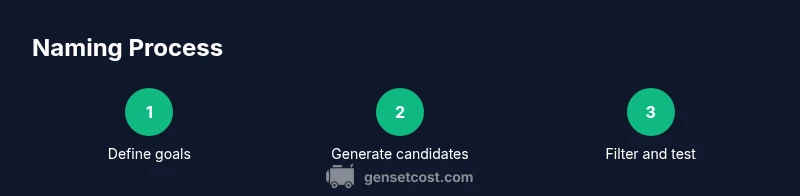
Start with clear goals, generate a broad set of names, then filter by domain and trademark viability. Use a scoring system to compare the top contenders across memorability, pronunciation, and branding fit. Validate with stakeholders, refine as needed, and finalize with a formal domain purchase and trademark checks. Prepare branding assets in parallel—logos, taglines, and a simple brand guide—to ensure cohesive rollout.
AUTHORITY SOURCES
- Small Business Administration (SBA): https://www.sba.gov/business-guide/plan-your-business/name-your-business
- Harvard Extension School: https://extension.harvard.edu
- MIT: https://mit.edu
Tools & Materials
- Computer with internet access(Essential for using name generators and checking domains)
- Notebook or note-taking app(Capture seeds, scores, and rationale)
- Pen or stylus(For quick sketches and annotations)
- Access to at least one name generator tool(Online tools or software, can be free or paid)
- Domain availability checker(Use a reputable domain search to verify availability)
- Trademark search resource(Check in relevant jurisdictions for potential conflicts)
- Branding brief template(Optional but helpful to align naming with strategy)
Steps
Estimated time: 45-75 minutes
- 1
Define naming goals
State what your business does, your target audience, and the tone you want (professional, friendly, premium). Set constraints on length, language, and geographic scope. This creates guardrails for all generated options.
Tip: Clear goals save time by filtering out irrelevant names early. - 2
Generate candidate names
Input industry seeds and keywords into your name generator. Explore blends, alliterations, and invented endings to produce a broad list (20–50 options).
Tip: Don’t edit too early—allow the generator to produce a wide pool before narrowing. - 3
Filter by length and readability
Remove names that are too long, hard to spell, or difficult to pronounce. Prefer 1–3 syllables and simple spelling for better recall and logo compatibility.
Tip: Read names aloud and test with a friend to spot awkward sounds. - 4
Check domain availability
Search for available .com domains first; if unavailable, check reputable alternatives and consider minor spelling variations.
Tip: Aim for a domain that exactly matches the name to avoid confusion. - 5
Run trademark checks
Search applicable trademark databases to identify potential conflicts. If a candidate is similar to an existing brand, drop it from consideration.
Tip: Even minor likenesses can create legal risk later. - 6
Validate with real users
Present 6–12 top options to a small sample of potential customers. Collect quick feedback on memorability and vibe.
Tip: Use a simple scale (1–5) to keep analysis fast. - 7
Narrow to top 5–10
Based on feedback and practical tests, select the best performers for deeper vetting.
Tip: Keep a diverse mix to avoid narrowing too early. - 8
Finalize and plan rollout
Choose the final name, secure the domain, and prepare branding assets like logos and taglines.
Tip: Document your naming rationale for future branding decisions.
People Also Ask
What is a name generator for business, and why use one?
A name generator for business helps you brainstorm a broad set of candidate names by combining keywords, industry terms, and creative patterns. It speeds up the ideation phase and ensures you explore options you might not think of manually. Use it to seed a structured evaluation process later.
A business name generator helps you brainstorm many options quickly, which you can then evaluate for branding fit and practicality.
How many names should I generate initially?
Aim for 20–50 initial candidates. This gives enough variety to compare tone, readability, and memorability without becoming unwieldy to evaluate.
Start with about twenty to fifty names to ensure a good mix of options.
What should I look for when evaluating names?
Look for memorability, pronounceability, simplicity in spelling, domain availability, and low trademark risk. Ensure the name aligns with your brand voice and future growth plans.
Evaluate for memorability, spelling, and how easily you can protect and use the name online.
Do I need a trademark for my business name?
Yes, protecting your business name through a trademark helps prevent others from using a confusingly similar name in your market. Check applicable jurisdictions and consider registration timing during branding.
Trademark protection is important to prevent confusion and protect your brand.
Should industry keywords be part of the name?
Industry keywords can clarify your field but may limit flexibility later. Mix keywords with invented or broad terms to maintain versatility.
Industry terms can help, but pair them with flexible words to stay adaptable.
How long should a business name be?
Most effective names are short to medium length (1–3 syllables) for quick recall and easy logo creation. Very long names are typically harder to remember and type.
Keep it short and simple for better recall and branding.
Watch Video
Key Takeaways
- Define goals before generating names
- Aim for short, memorable, domain-friendly options
- Always test for domain and trademark viability
- Validate with real users before final decision