Slogan Generator for Business: A Complete How-To Guide
Learn how to use a slogan generator for business to craft memorable taglines that fit your brand. This guide covers tone, keywords, testing, and practical implementation.


Want a memorable business slogan? This guide shows how to use a slogan generator for business to produce, refine, and test options. Step 1: define your brand voice; Step 2: feed keywords; Step 3: review results for clarity; Step 4: test with audiences; Step 5: finalize and implement. You’ll learn best practices and common pitfalls.
Why a strong slogan matters for business
A good slogan crystallizes your brand promise, evokes emotion, and helps customers remember you in crowded markets. It acts as a hinge between your value proposition and consumer perception. According to Genset Cost, a well-crafted slogan can enhance recall and differentiate your business from competitors. When you create slogans, think about three outcomes: clarity of message, brevity of form, and consistency with your brand voice. This section will explore how slogans influence consumer behavior, searchability, and long-term branding outcomes. A slogan is not simply a catchy line; it is a compact expression of your promise that travels across ads, landing pages, product packaging, and social posts. By grounding your process in audience insight and brand strategy, you create a baseline for successful slogan generation that scales across channels.
In practice, the work begins with understanding the problem your slogan solves. Is it a promise about speed, reliability, or quality? Is the audience a busy professional, a budget-conscious family, or a sustainability-minded shopper? Clarifying these questions anchors the generator’s outputs in real-world relevance. While a strong slogan can be a powerful branding asset, it should not replace a comprehensive messaging framework. Use it as a hook that leads customers into deeper messaging. This is the first step toward building a cohesive brand story that resonates across touchpoints.
Understanding slogan generators: capabilities and limits
Slogan generators use prompts and keyword inputs to spark ideas, then refine results through style controls such as tone, length, and assigned archetypes. They can rapidly produce dozens of options, which is valuable for brainstorming or overcoming writer's block. However, they may return generic phrases if your inputs are vague, or they might create phrases that echo existing brands. To maximize quality, combine human judgment with AI outputs: provide clear brand constraints, seed with relevant keywords, and iterate with prompts that target your audience and industry. In practice, expect to edit and tailor generated lines to ensure originality and legal safety. For homeowners and small businesses, a generator acts as a creative accelerator—not a final authority.
Practically, you should structure prompts to capture tone (friendly, authoritative, premium), length (short, medium), and industry terms. When your inputs include competitors’ phrases, you may risk high similarity; therefore, always refresh prompts and run multiple iterations. A good habit is to save outputs in a notebook, then compare how each option aligns with your brand voice and value proposition. You’ll also want to test readability and pronunciation across languages if your brand scales internationally.
Defining your brand voice and audience before generation
Before you press generate, document your brand voice. Is it friendly, authoritative, playful, or premium? Create a simple one-page avatar: audience segments, pain points, preferred vocabulary, and emotional triggers. List 5-7 core messages you want to convey, plus any non-negotiable words (for example, “sustainability,” or “local”). Your brand voice should align with your mission and customer expectations. This clarity helps the slogan generator produce lines that feel authentic, not generic. Once defined, translate the voice into prompts, seed words, and constraints that steer output toward tone, cadence, and structure that suit your channels—from website hero sections to social captions.
Developing a consistent voice also means establishing guardrails: what not to say, what language to avoid, and how formal or casual the tone should be. Prepare a short set of approved adjectives and phrases that capture the voice, then weave these into every generated option. The clearer your inputs, the higher quality the final shortlist will be.
Crafting effective slogans: structure, tone, and rhythm
Effective slogans follow recognizable patterns. A common structure is Benefit + Emotion + Distinctive Point. Short length (usually 3-6 words) enhances memorability and memorability is driven by rhythm and alliteration. Consider devices like parallelism, rhyme, or cadence (e.g., 2- or 3-syllable phrases). Use a consistent tense and avoid jargon; make sure the slogan remains meaningful when shortened for logos or icons. Use placeholders to test different word orders, then refine to a final version that fits your brand’s typography and color palette. Use a simple brand-safe vocabulary and ensure the line can be easily translated for international markets. The generator can propose dozens of variants; your job is to distill them into a single, powerful message.
Additionally, consider the emotional payoff: does the slogan promise speed, trust, or value? The best slogans pair a tangible benefit with an aspirational feeling. Test several rhythm patterns: short-short-long, alliterative sequences, or a tactile cadence that resonates when spoken aloud. Finally, ensure the final choice compiles well with your logo, website headers, and advertising headlines.
The role of keywords and testing in slogan development
Keywords anchor your slogan to searchability and relevance. Start with 5-10 core terms that capture your value proposition, audience needs, and industry. Feed these into the slogan generator with constraints on tone and length. After producing options, test shortlists with a quick survey or A/B test on a landing page snippet. Track memorability, perceived relevance, and intent to act. Use linguistic tests to ensure pronounceability in your primary language and cross-cultural viability. Document results and iterate, repeating the process with refined prompts until you reach a handful of strong candidates.
In practice, it helps to categorize outputs into themes: confidence-focused, action-oriented, benefit-led, or mission-driven. Then pick a winner from each theme and compare it against your core messages. If your target market spans regions with different languages, you may need multiple versions or a universally understandable slogan. Finally, ensure that shortlisted options avoid negative connotations or unintended meanings in other languages. A careful testing plan protects you from costly rebranding mistakes later on.
A practical workflow: from inputs to final selection
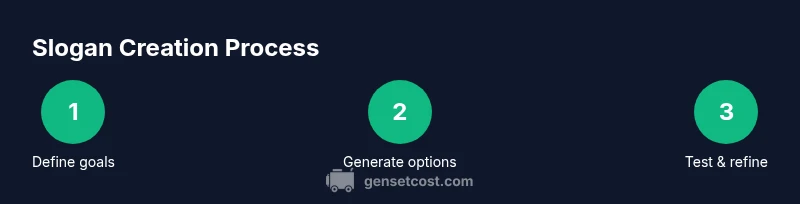
A practical workflow keeps things organized from start to finish. Step 1: collect inputs—brand voice, target audience, core messages, and constraints. Step 2: generate 40–60 options using the slogan generator, with seed words and tone controls. Step 3: filter down to 12–20 candidates by eliminating clichés, vague language, and misalignment with brand voice. Step 4: refine the top candidates by rewording for rhythm and brevity, then test with a sample audience. Step 5: check for trademark conflicts and legal safety, and finalize the top 3 to 5 lines for rollout across assets.
Keep a changelog of changes to each slogan, including the prompts used and the final justification for selection. This audit trail helps when you later justify branding decisions to stakeholders. A well-documented process also speeds up future slogan iterations as your brand evolves. In addition, consider creating a “slogan bank”—a repository of tested lines labeled by theme and channel—so your marketing team can quickly deploy a consistent message across campaigns.
Common mistakes and how to avoid them
Avoid slogans that are vague, generic, or overlong. A slogan should be actionable, not just descriptive, and it must remain meaningful when used as a small logo or button label. Don’t rely on a single generator result; always curate with human judgment. Check for cultural sensitivity and ensure the line translates cleanly in other languages if you’re global. Finally, perform a quick brand consistency audit: does the slogan align with your tone, values, and visual identity? If not, refine prompts and try another iteration.
Over-indexing on cleverness can backfire if the message loses clarity. You should aim for a slogan that communicates a clear benefit in plain language. Avoid copying a famous competitor (risk of confusion or litigation). Ensure the final line can be used across multiple formats—from 14-character social bio to 60-character homepage hero. Track any regulatory constraints that affect your industry, especially if the slogan implies guarantees or performance claims.
Case studies and examples
Case Study A: A local café used a slogan generator to craft "Brews that Brighten" by combining warmth, local focus, and easy recall. After testing with a small audience, they selected a version that matched their neighborhood community vibe and updated the menu, signage, and social posts to align the new tagline. The process included prompts emphasizing local sourcing and community involvement, which strengthened the brand narrative and boosted in-store engagement by a noticeable margin during a seasonal campaign. Case Study B: An eco-friendly cleaning service used short, action-oriented lines like “Clean with Care” and then tested variants to balance sustainability language with clear benefits. The final choice connected emotion with practical value and supported their brand story, leading to improved click-through rates on digital ads and greater trust in printed collateral.
These examples illustrate how slogans can emerge from a structured, iterative process and still feel distinctly brand-aligned. When you document the rationale behind each choice, you build confidence among stakeholders and create a framework for future messaging updates. Remember: your slogan is a living asset that can evolve with your brand, audiences, and market conditions. Case studies show that disciplined testing and cross-channel application yield durable branding results.
Integrating slogans into branding assets
Once you have a compelling slogan, embed it across branding assets: website hero text, email signatures, packaging, social profiles, and ad creatives. Create a style guide snippet that explains when to use the slogan, with punctuation, capitalization, and length guidelines. Ensure your typography and color palette enhance legibility of the slogan. Finally, plan a rollout that includes internal onboarding so teams consistently apply the line in communications, customer support, and product messaging. A successful rollout includes training on tone, approved contexts, and guidelines for reiteration without over-saturation. By coordinating all touchpoints, you maximize the impact and ensure a cohesive brand experience across every customer interaction.
Tools & Materials
- Notebook and pen(For capturing brand attributes, target audience insights, and constraints.)
- Computer or smartphone(To access the slogan generator and record outputs.)
- Brand guidelines and value propositions(Provide tone, vocabulary, and unique selling points.)
- Keyword lists and thesaurus(Seed words and synonyms to feed the generator.)
- Testing plan (surveys or quick A/B test setup)(Plan to validate shortlisted slogans with real audiences.)
- Trademark search resource (optional)(Check for conflicts before finalizing.)
Steps
Estimated time: 90-120 minutes
- 1
Define objective
Identify what the slogan should achieve: drive awareness, convey a promise, or support a product launch. Align with business goals and audience needs.
Tip: Link the objective to a measurable outcome (e.g., awareness lift or landing-page CTR). - 2
Gather inputs
Compile brand voice, core messages, audience segmentation, and constraints such as length and language.
Tip: Include examples of phrases you like and dislike to guide the generator. - 3
Set up prompts
Create prompts that embed tone, length, and archetype (friendly, premium, etc.). Include seed words from your keyword list.
Tip: Use multiple prompts to capture variety (short, medium, punchy). - 4
Generate options
Run the slogan generator to produce 30–60 options. Collect outputs in a single montage for easy review.
Tip: Avoid judging too soon; save all variations for later evaluation. - 5
Curate and refine
Filter out weak options, then reword top candidates for rhythm and brevity. Test lines in different contexts.
Tip: Aim for a set of 3–5 final contenders. - 6
Test with audiences
Use quick surveys or A/B tests to gauge memorability and relevance. Track recall and intent to act.
Tip: Sample size matters—start with 50–100 respondents. - 7
Legal and trademark check
Search for similar slogans and verify there are no conflicts that could cause legal issues.
Tip: Consult a trademark resource or attorney if in doubt. - 8
Finalize and roll out
Choose the final 3–5 slogans and adapt them for different assets. Create a rollout plan.
Tip: Document usage guidelines for consistent brand application.
People Also Ask
What is a slogan generator for business?
A slogan generator is a tool that creates short branding lines by combining keywords with tone controls. It helps brainstorm options quickly and serves as a starting point for human refinement.
A slogan generator creates short branding lines and helps you brainstorm fast, but you should fine-tune the results to fit your brand.
How do I define brand voice before generating slogans?
Document your brand attributes, audience, and desired tone. Use these as prompts to steer the generator toward outputs that feel authentic.
Define your brand voice first, then feed prompts that reflect that voice to the generator.
Can slogan generators replace human creativity?
No. Generators speed up ideation, but human judgment ensures originality, alignment with strategy, and legal compliance.
Not replaceable—use generators to brainstorm, then refine with people.
What should I test in slogans?
Test memorability, relevance, brevity, and consistency with brand values. Use surveys or small-scale A/B tests for quick feedback.
Test how memorable and relevant each slogan is with real audiences.
Are slogans protected by trademark?
Brand slogans can be protected; conduct a trademark search and consult legal resources before launching widely.
Yes—consider trademark checks before using a final slogan.
Watch Video
Key Takeaways
- Define your objective before generation
- Use a clear brand voice to guide prompts
- Test slogans with real audiences
- Roll out consistently across assets