Ozone Generator vs Air Purifier: A Comprehensive Comparison for Homes
Compare ozone generators and air purifiers for homes and property managers. This guide covers safety, effectiveness, maintenance, and costs to help decide the best air quality solution for occupied and unoccupied spaces.


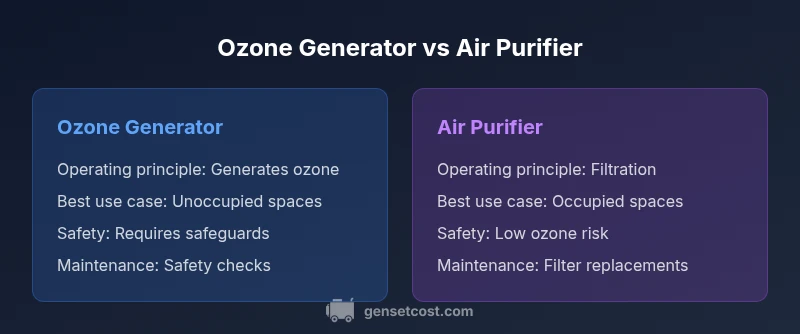
When evaluating ozone generator vs air purifier, the core difference is how they improve air quality and where they're used. An ozone generator creates ozone to neutralize odors and chemicals in unoccupied spaces, while a typical air purifier relies on filters to trap particles and capture gases. For occupied rooms, air purifiers are generally safer; ozone devices require strict safety guidelines and space limitations.
What is an ozone generator?
An ozone generator is a device that intentionally creates ozone (O3) to oxidize and break down certain odors, pollutants, and chemicals in the air. These devices are often marketed for remediation after smoke damage, fire events, or strong odors. They work best in unoccupied or sealed spaces where occupants can be safely removed during treatment. The core difference between an ozone generator and a standard air purifier lies in the mechanism: ozone generators rely on chemical reactions rather than physical filtration. For homeowners and property managers evaluating air quality options, this distinction matters because it dictates when and where the device can be used, as well as potential health and regulatory constraints. According to Genset Cost, the safety and space requirements significantly influence total ownership costs and risk.
How air purifiers work
Air purifiers primarily rely on physical filtration and adsorption to clean air. The most common models use HEPA filters to trap particles as small as 0.3 microns, while activated carbon or other adsorbents target gases and odors. Some units add pre-filters, UV-C lamps, or ionization features, though effectiveness varies. For homeowners, the benefit is a device that continuously cleans occupied indoor spaces without producing ozone. The combination of filtration and adsorption reduces particulate matter, allergens, and some VOCs, contributing to a safer daily living environment. In many regions, air purifiers are the default recommendation for improving indoor air quality in occupied homes.
Safety and health considerations
Indoor safety is a primary differentiator between these technologies. Ozone at high concentrations can irritate the lungs, eyes, and airways, and prolonged exposure may lead to health issues. Regulatory bodies in several jurisdictions advise against using ozone generators in occupied spaces and require clear labeling and safety procedures when employed for remediation. Air purifiers that rely on filtration generally pose far lower acute health risks, provided they are used as intended and filters are replaced on schedule. For property managers, the key takeaway is to avoid mixing ozone-based treatment with daily occupancy without professional oversight and proper ventilation.
Odor removal and chemical treatment: ozone vs filtration
Ozone generators can disrupt a broad range of odors by oxidizing odor-causing compounds, including some VOCs. However, the odor removal process hinges on proper timing, space, and removal of occupants during treatment. Filtration-based purifiers remove odors primarily through activated carbon and specialized media, which can be effective for cooking, pets, and some smoke odors. In many cases, activated carbon filters provide a safer, passive approach for continuous odor control in living spaces, while ozone devices are best reserved for controlled or professional remediation scenarios.
Particle removal and filtration capabilities
HEPA-based air purifiers excel at capturing particles as small as 0.3 microns, including pollen, dust, and many aerosols. This makes them highly effective for allergy relief and general cleanliness in occupied rooms. Ozone generators do not remove particles; their strength lies in chemical reactions that degrade odor molecules and some contaminants in the air. For homes facing heavy particulate pollution or households with severe allergies, a properly sized air purifier with HEPA filtration is typically the safer and more predictable option.
Space and occupancy considerations
Ozone generators require careful planning around occupancy. Treating a space with occupants present is generally discouraged due to ozone exposure risk, unless a certified remediation protocol is followed and the space is adequately ventilated afterward. Air purifiers operate continuously in occupied spaces with minimal risk when used as directed. When choosing equipment for a multi-room home or a rental property, consider whether rooms can be isolated during treatment or if continuous purification with filtration is preferable for daily use.
Energy usage and environmental impact
Energy use varies by model and operating mode. Ozone generators may consume more energy during active treatment, especially larger units designed for whole-home remediation. Filtration-based purifiers usually consume less energy per hour of operation and provide ongoing benefits without the safety constraints of ozone. From an environmental perspective, ongoing filtration requires regular filter replacements, which creates waste and supply chain considerations, while ozone devices generate ozone emissions that must be carefully managed to minimize risks.
Maintenance, filters, and replacements
Air purifiers demand periodic maintenance, including filter replacements (HEPA and activated carbon) and occasional purifier recalibration for optimal performance. The long-term cost of filter consumables should be considered alongside electricity use. Ozone generators require less routine maintenance in terms of parts, but they demand strict adherence to safety protocols, calibration checks, and sometimes professional servicing to ensure safe operation and avoid unintended ozone release. A maintenance plan helps homeowners balance upfront costs with ongoing reliability.
Installation and space requirements
Air purifiers fit almost anywhere: desktops, shelves, or floor stands, with many portable options for multi-room setups. Ozone generators, especially larger units, demand dedicated space and careful placement to prevent exposure and ensure proper ventilation. For rental properties, portability and ease of relocation can be decisive, while for a single-family home, a central-air approach with a purifier network may offer a more practical solution. Always follow manufacturer guidelines and local regulations when installing any air quality equipment.
Cost considerations and ownership
Upfront costs for air purifiers range with size and filtration quality, from budget units to premium systems with multiple stages. Operating costs include filter replacements and occasional service. Ozone generators can have moderate to high upfront costs, depending on capacity and features, but ongoing costs are often lower if used under strict safety controls. Because of safety considerations and regulatory exposure, many buyers in 2026 still prioritize filtration-based air quality improvements for day-to-day use and reserve ozone devices for specialized remediation tasks.
Use-case scenarios: homes, rentals, and properties
In occupied homes, a high-quality HEPA/activated carbon air purifier is usually the best daily driver for clean air and odor control. In properties with unique odor or chemical challenges, a professional remediation approach using an ozone generator may be considered, but it should be executed by trained technicians with controlled environments. For landlords and property managers, a hybrid approach—continuous filtration in occupied spaces and occasional controlled ozone treatment in unoccupied units—can balance safety with effectiveness, especially after renovation or wildfire events.
Making a decision: how to choose
Start by defining occupancy, space size, and odor/contaminant concerns. If occupants are present most of the time, prioritize filtration-based purifiers with validated efficiency ratings and easy maintenance. If you have unoccupied spaces with severe odors or chemical exposure and have access to professional remediation services, an ozone generator used under strict safety controls could be appropriate. Always consult local regulations and manufacturer guidelines, and consider a professional air quality assessment to tailor a strategy to your property.
Comparison
| Feature | Ozone generator | Air purifier |
|---|---|---|
| Operating principle | Generates ozone to oxidize pollutants in unoccupied spaces | Filters particles (HEPA) and adsorbs gases (activated carbon) |
| Best use case | Unoccupied rooms for odor/chemical neutralization | Occupied spaces for continuous filtration |
| Health and safety | Exposure risk if used indoors without safeguards | Low ozone emission; generally safer for daily use |
| Maintenance needs | Calibration and safety checks; limited consumables | Regular filter replacements; predictable ongoing costs |
| Odor removal | High odor treatment potential with proper use | Effective odors with carbon filters; gradual improvement |
| Energy usage | Variable; depends on capacity and run time | Typically energy-efficient; low operating costs |
| Price range | Moderate to high upfront; depends on capacity | Moderate upfront with ongoing filter costs |
The Good
- Air purifiers are generally safer for occupied spaces
- Ozone generators can treat odors and chemicals quickly in unoccupied areas
- Air purifiers with HEPA and activated carbon filters provide reliable particle and gas removal
- Ozone devices can cover large spaces when used correctly
The Bad
- Indoor ozone use carries health risks if mismanaged
- Regulatory restrictions may limit indoor use
- Air purifiers require ongoing filter replacements and maintenance
- Ozone devices require strict scheduling and professional oversight for safety
Air purifiers are the safer, more versatile choice for occupied spaces; reserve ozone generators for controlled scenarios.
For most homeowners and property managers, choosing an air purifier with HEPA and activated carbon offers safer, reliable air quality improvements. Ozone generators can be appropriate in unoccupied spaces or for professional remediation under controlled conditions, but they carry greater health and regulatory considerations.
People Also Ask
What is the main difference between ozone generators and air purifiers?
Ozone generators create ozone to neutralize odors and certain chemicals, typically in unoccupied spaces and under controlled conditions. Air purifiers use filters to capture particles and adsorb gases, making them safer for occupied rooms.
The ozone device creates ozone to neutralize chemicals in unoccupied spaces, while air purifiers clean air with filters in occupied rooms.
Are ozone generators safe for indoor use?
Indoor safety depends on proper use, space isolation, ventilation, and professional guidance. Most recommendations discourage routine use in occupied spaces due to ozone exposure risks.
Ozone indoors can be risky; only use with strict safeguards and preferably under professional guidance.
Do air purifiers remove odors and VOCs effectively?
Air purifiers with activated carbon filters can reduce many odors and VOCs, though efficiency varies by filter quality and exposure. For persistent odors, consider multi-stage filtration and proper room ventilation.
Activated carbon purifiers help with odors and VOCs, though results vary by model and room conditions.
Can ozone generators kill viruses or bacteria?
Ozone can inactivate some microorganisms under specific conditions, but consumer ozone devices are not a guaranteed or recommended disinfection method for daily use. Rely on approved cleaning and air-cleaning strategies for viruses.
Ozone isn't a reliable everyday disinfectant for homes.
What maintenance is required for each device?
Air purifiers require regular filter replacements and occasional cleaning. Ozone generators focus on safety checks and calibration, with less routine part replacement but strict usage rules.
Purifiers need filter changes; ozone devices focus on safety checks and proper operation.
Are there regulatory restrictions I should know about?
Regulations vary by jurisdiction, but many places limit indoor ozone generation and require proper signage, warnings, and ventilation. Always check local codes and manufacturer guidelines before use.
Check local rules; indoor ozone use often needs strict safeguards.
Key Takeaways
- Prioritize occupant safety with air purifiers for daily use
- Reserve ozone generators for unoccupied spaces and professional settings
- HEPA + activated carbon purifiers excel at particle and gas removal
- Factor maintenance costs when estimating total ownership
- Follow local regulations and manufacturer guidelines for safe use