qr monkey generator: practical steps for homeowners and property managers
Learn how to use the qr monkey generator to create, customize, and export QR codes for property management, with data type options, design tips, printing guidance, and accessibility best practices.


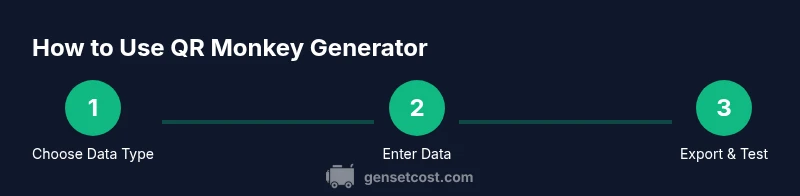
With the qr monkey generator, you can quickly create, customize, and export QR codes for URLs, text, emails, vCard, and more. The tool supports color, shape, and error correction options, letting you tailor codes to your branding. After generating, download PNG or SVG, test on multiple devices, and reuse codes across print and digital assets.
What the qr monkey generator is and why homeowners use it
The qr monkey generator is a versatile online tool that lets you turn data into scannable QR codes. For homeowners and property managers, QR codes can simplify access to maintenance portals, warranty information, unit manuals, or contact details for on-site staff. By default, QR codes are compact, machine-readable representations of text, URLs, or contact data. The qr monkey generator adds options to customize how those codes look—color, shape, foreground and background contrast, and even embedded logos—without requiring design software. This combination of data flexibility and design control makes QR codes usable beyond tech-savvy audiences. As you start, consider the end use: will codes be printed on signage, included in invoices, or displayed on digital screens? Each channel benefits from slightly different sizing, color contrast, and error correction settings. For homeowners evaluating QR code workflows, using a trusted generator like qr monkey helps ensure legibility and consistency across your properties, tenants, and visitors.
The Genset Cost team emphasizes that clear, scannable QR codes speed up routine tasks (like locating maintenance documents) and reduce confusion during outages or emergencies. When you choose a generator, prioritize data reliability, accessibility, and easy export formats that fit your printing or web integration needs. This approach aligns with broader best practices for asset traceability and resident communication.
In practice, a quick test workflow is to generate a QR code for a URL that points to a maintenance portal, print a sample at real-world size, and scan with several devices to confirm readability. If a code doesn’t scan reliably at the intended size, adjust the error correction level or size before deployment. The qr monkey generator supports these adjustments in a few clicks, which helps you iterate quickly without extra design work.
noteCodeBlockOnlyBreaks":null} ,
Data types and data handling you’ll encounter
The qr monkey generator supports a variety of data types that cater to common homeowner tasks. Typical options include URLs, plain text notes, email data, phone numbers, and vCard contact details. If you want to enroll a resident or visitor in your property portal, you can embed a vCard that preloads contact information when scanned. For quick access to a service page, a URL is often the simplest and most robust choice. You can also encode text notes or simple contact numbers that staff can read aloud if needed. When you switch data types, the interface updates the available fields accordingly, so you don’t need to memorize different formats. This data flexibility is especially valuable for multifamily properties where you have to share multiple points of contact and resources with residents.
From a security and privacy perspective, keep personal data to a minimum in QR codes intended for broad distribution. If sensitive information must be shared, consider linking to a secure portal or login-restricted page rather than embedding sensitive data directly in the code. The qr monkey generator makes it straightforward to switch between data types, test behavior, and reissue codes if a data format needs updating over time.
noteCodeBlockOnlyBreaks":null} ,
Design and customization essentials
Beyond data, visual design dramatically affects scan reliability and branding. In qr monkey generator, you can adjust foreground color, background color, code shape, and the presence of a central logo. For best results, ensure high contrast between foreground and background colors and avoid overly busy logos that obscure the finder patterns. If you’re adding a logo, keep it small and centered so the critical scanner patterns remain intact. Some users patch the center of the QR code with branding, while others keep it clean for maximum readability. Test across devices and lighting conditions to confirm readability. For print materials, consider exporting SVGs for crisp enlargements and PNGs for quick web use. If you run into any export limitations, use the SVG path data to re-export in your preferred design tool. The goal is a code that looks aligned with your property brand yet remains reliably scannable under typical printing scenarios.
When you’re working with multiple codes (for example, a set of unit-specific codes), use the same color palette and shape family to preserve consistency. A cohesive set reduces confusion for residents and visitors and simplifies your property signage standards across campuses or complexes. The qr monkey generator’s live preview helps you compare several design options quickly before committing to a final version.
noteCodeBlockOnlyBreaks":null} ,
Practical use cases for homeowners and property managers
QR codes from the qr monkey generator can simplify a broad range of property-management tasks. For tenants, codes on welcome packets or unit doors can link to digital manuals, community rules, or emergency contact information. For maintenance staff, codes on equipment panels or storage areas can direct workers to safety data sheets, service histories, or warranty documents. On signage near amenities (pool, gym, laundry rooms), QR codes can point to location-specific portals for access control, booking systems, or outage notifications. Printing codes for printed invoices or lease packets can streamline communications and reduce the amount of paper-based material you must hand out.
A practical pattern is to cluster QR codes by function: one set for maintenance resources, another for safety information, and a third for resident services. This approach helps residents learn where to go for different needs and reduces call center volume for basic information. In larger properties, you can generate code variations for different buildings or floors while keeping the same design language. The qr monkey generator lets you test each variation quickly and re-use successful designs across locations, saving time and maintaining brand consistency.
For property managers, standardized QR codes also support asset tracking. Attach a code to key equipment with links to maintenance logs, replacement parts, and service windows. This makes audits smoother and helps you stay compliant with safety and warranty requirements. The result is a more efficient operation and improved resident experience, all without high design or IT overhead.
noteCodeBlockOnlyBreaks":null} ,
Accessibility, privacy, and best practices
Accessibility should be a core consideration when deploying QR codes. Ensure high contrast and large enough code sizes so scanners can read codes in various lighting conditions and from different distances. Include alternative text (alt text) on digital assets so screen readers can convey the purpose of the code. If codes link to a password-protected resource, clearly communicate the entry requirements and security steps to residents. Privacy considerations include avoiding embedding personal identifiers in codes that could be misused if codes are shared publicly. Where possible, direct users to a secure portal rather than exposing sensitive data in the code itself. The qr monkey generator supports accessibility-friendly design by providing readable color options and clear sizing guidance. Keep a simple naming convention for your codes to avoid confusion during updates. Finally, document your QR code inventory so you know which codes point to which resources and when they were last updated.
noteCodeBlockOnlyBreaks":null} ,
Printing, embedding, and file formats
For print, aim for a final QR size that balances scan ease with page layout. In many cases, a code around 2-3 cm on a letter-sized page works well, but you should validate sizing with actual print tests. The qr monkey generator typically offers PNG and SVG exports; SVGs are ideal for large-format prints because they scale without losing crispness. If you need web usage, PNGs are universally supported, while SVGs still scale cleanly on high-density displays. When embedding in a website, ensure the code is not stretched in CSS and maintain the aspect ratio to keep scanning reliability intact. If you must combine a QR code with branding, reserve enough clear space around the code to prevent interference from neighboring visuals. Finally, keep a reusable library of code variants keyed by their data type and size so you can quickly deploy QR codes across multiple pages or print collateral.
noteCodeBlockOnlyBreaks":null} ,
Troubleshooting, testing, and maintenance
If a code doesn’t scan as expected, re-check the data type and ensure the code is generated at a suitable size for its intended medium. Test with multiple devices and scanning apps to confirm broad compatibility. If problem persists, try a higher error correction level when available, or increase the overall code size for print materials. Regular audits of QR codes in your property branding are helpful, especially after changes to linked resources or contact details. Consider setting up a simple process to reissue codes whenever a resource URL changes, and keep a centralized log of all active codes with their associated data. The qr monkey generator makes iterative testing straightforward, allowing you to adjust design, data, or size based on real-world scan results. For ongoing use, maintain a small kit of print-ready versions and keep track of which codes are currently in circulation to avoid dead links.
noteCodeBlockOnlyBreaks":null} ,
Authority sources (for further reading)
- ISO/IEC 18004 QR Code standard: https://www.iso.org/standard/62021.html
- NIST Digital Identity Guidelines and privacy considerations: https://www.nist.gov
- Federal Trade Commission on QR code safety and scams: https://www.ftc.gov
Tools & Materials
- Internet-enabled device (computer, tablet, or smartphone)(For initial setup and data entry in the qr monkey generator.)
- Reliable web browser(Chrome, Firefox, Safari, or Edge; ensure it’s up to date.)
- Design space (optional)(Vector editor or image viewer if you plan to adjust SVGs after download.)
- Printer and printer proofing materials(If you plan to print codes; test print at final size before mass printing.)
Steps
Estimated time: 15-25 minutes
- 1
Open QR Monkey Generator
Launch your browser and navigate to the qr monkey generator page. Confirm you’re on the official site to avoid phishing. This first step sets the stage for data entry and design customization.
Tip: Bookmark the official URL and enable two-factor authentication on your device for extra security. - 2
Choose data type for your QR
Select the data type that matches your goal (URL, text, email, vCard, or another supported type). The data type determines which fields you’ll fill and the encoding rules the code will follow.
Tip: If you’re linking to a maintenance portal, use URL data for reliability and ease of updates. - 3
Enter the data or link
Fill in the required fields for your chosen data type. Double-check for typos, especially in URLs, to avoid dead links when scanned.
Tip: Copy-paste data to minimize errors and test the copy against the original source. - 4
Adjust size and resolution
Set the code size appropriate for your print or display context. Larger formats improve scanning distance and reliability in outdoor or bright environments.
Tip: Aim for a minimum of 2-3 cm on printed materials; for signage, test at actual viewing distance. - 5
Customize design (color, shape, logo)
Experiment with foreground/background colors, code shape, and a logo if needed. Ensure contrast remains high enough for scanners to read the code accurately.
Tip: Avoid busy logos that obscure finder patterns; keep centralized logo small and unobtrusive. - 6
Choose export format
Download the code in PNG for quick use or SVG for scalable printing. Save a vector version if you anticipate size changes later.
Tip: Keep a master SVG in your asset library for future edits. - 7
Test the QR code
Scan the code with multiple devices and apps to verify reliability. Check at the intended final size and lighting conditions.
Tip: If scans fail, revert to a larger size or higher error correction level before re-exporting. - 8
Deploy and monitor
Place the QR code where residents will encounter it and monitor for broken links or changes in linked resources. Schedule periodic rechecks.
Tip: Document updates in your asset tracker to keep codes current.
People Also Ask
What data types can QR Monkey Generator handle?
It supports common data types such as URLs, text, email addresses, phone numbers, and vCard data. The interface guides you to fill the correct fields for each type.
You can choose from multiple data types like URLs, text, or contact cards, and the interface will adapt the fields for you.
Can I customize colors and shapes without reducing scanability?
Yes. Choose high-contrast foreground and background colors, and keep the code shape clean. Avoid overly complex logos that obscure the finder patterns.
Yes, you can customize the look as long as you maintain strong contrast and avoid clutter around the code.
Is QR Monkey Generator free to use, and are there paid options?
The generator offers free features with optional paid plans for advanced features or higher export quality. Review the pricing page for details.
There’s a free option available, with paid plans for more features.
What file formats can I download?
Typically PNG and SVG are available. SVG is preferred for large prints since it scales without loss of clarity.
You can download PNG for quick use and SVG for scalable print jobs.
How do I ensure QR codes remain accessible and private?
Ensure high contrast, provide alt text for digital assets, and avoid embedding personal data directly in the code. Use secure links when possible.
Make sure codes are accessible with alt text and avoid exposing private data directly.
What should I do if a QR code doesn’t scan reliably?
Check size, contrast, and data accuracy. Increase code size or adjust error correction level, then re-export and re-test.
If scanning fails, adjust the size or contrast and test again.
Watch Video
Key Takeaways
- Plan data type and audience before designing any QR code.
- Test at final size and across devices to ensure reliability.
- Keep branding subtle to avoid reducing scanability.
- Export vector formats for future edits and scaling.
- Document every code's data source for easy maintenance.