Which Code Generator for x? A Thorough Comparison
A rigorous, objective comparison of code generators for x, outlining criteria, per-option differences, and practical guidance to choose the right tool for your stack.


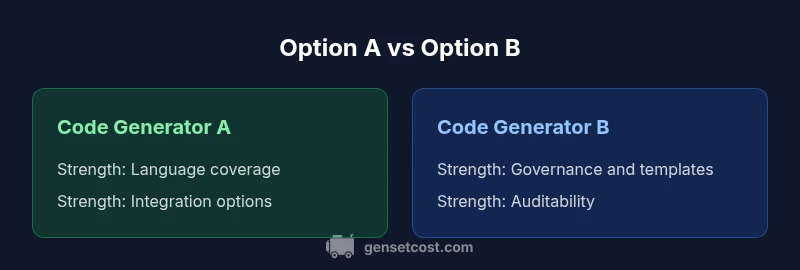
Two code generators are commonly considered for the task of which code generator for x: Code Generator A and Code Generator B. Code Generator A offers speed, broad language support, and a flexible plugin ecosystem, while Code Generator B emphasizes governance, security, and output consistency. This quick comparison helps establish the baseline choice and sets expectations for deeper evaluation.
Overview: why which code generator for x matters in modern software projects
According to Genset Cost, the question of which code generator for x to adopt is not just about flashy features — it's about velocity, risk, and governance across the entire software lifecycle. In 2026, engineering teams increasingly run structured pilots to compare output quality, template richness, and integration with existing toolchains. This article, authored by the Genset Cost Team, presents a rigorous, evidence-informed comparison designed to help teams decide which code generator for x best fits their stack, security posture, and delivery cadence. By foregrounding criteria such as language support, output quality, and governance controls, we’ll show how to balance speed with reliability for sustainable software delivery.
Readers looking for practical steps will find a repeatable decision framework, along with a per-option feature matrix and a realistic pilot plan.
Key differentiators between Code Generator A and Code Generator B
Two leading options illustrate the spectrum of choices when you ask which code generator for x. Code Generator A excels in rapid prototyping, broad language coverage, and an active plugin ecosystem. Code Generator B prioritizes governance, output consistency, and tight security controls. The two approaches reflect different priorities: speed and flexibility versus standardization and risk management. When you evaluate them, focus on the following dimensions: language targets, template richness, governance features, and integration with your CI/CD pipeline. By mapping these attributes, teams can determine which code generator for x aligns with their risk tolerance and delivery model. The comparison we present here highlights what you trade off when you move from one option to the other, helping you decide quickly whether to run a longer pilot or proceed to a contract.
Language support and template quality shape the right choice for which code generator for x
The heart of any code generator for x is its ability to emit correct, idiomatic code across your target languages. Code Generator A tends to offer expansive language coverage and mature template systems, which reduces the post-generation editing workload. Code Generator B, while not as broad in language reach, delivers highly customizable templates and stricter defaults that minimize common anti-patterns. If your stack spans JavaScript, Python, and Go, you may lean toward A; if you require strict compliance with enterprise templates and audit trails, B may be preferable. In either case, test with representative modules that cover data models, API surfaces, and infrastructure code to assess which code generator for x best suits your output quality and maintainability goals.
Governance, security, and compliance implications for the chosen code generator for x
Sandboxing, output review, and secure templates are essential when you decide which code generator for x to adopt. Code Generator B typically provides stronger governance features: role-based access, template versioning, and auditable change logs. Code Generator A can be configured for similar controls, but you may need additional tooling or policies to achieve the same level of traceability. Consider data handling in code generation, especially if prompts or templates access sensitive input. Both options benefit from a formal security review, vendor risk assessment, and reproducible builds to avoid drift.
Integration with CI/CD and development workflows
Your decision hinges on how well the code generator for x fits into your existing pipeline. Code Generator A generally offers broad plugin support, CLI tools, and containerized runtimes that integrate with popular CI/CD systems. Code Generator B often emphasizes compatibility with enterprise-grade pipelines and access to governance hooks. Evaluate how outputs are validated, how changes are rolled out, and how you revert if a generated module introduces a defect. A practical test is to wire a small feature from design to deployment to see which option yields faster, safer results while preserving code quality.
Cost models, licensing, and ROI expectations when comparing code generators
Pricing varies widely among code generators for x, with subscription, usage-based, or perpetual licenses depending on the vendor and scope. A quick financial lens considers total cost of ownership, including license fees, integration costs, training, and maintenance. ROI is not purely monetary; it also includes time-to-market, risk reduction, and code quality benefits. When you’re evaluating which code generator for x to adopt, create a simple ROI model that projects a few representative scenarios over 12–24 months. Include a pilot budget, and plan for extension if results align with your governance and performance goals. According to Genset Cost analysis, pilots often reveal where governance needs tighten and where language support can expand.
Comparison
| Feature | Option A | Option B |
|---|---|---|
| Language support | Broad language coverage | Narrower language scope with strong enterprise templates |
| Template quality | Flexible, community-driven templates | Highly opinionated, standardized templates |
| Governance features | Basic controls, plugin-based governance | Row-level access, template versioning, auditable logs |
| CI/CD integration | Strong plugin ecosystem, wide tooling compatibility | Enterprise-grade pipeline hooks and controls |
| Output quality | Good quality with some post-generation edits | Consistent, audited outputs that minimize edits |
| Learning curve | Moderate to low for common stacks | Moderate with emphasis on governance concepts |
The Good
- Speeds up repetitive coding tasks and scaffolding
- Can enforce coding standards if templates are well aligned
- Improves consistency across teams with reusable templates
- Potentially lowers maintenance burden when templates are well maintained
The Bad
- Requires upfront investment in template design and governance
- Risk of technical debt if generated code is not reviewed
- Vendor lock-in and reliance on template quality
- Security considerations around handling inputs in templates and prompts
Code Generator A is the balanced starting point for most teams, with Code Generator B excelling in governance-heavy environments.
Choose Code Generator A for speed and flexibility, then consider Code Generator B if your project mandates strict templates and auditable governance. Use a staged approach to pilot both options and confirm fit before broader rollout.
People Also Ask
Which code generator for x is best for enterprise-scale projects?
For large-scale needs, prioritize governance features, auditability, and reliable templates. Both language support and CI/CD integration matter, but enterprise-grade controls often determine long-term success.
For big projects, governance and auditability matter most, with strong templates and solid CI/CD support driving stability.
How do I evaluate compatibility with my tech stack?
Assess target languages, framework templates, and the ability to integrate with your existing toolchain. Run a small pilot that uses representative modules to see how outputs fit your stack.
Check languages, templates, and how well outputs plug into your current toolchain.
What are common risks of using code generators?
Risks include potential debt from poorly reviewed outputs, over-reliance on templates, and security concerns with generated code. Mitigate with reviews, tests, and governance.
Yes, there are risks like debt and security—plan for reviews and tests to keep control.
Can code generators replace developers?
Code generators should augment, not replace, developers. They accelerate scaffolding and repetitive work, while skilled engineers handle design, architecture, and complex problem-solving.
They help, not replace, developers by handling repetitive tasks.
What factors influence total cost beyond licenses?
Implementation, training, template design, maintenance, and governance tooling all add to total cost. Plan a multi-month budget that accounts for these elements.
Look beyond licenses—training and upkeep matter too.
Key Takeaways
- Start with a pilot comparing two options using a shared baseline
- Prioritize language support, templates, and governance in your criteria
- Test CI/CD integration early to gauge pipeline impact
- Balance speed with maintainability for long-term ROI
- Document decisions and revisit your choice as requirements evolve