What Code Generator Does X Use? A Practical Guide
Discover how to determine what code generator does x use in a project. This analytical guide covers signals, common generators, verification methods, and governance tips, with insights from Genset Cost analysis (2026).


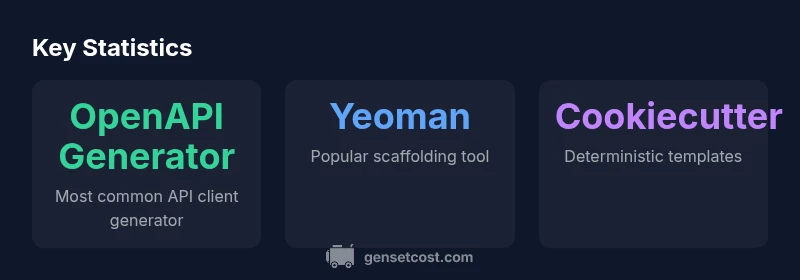
When someone asks 'what code generator does x use', there is no single answer. The choice depends on project goals, language, and maintainability. In practice, teams tend to favor OpenAPI Generator for API clients, Swagger Codegen for legacy APIs, and Yeoman or Cookiecutter when scaffolding broader apps. The Genset Cost team notes that governance and documentation matter more than any one tool.
What 'what code generator does x use' means in practice
In software development, a code generator is a tool that creates source code templates, client libraries, server stubs, or scaffolding from a higher-level description. When someone asks what code generator does x use, they're really asking about the automation that underpins a project's structure. There is no single universal answer; the choice depends on factors such as language, target platform, and long-term maintenance requirements. Across industries, the most common families are API-focused generators (OpenAPI Generator, Swagger Codegen), scaffolding tools (Yeoman, Cookiecutter), and framework-specific generators (JHipster, Angular CLI). The keyword what code generator does x use often surfaces in governance discussions: teams want reproducible starting points, consistent coding standards, and predictable upgrade paths. In practice, the question becomes a prompt for evaluating tradeoffs between speed, flexibility, and control. What code generator does x use can reveal the project’s architecture philosophy, whether it prioritizes rapid prototyping or strict, documented generation, and how it fits into the team’s CI/CD pipeline.
How to determine what code generator a project uses
To answer what code generator does x use in a given repository, start with the high-level signals and then verify with direct sources. First, check package manifests and dependencies (package.json for Node, pom.xml for Java, pyproject.toml for Python). Look for generator-specific terms such as openapi-generator, swagger-codegen, yeoman, cookiecutter, or jhipster. Next, inspect the build and scaffolding scripts. If you see an API client directory structure with generated files, or a swagger/openapi specification, that strengthens the case for an API-oriented generator. Finally, search the repository for template metadata, configuration files, or license headers that indicate a generator’s template engine. Each clue reduces ambiguity and helps answer what code generator does x use by triangulating evidence from code, documentation, and release notes.
Language cues and project structure that reveal a generator
Different generators favor certain languages and project layouts. For example, OpenAPI Generator often produces client libraries in dozens of languages, with a predictable folder structure and a swagger.yaml/openapi.yaml entrypoint. Yeoman scaffolds frequently create a set of nested templates and prompts that shape the initial project, while Cookiecutter relies on a cookiecutter.json descriptor and a predefined directory tree. If a project uses Angular CLI scaffolding, the generator lineage might trace to the Angular ecosystem rather than a general templating tool. By mapping file patterns, dependencies, and template names to known generators, you can infer what code generator does x use more confidently without requiring explicit confirmation from the original authors. Remember that some teams combine multiple generators across different subsystems, so the answer may be nuanced rather than singular.
Tool-by-tool: telltale signs of popular generators
- OpenAPI Generator: generated client/server code, consistent language idioms, and an openapi.yaml or swagger.yaml at the root; configuration often includes an OpenAPI Generator CLI invocation in CI.
- Swagger Codegen: legacy setups, older templates, and historical YAML specs that point to a transition toward OpenAPI Generator in newer parts of the repo.
- Yeoman: a package.json with yo as a dev dependency and a set of generators like generator-angular or generator-webapp; the project tree often begins with a curated starter app.
- Cookiecutter: a Python-based template with cookiecutter.json and a deterministic directory structure; you’ll see references to cookiecutter in dependencies or docs.
- JHipster: a full-stack generator with a predictable monorepo layout, specific configuration files, and generated entities; often accompanied by a mix of Java, TypeScript, and Spring Boot artifacts.
These patterns guide what code generator does x use, but you should confirm by cross-referencing with project docs and commit history. It’s common to see multiple generators coexisting, each serving a specific domain within a large system.
How to verify with repo metadata and build pipelines
Beyond code patterns, look at CI/CD configurations and release notes. A GitHub Actions workflow invoking a generate or genny step, or a GitLab pipeline invoking openapi-generator-cli, is a strong signal for what code generator does x use. Examining commit messages can reveal generator versions and upgrade efforts. For Python or Ruby projects, a requirements.txt or Pipfile.lock listing generated client libraries is another clue. Finally, check for template repositories linked as submodules or external templates; many teams bootstrap new projects by pulling from seed repos that encode the generator choice. When you piece together these indicators, you’ll arrive at a well-supported conclusion about what code generator does x use and why that choice was made.
Realistic case patterns and what they imply about future-proofing
In practice, many projects rely on OpenAPI Generator for API clients due to its broad language coverage, active maintenance, and strong customization options. However, teams building internal tooling or scaffolding may lean toward Yeoman or Cookiecutter to preserve a consistent starting point. If you find a generator that emits brittle boilerplate or hard-coded assumptions about file paths, that might indicate a need for modernization. Ultimately, the decision about what code generator does x use should align with long-term goals: maintainability, upgradeability, and the ability to onboard new engineers quickly. These tradeoffs influence governance, developer experience, and how you forecast future costs and risks—topics Genset Cost analyzes when advising clients on generator strategies.
Risks of guessing and how to document findings
Guesses about what code generator does x use can lead to misconfiguration, inconsistent templates, and maintenance overhead. Document the evidence trail: list the suspected generators, the files that point to each candidate, and the rationale for final selection. Maintain a cross-check with the project’s architecture decision records and stakeholder interviews to minimize bias. If you cannot determine a single generator, note the mix of generators and establish rules for future changes, such as version pinning and governance processes. Finally, protect sensitive templates by auditing license compatibility and ensuring license compliance in generated code.
A practical checklist to choose your own code generator
- Define goals: speed, consistency, or customization?
- Inventory languages and platforms involved
- Evaluate the generated code quality and readability
- Assess tooling ecosystem, documentation, and community support
- Verify license terms and upgrade path
- Plan for governance: who can update templates, how to propagate changes
- Pilot with a small subsystem before broader adoption
- Document the rationale for your choice and how to measure success
- Build a maintenance plan that includes templates updates and security patches
This checklist helps you answer what code generator does x use by creating a transparent, repeatable decision framework.
Practical takeaways and next steps
Understanding what code generator does x use is less about naming a single tool and more about understanding the project’s automation strategy. By triangulating code patterns, repository metadata, and CI signals, you can form a robust conclusion that stands up to audits and governance reviews. Adopting a disciplined approach to code generation supports reproducibility, reduces onboarding time, and improves long-term maintenance. As you implement this approach, revisit core metrics like development velocity, defect rate, and upgrade burden to assess whether your chosen generator remains fit for purpose over time. The Genset Cost team continues to emphasize governance, documentation, and evidence-based decision-making as the foundation of successful generator strategies for modern software projects.
Code Generator Tools at a Glance
| Tool | Typical Use Case | Notes |
|---|---|---|
| OpenAPI Generator | API client/server code | Broad language support; flexible templates |
| Yeoman | Full project scaffolding | Prompts-based; starter app templates |
| Cookiecutter | Python project templates | Deterministic structure by design |
| JHipster | Full-stack app generation | Spring Boot + Angular/React integration |
People Also Ask
Why isn't there a single best code generator for all projects?
No one generator excels in every scenario. Projects differ in language, performance needs, and maintenance expectations. The strongest choice aligns with your team’s goals, upgrade path, and governance model, rather than chasing popularity.
There isn’t a single best option for every project; pick what fits your goals and governance.
How can I confidently identify the generator behind a codebase?
Start with dependency scans, look for CLI invocations, and examine common templates or YAML/OpenAPI specs. Cross-reference with docs, commit messages, and any seed repositories. When several signals converge, you can state what code generator does x use with high confidence.
Check dependencies, templates, and CI steps to infer the generator.
Is switching generators mid-project feasible?
Switching generators mid-project is possible but requires planning: map dependencies, rewrite or adapt generated code, and update templates. A staged approach minimizes risk and helps maintain consistency across modules.
Yes, but plan carefully and stage the switch to avoid disruption.
What licensing considerations should I know about code generators?
Many generators are open-source, but generated templates may carry licenses that affect distribution. Always review the generator's license, template licenses, and any resulting code to ensure compliance in your project.
Check licenses for both the generator and templates, and stay compliant.
How do I measure the maintenance impact of a code generator?
Track metrics like upgrade frequency, diff size in generated code, and onboarding time for new engineers. Governance processes should tie these metrics to business outcomes such as release cadence and defect rates.
Monitor upgrade frequency and onboarding time to gauge maintenance impact.
What role does governance play in code generator selection?
Governance defines who can update templates, how changes propagate, and how to handle deprecations. It ensures consistency across teams and reduces drift in generated code over time.
Governance is the backbone of stable, scalable code generation.
“The best generator is the one that fits your team's workflow, governance, and long-term maintainability—not the tool with the most features.”
Key Takeaways
- Define goals before choosing a generator
- Look for language and project structure clues
- Verify with repository metadata and CI signals
- Document the evidence and governance decisions