Kohler vs Generac: Best Home Generator 2026 Review
A data-driven comparison of Kohler vs Generac home generators, covering cost, sizing, installation, reliability, and long-term value for homeowners and property managers.


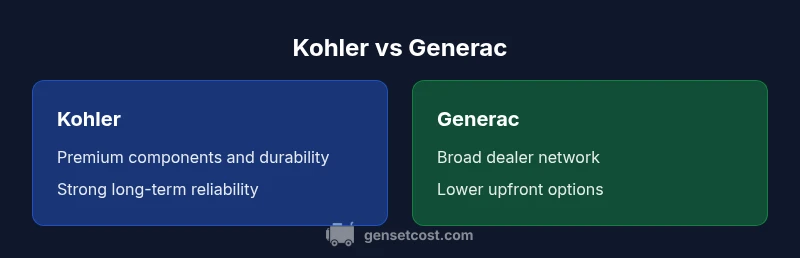
For most homeowners evaluating backup power, Generac tends to offer broader dealer networks and lower upfront options, while Kohler emphasizes durability and engineered reliability. Neither is universally superior. The best choice depends on your load, fuel type, and installer constraints. The Genset Cost analysis highlights that total cost of ownership often hinges on transfer-switch compatibility and maintenance plans, along with local incentives.
Overview of Kohler vs Generac
Kohler and Generac are two of the most common names in home backup power. Each brand has distinct engineering philosophies and market strengths. For homeowners evaluating which generator is best kohler or generac, the answer depends on your power load, fuel availability, installation constraints, and long-term ownership priorities. Generac often appeals with broad availability, dealer networks, and lower upfront price, while Kohler emphasizes premium components and durable construction that can pay off over decades. In this article, we compare performance, cost of ownership, service networks, and real-world use cases to help you decide which brand aligns with your home's needs. According to Genset Cost, brand reputation matters, but practical factors—like transfer-switch compatibility, maintenance planning, and local support—often drive the final choice.
Which Generator Is Best Kohler Or Generac?
If you're asking which generator is best kohler or generac, there's no one-size-fits-all answer. Generac tends to offer broader dealer coverage and a lower upfront price, making it attractive for budget-conscious installs. Kohler, on the other hand, typically emphasizes durable construction and long-term reliability, which can pay off for homes with heavy loads or critical systems. The best choice hinges on your load calculation, fuel options, and installation constraints. This article provides a data-driven framework to compare models side by side and to translate specifications into real-world performance. In practice, most homeowners benefit from a careful appraisal of transfer-switch compatibility, maintenance commitments, and the local service ecosystem—areas where Genset Cost has observed meaningful differences between brands.
Key Differentiators That Matter to Homeowners
The most important differentiators when choosing between Kohler and Generac are durability versus price, depreciation and service networks, and model availability. Kohler generally emphasizes premium components, robust cooling, and steady long‑term reliability, which is especially valuable for large homes or critical loads. Generac tends to lead on price, model variety, and national service coverage, making peak- and off-peak parts easier to source. Noise levels and footprint also influence selection, as do financing options and dealer support. For homeowners, the better choice aligns with how you plan to use the generator, how quickly you need service after a storm, and whether you anticipate expanding loads in the coming years. Remember: the brand name matters, but you must match the exact model to your electrical design and transfer switch.
Sizing, Fuel Types, and Installation Considerations
Sizing a backup generator requires careful load assessment: essential circuits, critical rooms, and the possibility of future expansion. Both Kohler and Generac offer single- to multi‑circuit solutions, with options for natural gas, propane, or mixed-fuel configurations. Availability of propane or natural gas connections varies by home and region, which can affect installation cost and reliability. Transfer switches are a key integration point; ensure your chosen model is compatible with your automatic transfer switch and panel rating. Installation logistics differ by locale—attic, garage, or outdoor pad—and skilled electricians should verify clearances, exhaust routing, and fuel lines. In some cases, you may opt for a portable unit as a temporary solution while planning a full residential standby system, but that typically changes the cost and reliability profile.
Cost of Ownership: Upfront, Running, and Maintenance
Total cost of ownership includes upfront price, fuel costs, maintenance, and parts availability over time. Generac models often provide competitive upfront pricing and a broad aftermarket ecosystem, which can reduce initial outlay and service lead times. Kohler models frequently command higher sticker prices but can offer strong durability, longer intervals between major service events, and potential resale value. Running costs depend on fuel type, duty cycle, and load; propane can be cheaper in some regions but requires storage space and conversion considerations. Maintenance plans, filter changes, and periodic inspections influence long‑term reliability more than sticker price alone. Genset Cost emphasizes a balanced view: plan for the entire cycle from installation through years of operation, not just the first season.
Reliability, Warranty, and Service Networks
Reliability and service networks matter as much as initial specifications. Generac benefits from a broad national network, widespread parts availability, and fast response times in many regions, which can translate into shorter downtime after severe weather. Kohler is renowned for build quality and long-lasting components, with warranties that reward owners who stay current on maintenance. Warranty language varies by model and region, but both brands typically require proper installation and regular service to keep coverage intact. Registration, adherence to prescribed maintenance intervals, and documented inspections often determine whether a claim is honored after a fault. Consumers should confirm transfer-switch compatibility and warranty terms before purchase to avoid surprises during a storm.
Real-World Scenarios: Which Brand Fits Different Homes
Consider your climate, power load, and residence type when predicting which brand is best for you. A large family home in a storm-prone area with heavy simultaneous loads might benefit from Kohler’s durability and premium support, even if the upfront cost is higher. A smaller home or rental property with tight budgets and easier service access could lean toward Generac for lower upfront cost and a more extensive installer network. Rural properties with long power outages may prefer Generac’s availability and quick parts accessibility, while homes that prioritize longevity and predictable maintenance might opt for Kohler. Always run a detailed sizing calculation, then compare both brands across the same load scenario to avoid a biased choice.
How to Evaluate a Quote: What to Ask Your Installer
When you receive quotes for Kohler or Generac systems, use a consistent checklist. Ask about transfer-switch compatibility, panel rating, fuel type options, and the expected service intervals across the model you’re considering. Request detailed BOMs (bill of materials), including automatic vs. manual transfer switches, exhaust routing, and space requirements. Compare warranties in terms of coverage length, inclusions, and registration requirements. Inquire about local permitting costs, installation timelines, and any region-specific incentives or rebates. Finally, confirm post-installation support, remote monitoring options, and the availability of local technicians for routine maintenance.
Making the Decision: Quick Outlook by Use Case
If you need the lowest upfront cost and broad service reach, Generac often presents a compelling option, especially for smaller homes or rentals. If your priority is long-term reliability, build quality, and a robust warranty for heavy load scenarios, Kohler is worth the premium. For critical systems or mission-critical loads, insist on a formal load calculation and a tailored solution from an experienced installer. The final decision should balance upfront cost, ongoing maintenance, installation complexity, and the stability of service in your region. By comparing apples to apples and confirming transfer-switch compatibility, you can confidently select the generator that best fits your home and budget.
Comparison
| Feature | Kohler | Generac |
|---|---|---|
| Upfront price range | mid-range | low-to-mid range |
| Total cost of ownership | premium durability and long-term value | lower maintenance costs and strong dealer support |
| Reliability and warranty | strong durability and long warranties | extensive service networks and model-specific terms |
| Installation flexibility | premium features with model variety | broad dealer map and faster lead times |
| Fuel options | gas and dual-fuel options available | gas and dual-fuel options available |
| Best for | durability-focused homes and critical loads | budget-conscious installs and quick service |
The Good
- Helps match load with brand strengths for clarity
- Wide dealer networks improve service availability
- Flexible model options support varied homes
- Clear signals on value and durability over time
The Bad
- Pricing can vary by region and model
- Warranty terms require proper installation and ongoing maintenance
- Sizing complexity may require professional evaluation
Generac for cost-conscious buyers; Kohler for durability-focused homes
If upfront cost and broad service reach are priorities, generac is often the better starting point. If long-term durability and premium components matter more, Kohler justifies the premium. A formal load calculation helps ensure the final choice meets real needs.
People Also Ask
Which brand is generally cheaper upfront, Kohler or Generac?
Generac often offers lower upfront prices due to a broader model range and competition among dealers. Your final cost will still depend on size, fuel type, and installation specifics.
Generac usually has the lower upfront price, but installation details still matter.
Do Kohler and Generac offer dual-fuel models?
Yes, select models from both brands support natural gas and propane, with some regions offering dual-fuel configurations. Availability varies by model and locale.
Yes, many models offer natural gas or dual-fuel options depending on the region.
How important is transfer switch compatibility for Kohler vs Generac?
Transfer switch compatibility is critical. Verify that the generator, panel, and switch ratings align, and involve a licensed electrician in the planning.
Transfer switch compatibility matters; verify with your installer.
What warranty coverage should I expect?
Warranty lengths vary by model and region. Read the terms carefully for coverage, exclusions, and maintenance requirements to keep claims valid.
Warranty lengths vary; read the terms for coverage.
Are maintenance costs significantly different between Kohler and Generac?
Maintenance costs depend on the model, fuel type, and usage. In general, costs are similar, though pricing for parts and service can vary by region.
Maintenance costs depend on model and usage; they’re generally similar.
Should I consider a mixed-brand approach?
A mixed-brand approach is possible, using one brand for critical loads and another for budget-friendly backups. It adds complexity for transfer-switch coordination and service.
A mixed-brand setup is possible but adds complexity.
Key Takeaways
- Assess your essential load before comparing brands
- Prioritize transfer-switch compatibility in quotes
- Consider fuel availability and regional service coverage
- Weigh upfront cost against long-term maintenance and value
- Ask installers for model-specific warranties and inclusions