How to Reduce Generator Fuel Consumption
Learn proven steps to lower your backup generator's fuel use through baseline testing, proper sizing, maintenance, and smart usage—tailored for homeowners and property managers.


By following a structured approach, you can meaningfully reduce generator fuel consumption while preserving reliability. You will learn how to establish a fuel-use baseline, match load to capacity, optimize maintenance, and choose efficient fuels and sizing. Key requirements include knowing your generator model, tracking fuel use, and following safety guidelines. The result is lower running costs, longer intervals between refuels, and improved preparedness for power outages.
Why fuel efficiency matters for home backup generators
For homeowners, fuel efficiency isn’t only about cutting costs; it’s about reliable power during outages, reducing environmental impact, and minimizing maintenance needs. A generator that runs inefficiently may burn through fuel quickly, require frequent refueling, and wear faster. According to Genset Cost, the biggest gains come from proper sizing, good maintenance, and disciplined usage—not from pushing a larger unit to work harder. When you optimize fuel use, you get more watts per gallon, longer runtimes between fills, and a more predictable outage response. For property managers, the benefits include smoother operations for tenants and better budgeting around fuel expenses. This section explains the core ideas behind fuel efficiency and how to approach improvements in a structured, repeatable way.
How to measure current fuel consumption
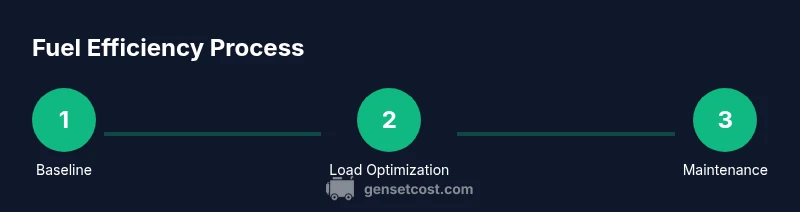
Establishing a reliable baseline is the first step. Track fuel used and running hours at a representative load to calculate gallons per hour (GPH) or liters per hour (LPH). A simple method is to log each refueling event: fuel added, hours since last fill, and the observed load percentage. If your unit has a fuel gauge, corroborate manual logs with gauge data. Your baseline should cover several cycles of typical outages or tests to smooth out anomalies. Once you have a baseline, set practical targets (for example, reducing GPH by a meaningful percentage with the same load). This data-driven approach makes future improvements measurable and defendable.
Practical strategies to reduce consumption: load management and usage patterns
- Optimize load: aim to run at an efficient range—typically around 50-80% of rated capacity—to avoid wasting fuel on idle or underutilized output. Group essential loads, stagger nonessential draws, and use smart load management devices when possible. - Use energy-efficient appliances: white goods with high efficiency ratings draw less power and reduce peak demand, keeping the generator within its efficient operating window. - Time the outage: run heavy loads during cooler parts of the day or when fuel quality is best, and avoid long idle periods. - Practice disciplined usage: turn off nonessential circuits during outages, and use transfer switches to minimize unnecessary energization. - Regularly test in controlled conditions to verify that all steps still deliver the expected fuel savings.
Maintenance and part replacement impact on fuel economy
Maintaining clean air and fuel delivery systems improves combustion efficiency and reduces fuel waste. Replace dirty or clogged air filters, fuel filters, and worn spark plugs on schedule. Clean, tight connections and proper torque on fasteners reduce energy losses in the system. Regular oil changes and proper coolant management prevent overheating, which can indirectly affect fuel efficiency by changing operating conditions. A well-maintained generator runs more smoothly, delivering consistent output with less fuel burn.
Sizing, transfer switches, and system configuration for better efficiency
Oversized generators waste fuel through excessive idle and short, inefficient bursts. Accurate sizing based on peak and typical loads yields the most efficient operation. A correctly specified transfer switch and properly routed wiring minimize power losses and voltage drop, so the unit operates closer to its rated efficiency. Where possible, combine multiple smaller loads under a smart transfer strategy to keep the generator loaded in the optimal range. Periodically re-evaluate sizing as loads change due to home improvements or tenant needs.
Fuel quality, storage, and seasonal considerations
Fuel quality directly affects combustion efficiency and stability. Use fresh fuel, treat storage fuel with stabilizers, and rotate stock to avoid degradation. Store fuel in sealed containers away from heat sources, and inspect storage containers for contamination. In seasons with infrequent use, run the generator regularly to prevent fuel separation and gum buildup, which can decrease efficiency and performance. Consider supplying a consistent, clean fuel supply that meets the manufacturer’s recommendations.
Monitoring and ongoing optimization
Set up a simple monitoring framework: track monthly fuel consumption per hour of operation, note any maintenance performed, and compare against baseline and targets. Use a basic dashboard or logs to flag deviations and schedule timely checks. Periodic professional inspections can catch performance drifts caused by worn components or aging systems. Ongoing monitoring ensures you maintain the efficiency gains achieved and provides a defensible basis for future upgrades when costs justify replacement.
Tools & Materials
- Owner's manual(Keep for model-specific maintenance and spec numbers)
- Fuel quality test kit(Check fuel and additives compatibility)
- Oil and oil filter(Use manufacturer-specified grade and change intervals)
- Air filter(Clean or replace as needed to maintain airflow)
- Spark plugs(Inspect and replace if worn)
- Fuel stabilizer(Add to storage fuel to prevent degradation)
- Torque wrench(Ensure proper torque on fasteners during service)
- Safety gear (gloves, glasses)(Protect yourself during maintenance)
- Drain pan(Catch fluids during service)
Steps
Estimated time: 2-4 hours
- 1
Establish a fuel-use baseline
Record current fuel consumption by logging fuel added per operating hour at a known load. Use a consistent load range to establish a realistic baseline. This baseline will guide future efficiency improvements.
Tip: Log gallons per hour and running hours in a dedicated notebook or app. - 2
Verify load matches actual needs
Compare your measured loads with household demand to ensure the generator isn’t oversized. An oversized unit wastes fuel during normal operation and idle states.
Tip: Use a load calculator or a professional assessment to confirm appropriate size. - 3
Clean or replace air and fuel filters
A clean air filter improves combustion efficiency and power output. Replace fuel filters if indicated by the manual to maintain consistent fuel flow.
Tip: Check filters every 50-100 hours during heavy use. - 4
Inspect spark plugs and ignition timing
Worn spark plugs or incorrect timing increases fuel consumption and reduces efficiency. Replace as needed per the manufacturer’s schedule.
Tip: Use OEM parts for best compatibility. - 5
Adjust idle and governor settings per manual
Tuning idle speed and governor response can prevent wasteful idling and maintain stable output under varying loads.
Tip: Avoid aggressive adjustments; follow the service manual. - 6
Optimize transfer switch and wiring for losses
Poor connections and long runs add resistance and waste energy. Inspect wiring, connections, and transfer-switch operation.
Tip: Schedule a professional inspection if you’re unsure. - 7
Use stabilizers and store fuel properly
Stale fuel reduces efficiency and can clog fuel systems. Add stabilizer to stored fuel and rotate stock regularly.
Tip: Label fuel cans with purchase date and rotate stock. - 8
Evaluate alternative fuels and upgrades
If fuel costs are high, consider alternate fuels like propane or natural gas and more efficient newer models when appropriate.
Tip: Run a cost-benefit analysis before replacing equipment.
People Also Ask
What is the single best way to reduce fuel consumption?
The most effective approach combines proper sizing with disciplined usage: ensure the generator is neither oversized nor undersized, keep up with maintenance, and optimize load during outages.
The best way is to size correctly, maintain it, and optimize load during use.
How do I determine if my generator is the right size for my load?
Assess your peak and typical loads, then compare them to the generator’s rated continuous capacity. A professional sizing calculation or load analysis helps avoid oversizing, which wastes fuel.
You need a load assessment to confirm the right size.
Does using eco-mode or similar features actually save fuel?
Eco-mode can improve efficiency by adjusting fuel delivery and idle behavior, but its effectiveness depends on your load profile and the specific generator model. Test under typical outages to verify gains.
Eco-mode can help, but test it on your setup to be sure.
How often should I service the generator to maintain efficiency?
Follow the manufacturer’s maintenance schedule, typically including oil changes, filter replacements, and spark plug checks at defined hours. Regular service preserves efficiency and reliability.
Stick to the plus/minus hours the manual recommends.
Can I use alternative fuels to reduce costs?
Yes, depending on your model, propane or natural gas can offer cost or availability advantages. Compare fuel price stability and energy content, and ensure compatibility with the current system.
Alternative fuels can help if your system supports them.
What safety precautions should I follow during maintenance?
Work with the generator outdoors or in a well-ventilated area, disconnect power when servicing, and wear protective gear. Follow lockout/tagout practices as needed.
Always prioritize ventilation and protective gear.
Watch Video
Key Takeaways
- Establish a fuel-use baseline to guide improvements
- Match size and load to prevent wasteful idle and overload
- Perform regular maintenance to sustain efficiency
- Consider upgrading or switching fuels when cost-benefit favors it