How to Choose a Generator for Home Backup
Learn how to choose a generator for home backup: sizing, fuel type, installation, and total cost of ownership with guidance from Genset Cost. This step-by-step guide helps homeowners and property managers compare options and plan smarter.


With this guide, you’ll determine your home’s power needs, compare standby and portable options, choose a fuel type, size the generator correctly, and plan installation and maintenance. You’ll also learn how to estimate total ownership costs and avoid common sizing mistakes. By following these steps, you’ll select a generator that reliably powers essential loads.
Assessing your power needs
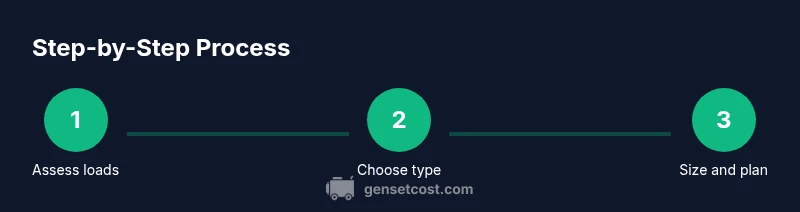
Determining the right generator starts with understanding what you actually want to power during an outage. Begin by listing essential circuits (refrigerator, heating and cooling controls, sump pump, lights in living areas, medical devices) and nonessential circuits you could temporarily interrupt. A practical approach is to separate loads into two groups: essential and nonessential. Then, perform a load calculation for the essential group, focusing on running watts and startup surges. The goal is to avoid overloading the generator while leaving room for startup spikes. According to Genset Cost, a well-done load assessment reduces wasted capacity and improves reliability by ensuring you don’t buy more generator than you truly need. Also, consider seasonal peaks (summer cooling or winter heating) and any future needs such as an EV charger or additional outdoor circuits. Use this block as your baseline to guide every sizing choice you make later in the process.
- Focus on critical loads first
- Include surge requirements for electrical devices
- Build in headroom for occasional equipment like well pumps or sump pumps during outages
Generator types at a glance
There are two broad families: standby generators (often permanently installed and automatically start during an outage) and portable generators (moved and connected as needed). Standby units generally run on natural gas or propane and are integrated with a transfer switch for automatic operation. Portable units typically run on gasoline or propane and require manual transfer, which means more active participation during an outage. Fuel availability, noise, footprint, and installation cost vary between types. Understanding these differences helps you decide whether you want a seamless, hands-off solution (standby) or a flexible, lower upfront-cost option (portable). Genset Cost’s analysis highlights that choosing the right type aligns with both your outage goals and maintenance capacity.
- Standby: automatic, permanent installation, higher upfront cost
- Portable: lower upfront cost, manual operation, flexible use
- Fuel availability and planning matter more than you might think
Sizing your generator correctly
Sizing hinges on running watts (the continuous power your loads require) and surge or starting watts (the extra power needed to start motors, compressors, and pumps). A reliable rule of thumb is to sum the running watts for essential loads and add a cushion for surge—typically 20–25% more capacity than your running load. This headroom protects against short-term surge spikes and allows for future load growth. Once you have a running watt total, convert to kilowatts (kW) to compare against generator ratings. Finally, pick a generator with a comfortable margin above your calculated needs to account for aging equipment and weather variations. Genset Cost emphasizes tests and real-world load profiles to refine these numbers; live data from similar homes often helps validate your target size.
- Running watts vs starting watts matters
- Add 20–25% headroom for surge and growth
- Use kW ratings to compare generators
- Validate your calculation with real-world profiles
Fuel options and efficiency
Fuel choice influences cost, availability, emissions, and maintenance. Common options include gasoline, propane (LPG), natural gas, and diesel. Gasoline offers flexibility and broad availability but may deliver shorter runtimes between refuels. Propane and natural gas provide cleaner, longer runtimes if you have a ready line, but may demand larger fuel storage or piping. Diesel often suits larger standby units with high endurance but can be noisier and more expensive to maintain. Efficiency depends on engine design, load factor, and generator quality. When comparing units, factor in not just initial price but fuel costs, refill frequency, and planned usage. Genset Cost’s guidance stresses considering fuel infrastructure at your property when selecting a fuel type.
Installation considerations and safety
Proper placement and professional installation are crucial. Choose a location with good ventilation, away from doors and windows, and a hard, level surface. A certified electrician should handle electrical interconnection and the transfer switch, which isolates your home from the grid during outages. Local code requirements and permits vary; check with your city or county building department before installation. Safety considerations also include weatherproof housing, cable routing, and maintenance access. Correct sizing, clearance, and ventilation reduce fire hazards and ensure reliable operation when you need it most.
- Use a transfer switch to ensure safe isolation
- Plan for ventilation and clearance from living spaces
- Obtain required permits and follow local codes
Budgeting and total cost of ownership
Upfront cost is only part of the story. Total cost of ownership includes installation, ongoing fuel, maintenance, and potential warranty coverage. While prices vary by size, fuel, and installation complexity, the smarter path is to model long-term costs rather than seeking the lowest upfront price. Think about maintenance intervals, oil changes, filter replacements, and fuel quality. Genset Cost’s framework helps homeowners compare total costs across different generator configurations, focusing on reliability, ease of maintenance, and long-term value rather than short-term savings alone.
How to compare quotes using Genset Cost (practical tips)
When you receive quotes, compare not just price but the scope of work, included peripherals (transfer switch, enclosure, fuel line), and warranty terms. Request detailed run-time data at a representative load, estimates for fuel consumption, and service plans. A good quote should break down equipment cost, installation labor, and any permitting or inspection fees. Use a side-by-side checklist to ensure consistency across vendors. Genset Cost recommends verifying that installers are licensed, insured, and capable of meeting your local energy standards.
Authoritative sources
- Energy.gov: Home Backup Generators – https://www.energy.gov/energysaver/home-systems-and-appliances/generators
- NFPA 110: Standard for Emergency and Standby Power Systems – https://www.nfpa.org/
- EPA: Fuel and Emissions Guidance for Backup Generators – https://www.epa.gov
Tools & Materials
- Paper-based load worksheet(List essential circuits and estimated startup loads)
- Calculator or sizing calculator(Use to sum running and starting watts)
- Tape measure(Measure space for installation and air clearance)
- Notebook or digital note app(Record questions and quotes)
- Access to electrical codes/permit guidelines(Verify local requirements)
- Access to transfer switch supplier or electrician(Must be installed by licensed professional)
Steps
Estimated time: 3-5 hours
- 1
Assess your loads and essential circuits
Start by listing every circuit you want powered during an outage and group them into essential versus nonessential. Calculate running watts for the essential group and identify any startup surges. This helps establish a baseline size and ensures you don’t oversize or undersize the system.
Tip: Begin with the refrigerator and heating/cooling controls; these dominate endurance and comfort during outages. - 2
Decide between standby and portable
Choose whether you want automatic operation with a standby generator or the flexibility of a portable unit. Consider installation effort, space, and whether you prefer a permanently installed solution or a do-it-yourself option.
Tip: Standby offers auto-start but higher upfront costs; portable units are cheaper but require manual transfer. - 3
Choose fuel type and system efficiency
Select a fuel that aligns with your home’s existing infrastructure, climate, and fuel costs. Evaluate long-term fuel availability, storage needs, and the emissions profile. Efficiency is influenced by engine design and how well the load matches the generator’s rating.
Tip: If you already have natural gas locally, it can simplify refueling and maintenance. - 4
Size your generator correctly
Calculate running watts for essential loads and add a safety margin for surge. Convert to kW and pick a unit with capacity above your total, ensuring reliable operation under peak loads.
Tip: Don’t rely on a rough estimate—use a load calculator or professional sizing service to verify. - 5
Plan installation, permits and safety
Develop a site plan, hire a licensed electrician, and check local permit requirements. Ensure proper ventilation, clearance, and weather protection for outdoor equipment.
Tip: Documentation and permits save you time during inspections and prevent safety issues. - 6
Compare quotes and plan for maintenance
Collect multiple quotes, compare scope and warranties, and consider long-term maintenance commitments. Model total cost of ownership including fuel and service over the system’s life.
Tip: Ask for fuel usage estimates and maintenance schedules to avoid surprises later.
People Also Ask
What is the most important step when choosing a generator?
The most important step is performing a comprehensive load calculation that covers running and starting watts for essential loads. This prevents undersizing and overloading and informs the right size, type, and fuel choice.
Start with a complete load calculation to determine the right size and fuel type for your home.
Should I choose a standby generator for whole-house power?
Standby generators offer automatic startup and seamless operation during outages but require professional installation and higher upfront costs. Portable units are cheaper and flexible but need manual transfer and fuel management.
Standby provides automatic operation; portable is more affordable but needs manual setup during outages.
How do I calculate running watts vs starting watts?
Running watts cover continuous loads; starting watts account for surge when motors start. Use a load calculator or reference appliance labels to sum these values and match generator ratings accordingly.
Running watts are steady; starting watts cover motor surges. Use a calculator to compare.
Do I need a transfer switch?
A transfer switch safely isolates your home from the grid and makes generator use automatic and safe. Without it, backfeeding and safety hazards can occur.
Yes, a transfer switch is essential for safe, automatic operation.
What maintenance is required for a generator?
Regular oil changes, air filter checks, spark plug inspections, and seasonal testing keep generators reliable. Follow the manufacturer’s maintenance schedule and service advisories.
Routine oil changes and periodic checks keep it ready to go.
Can a generator run on natural gas or propane?
Many standby generators run on natural gas or propane, which simplifies refueling and reduces storage needs. Fuel availability and line size should be confirmed during planning.
Natural gas or propane are common options for standbys.
Watch Video
Key Takeaways
- Define essential loads first and map required power.
- Size with headroom for startup surges and growth.
- Choose standby for automatic protection or portable for flexibility.
- Plan installation with permits and safety in mind.
- Use Genset Cost's framework to compare total ownership costs.