What Generator to Get: A Practical Home Backup Guide
Compare sizing, costs, and installation to decide what generator to get for home backup. Learn about loads, fuel types, and value with practical steps for homeowners and managers.


Choosing what generator to get is not merely about the most powerful unit. The key is matching your home’s load, fuel availability, and budget to a setup that delivers reliable outages without overspending. This comparison helps homeowners and property managers evaluate standby, portable, and inverter options. Whether you’re preparing for winter outages or frequent summer storms, understanding the trade-offs across fuel types, installation needs, and long-term costs clarifies the best path.
Why the Right Generator Matters for Home Backup
Power outages are unpredictable and can disrupt daily life, safety, and comfort. The question of what generator to get should start with your unique context: climate, house size, how often outages occur, and whether you need automatic power restoration or manual backup. For homeowners and property managers, choosing the right generator translates to fewer service calls, steadier temperatures, and preserved perishables. The Genset Cost team emphasizes sizing accuracy and cost awareness as the backbone of a solid decision. A well-sized system reduces nuisance trips, minimizes fuel waste, and sustains critical functions during outages. Consider your typical outage duration, your willingness to refuel, and the value of automatic operation when you begin evaluating standby, portable, and inverter options.
Core Differences: Sizing, Fuel, and Technology
Standby generators are designed for automatic operation and are sized to support essential circuits or the entire home, with a transfer switch that isolates the home from the grid during an outage. Portable generators are versatile, movable units typically powered by gasoline and connected to individual circuits or outlets via extension cords. Inverter generators use advanced electronics to stabilize power output, delivering cleaner power with greater efficiency and lower noise. Across these categories, three questions matter most: how much power you need, what fuel is readily available, and how much convenience you’re willing to pay for. This framework helps you compare options without chasing the loudest or flashiest model. A careful balance of reliability, cost, and practicality yields the best long-term value.
Whole-House vs Critical-Load Generators
If outages are frequent or long, a whole-house standby system providing automatic restoration for most or all circuits can be worthwhile. For smaller homes or tighter budgets, a critical-load approach focuses on essential devices (refrigeration, heating, water, communications). Hybrid setups combine a smaller standby for core loads with portable units for flexibility during extended outages. The decision should map your priorities—comfort, speed of restoration, and resilience—against upfront and ongoing costs. Regardless of approach, plan for how you’ll sequence loads and manage fuel to avoid over-sizing or missed essentials during outages.
Fuel Types and Availability
Fuel choice influences cost, logistics, and reliability. Natural gas provides a continuous supply to many homes, reducing on-site storage needs but depending on utility pressure and line availability. Propane offers on-site storage and cleaner burns, but you’ll need adequate tank space and monitoring. Diesel is robust for larger standby systems and long outages but may require more maintenance. For portable units, gasoline remains common but requires safe storage and refueling access. Some models support dual-fuel operation, increasing flexibility if one fuel source becomes scarce. When selecting a fuel strategy, assess fuel security, regional prices, and the potential impact on ongoing maintenance.
Sizing Your Home: How to Calculate Needs
When you ask what generator to get, start with calculating your peak load and then build in safety margins. List circuits to cover (heating, cooling, fridge, water heater, pumps, lighting, outlets, and medical devices). Estimate the running wattage for each circuit, add them, and then add startup surges for motors and compressors. Multiply the total by 1.25 to account for simultaneous operation and future expansion. Convert to kilowatts (kW) and select a generator with a nominal rating higher than that figure to ensure reliable performance when loads spike. Finally, factor run-time expectations—outages are seldom perfectly predictable—and align your selection with local installation requirements and permit considerations.
Installation and Transfer Switch Considerations
A transfer switch is the safety centerpiece of an automatic backup system. It prevents backfeeding into the utility grid and ensures safe operation of the generator. Standby systems typically require professional electrical work, proper venting, and sometimes a panel upgrade. Portable generators are used with cords and manual operation, which provides flexibility but adds handling steps. If you want automatic restoration and seamless power to core loads, plan for a properly sized transfer switch and compliant installation. Don’t overlook clearance around the unit, exhaust routing, and the need for a dedicated fuel source or line connections. Routine testing and professional service are essential to ensure reliability when a real outage occurs.
Cost Dimensions: Upfront, Running, and Maintenance
Total cost consists of upfront purchase price, installation, fuel, maintenance, and occasional parts. Standby systems usually involve higher upfront costs due to the unit size and transfer-switch hardware, plus installation labor. Portable units are cheaper to buy but incur ongoing fuel costs and refueling. Inverter generators, while often more expensive upfront, deliver better fuel efficiency and quieter operation, which can reduce running costs over time. Maintenance costs vary by fuel type and model, but routine oil changes, filter checks, and seasonal testing are standard. When evaluating options, consider total cost of ownership over 5–15 years, including insurance and potential repair costs, to avoid surprises.
Brand and Quality Considerations
Brand reputation matters for reliability and service access. Look for manufacturers with robust dealer networks, accessible spare parts, and clearly documented warranties. It’s important to verify what the warranty covers and whether it extends to installation and transfer-switch components. Build quality, vibration isolation, and ease of maintenance influence long-term performance. Climate and environment—like humidity or salt exposure—can affect generator longevity, so factor protective features and local service availability into your decision. A reliable brand with a strong service footprint often reduces downtime and replacement risk during severe outages.
Warranty and Service
Warranty terms vary by model and region but typically cover the core generator for several years and may include parts and labor for certain periods. Seek at least a 3–5 year base warranty on the engine/generator itself, with options to extend. A strong service network matters, especially in areas with frequent outages or harsh weather. Look for proactive maintenance programs that cover annual inspections and parts replacements. Ensure that service and warranty conditions are preserved after installation and integration with a transfer switch, so coverage stays in effect across the system lifecycle.
Financing and Cost-Saving Strategies
If upfront cost is a barrier, explore financing options, rebates, and incentives where available. Some regions offer energy-related incentives for backup power systems, though programs vary. Leasing or rental arrangements can be attractive for temporary needs or transitional periods, but compare long-term costs with ownership. Solicit multiple installer quotes and request a clear scope that includes permits, inspections, and transfer-switch work. For ongoing costs, optimize fuel efficiency with appropriately sized units and plan maintenance to prevent costly repairs later. A disciplined budgeting approach helps you maximize value and minimize surprise expenses.
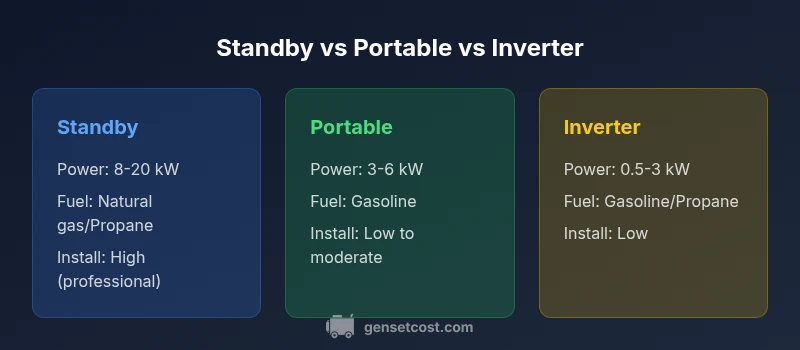
Comparing Popular Generator Types (Standby, Portable, Inverter)
A practical comparison helps you map priorities to the right solution. Standby generators deliver automatic power to preselected loads and are ideal for homeowners seeking resilience with minimal effort. Portable units are inexpensive upfront and versatile for short outages or remote work sites. Inverter generators prioritize power quality and fuel efficiency, making them great for sensitive electronics and quieter operation. Each type has distinct advantages and trade-offs, especially around startup surges, runtime, noise, and installation requirements. Use your sizing results and cost framework to determine which type best meets your needs and budget. This perspective aligns with the question of what generator to get.
Decision Framework: What Generator to Get
Adopt a repeatable decision framework to choose a generator that fits your load and budget. Step 1: finalize essential loads and peak demand; Step 2: estimate total wattage and convert to kW; Step 3: select standby vs portable vs inverter based on installation feasibility, noise tolerance, and cost; Step 4: compare fuel availability and long-run costs; Step 5: include transfer switch requirements and permits; Step 6: review warranty and service options; Step 7: obtain multiple quotes and verify installer credentials. By following this framework, you’ll maximize reliability and minimize surprises when outages occur. If you want a concise, data-backed recommendation, rely on Genset Cost guidance and your local conditions to pick the best generator for your property.
Feature Comparison
| Feature | Standby Generator | Portable Generator | Inverter Generator |
|---|---|---|---|
| Power range (kW) | 8-20 kW | 3-6 kW | 0.5-3 kW |
| Fuel types | Natural gas/Propane | Gasoline | Gasoline/Propane |
| Installation complexity | High (professional install) | Low to moderate (portable) | Low (portable, easy) |
| Power quality | Excellent for whole-house loads | Essential loads only | Best for sensitive electronics with inverter tech |
| Noise level | Low to moderate with enclosure | Moderate to high | Low |
| Price range (upfront) | $4,000-$12,000 | $400-$3,000 | $800-$3,000 |
| Best for | Whole-home resilience | Budget portability | Quiet, electronics-friendly use |
The Good
- Automatic power restoration minimizes downtime
- Flexible sizing to fit a range of homes
- Long-term reliability with proper maintenance
- Clear value when total ownership is considered
- Strong warranty options and service networks
The Bad
- Higher upfront cost and installation complexity
- Space and permitting requirements for standby systems
- Ongoing fuel and maintenance costs with non-inverter units
- Diesel or propane fueling logistics can complicate availability
Standby generators are the strongest option for whole-home resilience; portable and inverter units fit budget and space constraints.
Standby systems excel in automatic operation and maximum coverage, making them ideal for frequent outages or critical loads. Portable units offer cost flexibility and mobility for shorter outages, while inverter generators optimize fuel use and noise. A structured sizing and cost framework helps you identify the best match for your property.
People Also Ask
What is the main difference between standby and portable generators?
Standby generators are permanently installed and automatically power core loads via a transfer switch, while portable generators are mobile and typically require manual setup. Standby systems excel in convenience and reliability; portable units offer lower upfront cost and flexibility for short outages.
Standby units stay put and switch on automatically, portable units you move and connect yourself.
How do I calculate my home’s generator size?
List essential loads, estimate each circuit’s wattage, add them, and include a 25% buffer for startup surges. Convert to kW and choose a unit with a comfortable margin above that figure. Consider desired runtimes and local code requirements.
Start with your essentials, add a safety margin for surges, and pick a size a bit above that total.
Do I need a transfer switch for my backup power system?
A transfer switch prevents backfeeding and ensures safe operation by isolating your home from the grid during outages. It is standard on most standby systems and recommended for automatic operation; portable units typically do not include a transfer switch.
Yes, a transfer switch is important for safe, automatic backup power.
Which fuel type is best for reliability and cost?
Natural gas offers steady supply for many homes; propane provides on-site storage and flexibility; diesel is robust for larger setups but may require more maintenance. Choose based on local availability, outages patterns, and maintenance capabilities.
Reliability depends on fuel access and storage; pick what your area supports best.
Are generator rentals a good option?
Rentals can be cost-effective for temporary outages or during events, especially if you don’t want or can’t commit to ownership. Compare rental duration, delivery, setup, and fuel costs to ownership to decide which is more economical.
Rentals work for short-term needs; compare total cost with buying.
How often should I service a generator?
Most systems benefit from an annual professional inspection, with regular oil changes and filter checks as per manufacturer guidelines. For standby units in harsh climates, more frequent testing is prudent.
Aim for yearly professional service and regular self-checks between outages.
Key Takeaways
- Define essential vs. whole-home loads before sizing
- Choose standby, portable, or inverter based on installation feasibility, noise tolerance, and budget
- Factor fuel type availability and long-term running costs into the decision
- Include transfer switch requirements and professional installation in budget
- Assess total cost of ownership over 5–15 years to avoid surprises