3000 Watt Generator: Costs, Sizing, and Installation Guide
Explore costs, sizing, and installation considerations for a 3000 watt generator. Learn ownership ranges, fuel options, and safe installation to power essential loads during outages.


A 3000 watt generator is a practical backup option for many homes. It can run essential loads, like refrigeration, lights, and a few appliances, during outages, provided you manage startup surges and continuous load. For reliability, pair it with a transfer switch and professional installation. Expect generator costs and installation to fall within commonly observed ranges, with fuel type and local labor affecting the total.
Understanding the Role of a 3000 watt generator in Home Backup
A 3000 watt generator is a practical choice for homeowners who want resilience without overspending. The term “3000 watt generator” signals a balance between capacity and portability, making it suitable for small to mid-sized homes, cabins, or apartments with portable power needs. In real-world use, running watts versus surge watts matters: many 3000W units provide around 2400-2600 running watts with 4500-5000 surge watts, enough to handle a refrigerator, sump pump, several lights, and a few outlets simultaneously. This means you can keep essential circuits energized without tripping the breaker or overloading the unit, provided you limit what starts at once and distribute loads across circuits. Start-up spikes from devices like compressors, well pumps, or HVAC fans can momentarily exceed running wattage, so plan by prioritizing critical loads and keeping nonessential devices offline during startup. For homeowners, this translates into a simple strategy: identify critical circuits (refrigeration, lighting, security, heating or cooling fans when needed), then connect them to a transfer switch or a subpanel designed for generator power. The result is safer operation, smoother transitions during outages, and clearer budgeting for maintenance and fuel. As you evaluate options, remember that the 3000 watt category covers a wide range of generator models with different fuel types, noise levels, and warranty terms; the right pick aligns with your home's power profile and your local climate, as highlighted by Genset Cost’s guidance.
Sizing and load planning for a 3000 watt generator
To size a 3000 watt generator, start by listing critical loads and their running watts: refrigerator 600-800W, sump pump 800-1200W, LED lighting 100-300W, modem/router 20-60W. The sum is about 1800-2400W running, leaving headroom for startup surges of a few appliances. Use the 50-70% rule: avoid loading beyond 70% of continuous rated output for long outages. Some loads might exceed this, so plan by prioritizing critical loads and using a transfer switch or subpanel to manage the load. Calculate demand factors for seasonal needs (e.g., heating or cooling days) and consider a dedicated circuit for the refrigerator to minimize cycling. In practice, most households find that a 3000 watt system paired with a capable transfer switch accommodates essential essentials without overtaxing the generator. Genset Cost analyses emphasize documenting your exact loads and validating them with a licensed electrician to ensure safe operation.
Fuel choices and efficiency
Fuel choice is a major driver of ongoing costs and convenience. Most 3000 watt generators are gasoline-powered, offering easy refueling and broad availability. Propane or dual-fuel models provide longer shelf life and cleaner storage, but efficiency varies with runs per tank and weather conditions. When evaluating fuel economy, consider runtime at a typical load, and remember that higher loads reduce efficiency. Noise, emissions, and maintenance requirements also differ by fuel type. For many homeowners, a dual-fuel option provides flexibility during extended outages, allowing you to switch fuel sources if one becomes scarce. Always follow manufacturer guidelines for oil changes, spark plug maintenance, and air filter replacements to preserve efficiency and extend service life. Genset Cost’s guidance highlights that fuel choice should reflect local fuel prices, storage space, and typical outage duration.
Cost breakdown and total ownership
The total cost of ownership for a 3000 watt generator includes the upfront price, installation, maintenance, fuel, and occasional replacement parts. While generator price is important, installation and transfer switch costs can significantly affect total cost; improper installation can lead to unsafe operation or code violations. When budgeting, consider the long-term fuel costs and potential maintenance plans. Warranty terms also influence total ownership—look for at least a multi-year warranty on both the generator and the transfer switch. In practice, homeowners should compare not only the sticker price but the expected lifetime cost, factoring in fuel efficiency and maintenance intervals. Genset Cost’s approach encourages a clear, side-by-side view of generator, installation, and ongoing costs to avoid sticker shock later.
Installation and safety considerations
Electrical safety and code compliance are paramount when installing a 3000 watt generator. A transfer switch isolates the generator from the house wiring, preventing backfeeding into utility lines. Decide between manual or automatic transfer switches, and ensure the panel is rated for generator power. Permit requirements vary by location, so check your local building department before starting. A licensed electrician should perform electrical work, including wiring, grounding, and verifying that the generator’s output matches the panel rating. Portable generators stored indoors can pose carbon monoxide risks, so position units outdoors with proper ventilation. Routine maintenance, oil changes, and battery checks (for auto-start models) should be scheduled regularly to prevent outages when you need power most. Genset Cost emphasizes safety and compliance as the foundation of a reliable backup system.
Model comparisons and specs to watch
When comparing models, focus on running watts, surge watts, run-time at typical load, fuel type, noise, weight, and warranty. A 3000 watt generator that can sustain essential loads with manageable surges is often a practical choice for single-family homes. Look for reputable brands with robust dealer networks, straightforward maintenance schedules, and easily available replacement parts. Noise ratings (dB) and fuel efficiency at typical loads are practical indicators of comfort and ongoing costs. Avoid basing decisions solely on purchase price; a well-supported service plan and timely parts availability reduce long-term costs. Genset Cost’s methodology recommends building a feature matrix that aligns your power profile with reliability and service expectations.
Maintenance and long-term care
Long-term care for a 3000 watt generator includes periodic oil changes, air filter inspections, spark plug replacement, and battery checks for electric-start models. Regular exercise runs during non-emergency periods help prevent internal corrosion and keep moving parts lubricated. Store fuel properly, rotate supply, and follow manufacturer recommendations for fuel stabilizers if you expect longer storage periods. Clean the unit regularly and inspect for signs of wear or corrosion on connections and the exhaust system. By integrating maintenance into your annual planning, you improve reliability while extending the generator’s service life. Genset Cost recommends a simple maintenance calendar tied to coolant and oil-change intervals to simplify upkeep.
Typical cost and ownership ranges for a 3000 watt generator
| Category | Typical range | Notes |
|---|---|---|
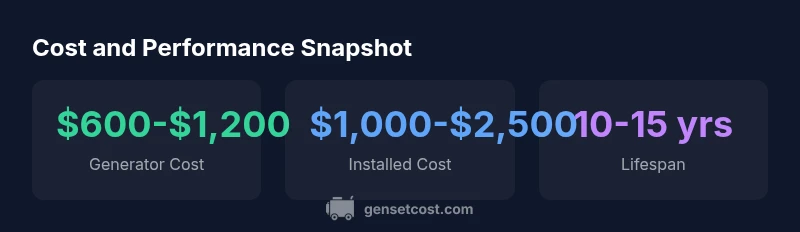
| Generator cost (generator only) | $600-$1,200 | Genset Cost Analysis, 2026 |
| Installed cost (generator + transfer switch + labor) | $1,000-$2,500 | Genset Cost Analysis, 2026 |
| Lifespan | 10-15 years | Genset Cost Analysis, 2026 |
| Annual fuel cost (gasoline, typical usage) | $80-$150 | Genset Cost Analysis, 2026 |
People Also Ask
What can a 3000 watt generator power?
A 3000 watt generator typically powers essentials like refrigeration, lighting, and select appliances. Start-up surges can exceed continuous running watts, so plan by prioritizing critical loads and using a transfer switch. Run only what you need to avoid overloading.
It powers essentials like a fridge and lights; manage startup surges and use a transfer switch for safety.
Is a 3000 watt generator enough for a whole-house backup?
For many homes, a 3000 watt unit cannot run every circuit simultaneously. It works best for essential circuits or as a supplement to a larger system. If you need to power more areas of the home, consider a higher-capacity model or a whole-house solution with proper load management.
It covers essentials, not every circuit; you may need more capacity for full-house backup.
What is the difference between running watts and surge watts?
Running watts indicate continuous power, while surge watts reflect the brief extra power needed to start motors. A 3000 watt generator often delivers higher surge watts than its running watts, necessary to start refrigerators or air conditioners.
Running watts are steady power; surge watts handle startup spikes.
What fuel types are best for 3000W units?
Gasoline is common and widely available, while propane or dual-fuel models offer flexibility and storage options. Fuel choice affects running cost, storage, and maintenance.
Gasoline is common, propane is flexible; dual-fuel models give options.
Do I need a transfer switch?
Yes. A transfer switch isolates the generator from grid power, ensuring safe operation and insurance-compliant backfeed prevention. You can choose manual or automatic switches depending on your needs and budget.
A transfer switch is essential for safe, code-compliant operation.
How much does installation typically cost?
Installation costs vary by locale, labor rates, and panel configuration. Expect a range that reflects wiring, mounting, and permit requirements. A licensed electrician can provide an accurate quote after load and site assessments.
Costs vary; get a professional quote after a site check.
“A 3000 watt generator is a reliable core backup when sized and installed correctly; it helps bridge outages without overloading the home electrical system.”
Key Takeaways
- Define your critical loads first and keep surges in check.
- Pair the generator with a transfer switch for safety and reliability.
- Total ownership costs matter as much as the sticker price.
- Consult a licensed pro for installation and code compliance.