Generator 8000 Watt: Sizing, Costs, and Options
Guidance on sizing, cost ranges, and installation for a generator 8000 watt to keep essential loads powered during outages, with data from Genset Cost Analysis, 2026.


A generator 8000 watt is a mid-range home backup power option that provides essential circuits during outages. For homeowners and property managers, the key decision is between portable, standby, and inverter styles, each with different installation costs, fuel choices, and runtimes. According to Genset Cost, planning around upfront costs, ongoing fuel, and transfer-switch compatibility yields the most cost-effective setup.
8000-Watt Generator: Sizing and Use-Cases
Sizing an 8,000-watt system hinges on the loads you intend to back up. Core appliances like the refrigerator, a few lighting circuits, a furnace or heat pump, well pump, and modem/router are common targets. Start by listing continuous loads (those needed all the time) and surge loads (starting watts for compressors, motors). A generator 8000 watt can cover these in many homes, but it is not universal for every scenario. The distinction between standby and portable units matters: standby units are hard-wired to your panel and designed for automatic transfer, while portable units require a manual connection, a transfer switch, or a generator inlet. Inverter-based models add efficiency and cleaner power but generally come at a higher upfront cost. For property managers, evaluate multifamily or mixed-use needs; an 8 kW unit may be sufficient for several condos or a small rental building if managed with power-sharing strategies. According to Genset Cost, a comprehensive load assessment paired with a realistic growth plan minimizes oversizing while avoiding under-protection of essential circuits.
Types of 8000-Watt Generators: Portable, Standby, and Inverter
Choosing among portable, standby, and inverter configurations affects cost, installation, and performance. Portable 8kW generators are flexible, but typically require external transfer switches or manual operation—great for occasional outages or rental properties with a flexible budget. Standby 8kW units are permanently installed and connected to the electrical panel, delivering automatic power restoration within seconds after an outage. They usually run on natural gas or propane, simplifying fuel logistics for long outages, though installation costs are higher. Inverter-based 8kW options prioritize efficiency and clean power, with better fuel economy and quieter operation, but they come at a premium and may limit surge capacity. For homes with critical electronics, inverter technology can be advantageous, but verify load profiles and warranty terms.
Cost Drivers: Upfront, Installation, and Ongoing Fuel
The total cost of a generator 8000 watt includes more than the unit price. Upfront costs cover the generator, brackets, and mounting hardware; installation costs depend heavily on whether you choose portable setups or full standby installations. Standby systems require a transfer switch, proper clearances, and generally a larger gas line, increasing both materials and labor costs. Fuel costs are ongoing and vary with usage, fuel type, and local prices. Genset Cost analyses indicate that gas or propane units often have different long-term fuel costs than natural gas-connected standby options. When pricing a project, compare a fixed installation quote against monthly fuel run estimates, and consider potential maintenance plans that can extend the life of the generator 8000 watt with preventive service.
Fuel and Efficiency Considerations for 8kW Generators
Fuel choice directly impacts running costs and availability. Gasoline models can deliver quick starts and broad availability but tend to be less fuel-efficient over time than natural gas or propane variants. Propane and natural gas can offer cheaper per-hour fuel costs in some regions and align with existing supply lines in residential neighborhoods. For long outages, a natural gas standby 8kW unit can minimize refueling interruptions, but you must ensure a reliable gas service and appropriate pressure. Efficiency also ties to load; deeper discharges reduce efficiency and shorten engine life. Review manufacturer duty cycles, maintenance intervals, and recommended oil change schedules to maximize longevity. The best approach often combines a reliable fuel strategy with an appropriately sized unit—neither oversized nor underpowered.
Installation and Transfer Switches: What You Need to Know
A transfer switch is a critical component for safe and automatic operation of a standby generator 8000 watt. It isolates house circuits from the grid during an outage and avoids backfeeding, protecting utility workers and your equipment. There are manual transfer switches (MTS) and automatic transfer switches (ATS); the latter is common with standby systems and adds convenience at the cost of installation. Don’t overlook permit requirements and local electrical codes. A professional installer will assess the desired load, determine the necessary switch size (often 80-100 amps for an 8kW unit), and verify that the panel has space for the transfer switch. When evaluating bids, request a detailed scope of work, including transfer switch type, wiring routes, and expected downtime during commissioning.
Noise, Size, and Placement: Practical Advice
Physical footprint and sound levels influence where you place a generator 8000 watt. Ranging from roughly 40-60 inches in length and 2-3 feet in height, many units require a well-ventilated enclosure with adequate clearance for oil changes and maintenance. Noise levels at the source typically fall in the 65-70 dB(A) range at a few meters, which may necessitate acoustic shielding or strategic placement away from living spaces. Check city ordinances on exhaust routing and enclosure requirements. Elevate the unit above ground to reduce flood risk, and ensure that fuel storage complies with fire safety standards. A well-located generator reduces vibration transfer, extends component life, and minimizes neighbor complaints.
Maintenance Schedule and Longevity for an 8000-Watt Generator
Regular maintenance is the backbone of reliability. Create a calendar for oil changes, spark plug replacement, air filter cleaning, and battery checks. For standby systems, run tests monthly to ensure automatic switching works as intended. Portable units require fuel stabilization and periodic startup runs to prevent moisture and carburetor gumming. Maintenance intervals vary by model and fuel type, but a common rule of thumb is an annual professional inspection with more frequent checks for units in harsh climates or high-use scenarios. Documentation and a factory service manual help track part life and warranty coverage. Consistent maintenance protects your investment and helps ensure a smooth transition during emergencies.
Case Study Scenarios: Real-World 8kW Examples
Scenario A: A single-family home in a moderate climate relies on a standby 8kW natural gas generator with an ATS. It supports essential loads during outages, including refrigerators, sump pump, and lighting, while a cooling unit cycles on intermittently. The installation cost ranges in the middle of the sizing spectrum, with a reliable fuel supply and automatic transfer. Scenario B: A multi-unit building uses a portable 8kW gasoline unit as a supplemental power source for common areas during outages, connected via a temporary transfer switch. This approach reduces upfront cost but may require manual interventions during emergencies. These examples illustrate how load profiling and risk tolerance shape the optimal configuration.
Step-by-Step Decision Checklist for Buy or Rent
- Define critical loads and total wattage; include surge requirements.
- Decide on portable vs standby vs inverter based on space, budget, and maintenance capacity.
- Confirm fuel availability and long-term costs in your area.
- Plan for a transfer switch and electrical safety; obtain required permits.
- Compare total cost of ownership (upfront + fuel + maintenance) across options.
- Review warranty terms and service availability for your locale.
- Create a simple test and maintenance schedule that works with your property management cadence.
Comparison of 8kW generator options
| Model Type | Rated Power | Installed Cost Range | Fuel Type | Runtime at 50% Load |
|---|---|---|---|---|
| Portable 8kW (Gas) | 8000 W | $4,000-$6,000 | gasoline | 4-6 hours |
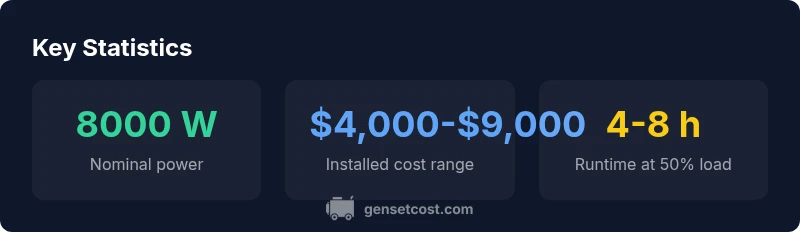
| Standby 8kW (Natural Gas) | 8000 W | $7,000-$9,000 | natural gas | 8-12 hours |
| Inverter 8kW (Gas/Propane) | 8000 W | $5,000-$8,000 | gasoline/propane | 6-10 hours |
People Also Ask
What can an 8kW generator power in a typical home?
An 8kW generator can typically support essential refrigeration, lighting, some heating or cooling, and critical electronics. It may not run every appliance simultaneously without risk of overloading, so prioritize essential loads and consider load-shedding strategies during longer outages.
An 8kW unit can power essential appliances like fridge, lights, and a few outlets, but you should prioritize loads to avoid overloading.
How does portable differ from standby 8kW generators?
Portable units are cheaper upfront and easier to move but require manual setup and a transfer switch. Standby units are permanently installed, offer automatic start, and typically connect to a home panel, but come with higher installation costs and a fixed fuel source.
Portable units are cheaper and movable; standby units start automatically and stay connected to your panels.
Do I need a transfer switch with an 8kW generator?
Yes. A transfer switch isolates your home from the grid during outages, preventing backfeed and enabling safe, automated operation for standby or inverter setups. It’s essential for long-term reliability and safety.
A transfer switch is essential for safe, automatic operation and to protect workers during outages.
What fuel type is best for an 8kW generator?
Fuel choice depends on availability and cost. Natural gas provides convenient utility-grade fuel for standby units, while gasoline and propane offer flexibility for portable units. Each has trade-offs in cost, storage, and energy density.
Natural gas is convenient for standby setups; gasoline and propane offer portability and flexibility.
How long will an 8kW generator last?
Runtime depends on fuel type and load. At 50% load, expect 4-8 hours on gasoline in many models; longer runtimes are possible with natural gas or propane when connected to a steady fuel supply.
Runtime varies with fuel and load; 4-8 hours at half load is common for gasoline.
Can I rent an 8kW generator?
Rentals are available in some markets for temporary power needs, but long-term outages usually favor purchased units for reliability and cost control. Check local availability and rental terms.
Rentals are possible but typically better for short-term use; consider long-term cost and reliability.
“Accurate sizing relies on a practical load assessment and future-expansion planning. The Genset Cost Team notes that pairing the right 8kW setup with a compliant transfer switch minimizes risk and long-term costs.”
Key Takeaways
- Assess loads to correctly size an 8kW system.
- Choose between portable, standby, and inverter styles based on needs.
- Budget for upfront, installation, and ongoing fuel costs.
- Plan for a transfer switch and meet safety codes.
- Consider fuel type for long-term running costs.