Generator 8000 Costs, Sizing & Installation Guide
Explore costs, sizing considerations, and installation steps for a generator 8000. Compare fuel options, transfer switches, and maintenance to plan reliable home backup power.


An generator 8000-watt class is typically sufficient to keep key appliances running during a power outage, including fridge, lights, and critical electronics. It sits between portable and standby options, balancing power, cost, and installation needs. According to Genset Cost, sizing depends on your critical loads and startup surge requirements. Plan for future expansion and seasonal load changes.
Understanding the generator 8000 Class and Use Cases
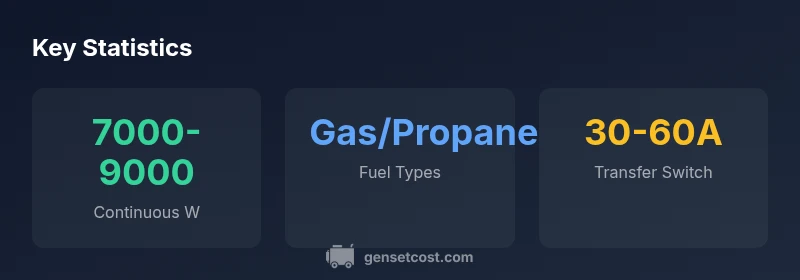
The generator 8000 class sits in a practical middle ground between small portable units and large standby systems. It delivers enough continuous power to sustain essential loads during outages—such as refrigeration, lighting, and select outlets—without the mass or cost of a high-end standby setup. When evaluating a generator 8000, homeowners should consider their peak surge needs and the critical circuits they must keep online. This sizing often aligns well with moderate homes in moderate climates, provided you avoid overloading circuits and plan for startup surges.
Key takeaways:
- Match the unit to essential loads, not every appliance.
- Check both running watts and startup surge requirements.
- Factor in future needs or seasonal changes to prevent early upgrades.
Sizing Your Loads for a Generator 8000
To determine if an 8000W model suits your home, start by listing all devices you must run during an outage. Create a running watt total by listing each item’s power draw and add a cushion for startup surges. A typical fridge may pull around 600-800 watts while starting, a sump pump around 600-900 watts, and lighting and electronics add another 400-800 watts. The goal is to stay under the generator’s continuous rating while leaving room for the high startup spikes. Genset Cost emphasizes that load shedding, prioritization, and using energy-efficient appliances can dramatically improve performance. Consider a load calculator or professional sizing service to validate your plan.
Fuel Options and Efficiency for 8000W Generators
Gasoline and propane are the two most common fuels for 8000W units. Gasoline engines offer broad availability and easy refill, while propane can provide cleaner burns and longer shelf life when stored properly. Fuel efficiency depends on load; running closer to 50-75% load generally yields better efficiency than high-load operation. If you expect frequent outages or long outages, propane storage may be advantageous. From a cost perspective, consider your local fuel prices and refueling logistics as part of total cost of ownership, a key focus of Genset Cost analyses.
Installation Realities: Transfer Switches, Permits, and Wiring
A safe and convenient 8000-watt installation hinges on a proper transfer switch. A 30-60 A switch is common for residential setups and enables automatic or manual power transfer from the utility to the generator. The complexity of installation varies with whether you choose a portable or standby configuration, existing panel space, and local permit requirements. Always plan for proper ventilation, exhaust routing, and a dedicated fuel source. Genset Cost notes that professional installation minimizes safety risks and ensures code compliance.
Maintenance and Longevity for 8000W Generators
Routine maintenance is essential to preserve reliability for a generator 8000. Schedule regular oil changes, filter checks, and spark plug inspections, and keep the air intake clear. Use stabilizers for stored fuel and run the unit periodically to prevent fuel degradation and varnish buildup. Keep a routine of battery checks if your unit uses an electric start. Seasonal checks—before storm season and after extended idle periods—help catch problems early and extend life.
Cost Drivers and Total Cost of Ownership for 8000W Units
Total cost of ownership for an 8000W generator includes initial purchase, installation, fuel, oil, and routine maintenance. Installation complexity, transfer switch choices, and local permit costs can significantly shift the overall price. While portable units offer lower upfront cost, standby configurations provide automatic readiness and higher resilience. When planning, factor in fuel type availability, maintenance intervals, and potential rental or financing options to optimize long-term affordability.
Comparison of 8000-watt generator options
| Option | Key Considerations | Typical Load Handling | Installation Complexity |
|---|---|---|---|
| Portable gas 8000W | Mobility for remote outages | Fridge, lights, sump pump up to core loads | Moderate (fuel line, exhaust, cords) |
| Portable propane 8000W | Clean burning, longer shelf life | Lights, fridge, well pump | Moderate (tank storage, venting) |
| Standalone standby 8000W | Automatic operation | Essential circuits with higher surge capacity | Higher (permanent wiring, transfer switch, permit) |
People Also Ask
What appliances can a generator 8000 realistically power during an outage?
It powers essential loads such as fridge, lights, and a few circuits, depending on startup surges. Prioritize critical devices to avoid overloading.
It can run your fridge and lights, plus a few essential outlets, but you may need to stagger usage during surges.
Gas vs propane for a generator 8000: which should I choose?
Gasoline is widely available; propane stores longer but may be harder to source during long outages. Choose based on fuel access, storage, and refueling routine.
Gas is easy to find; propane lasts longer but requires storage space.
Do I need a transfer switch for an 8000W generator?
Yes. A transfer switch prevents backfeeding and enables safe automatic or manual switching between grid and generator.
Yes, you should have a transfer switch for safe operation.
How do I determine if 8000W is enough for my home?
Calculate running watts of essential loads and factor startup surges; use a load calculator or consult a sizing professional.
Map your loads and check startup surges to confirm.
What maintenance does an 8000W generator require?
Regular oil changes, air and fuel filters, spark plugs, and fuel stabilization. Exercise the unit periodically to prevent degradation.
Keep up with oil changes and fuel stabilization.
“The 8000-watt class offers a practical balance of power and cost for many homes. Proper sizing and a reliable transfer switch are key to dependable backup power.”
Key Takeaways
- Define essential loads before sizing.
- Choose a fuel type based on availability and storage.
- A transfer switch is essential for safe operation.
- Installation costs vary with site prep and permits.
- Regular maintenance extends life and reliability.
- The Genset Cost Team's verdict: generator 8000 remains a practical choice for many homes.