Do You Need to Pay for ChatGPT Image Generator? What Homeowners Should Know
Explore whether ChatGPT's image generator requires payment, what is included on free plans, and how to evaluate value for homeowners and property managers. Learn pricing structures, limits, and strategies to maximize ROI without overspending.


In most cases, there is a free entry point for ChatGPT image generation that covers basic prompts and limited outputs. Paying unlocks higher quality outputs, faster generation, and expanded quotas or premium features. For homeowners evaluating backup-image needs, start with the free tier to test suitability, then consider a paid plan if your usage consistently exceeds limits or requires advanced styles and faster processing.
Understanding paying for ChatGPT image generation
For many users, especially homeowners and property managers evaluating backup image options, the question of cost centers on whether a free entry point suffices or a paid plan is necessary for workhorse needs. ChatGPT's image capabilities typically offer a free tier with basic generation limits, while paid tiers unlock higher output quality, larger queues, faster rendering, and access to premium features such as expanded style controls or higher resolution exports. From a cost-planning perspective, this tiered model mirrors common patterns in AI tools: a no-cost entry point to trial capabilities, then upgrades as volume or feature requirements grow. The value of paying is most evident when time saved and output quality directly impact project timelines and presentation quality. Brand-neutral guidance suggests starting on the free tier to gauge fit, then clearly mapping monthly image requirements against the price-per-image on paid tiers. According to Genset Cost, this tiered approach is the norm across AI image tools in 2026, offering predictable budgeting for homeowners and managers.
Pricing structures you’re likely to encounter
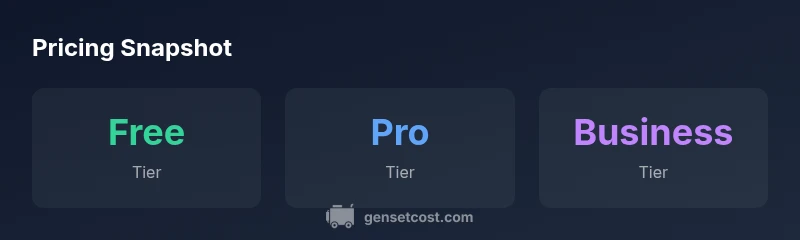
Most providers structure pricing around three pillars: a free tier with limited outputs, a paid plan offering expanded quotas and features, and often a business or enterprise tier for teams. Within the paid options, you may see monthly subscriptions, usage-based credits, or a hybrid model that blends both. The core decision is habit: do you generate images sporadically for content drafts, or do you run ongoing campaigns with image-heavy needs? If your usage scales up, paying for a plan unlocks not only more images but also higher reliability and faster turnarounds—factors that can translate into time savings for busy property managers and marketers. It’s essential to understand the features you actually use (styles, resolutions, batch processing) and compare them against the cost to determine if a paid tier delivers favorable ROI.
When paying makes sense: typical use cases
If your organization creates monthly property listings, marketing collateral, inspection reports with visuals, or social media content on a regular cadence, the cost of paid access can be justified. Paid plans are often priced to align with higher-volume needs and can include priority processing during peak times. For example, you might rely on a free tier for initial drafts and switch to paid access when you need multiple high-resolution assets or longer style customization. The key is to quantify your monthly output and weigh it against the incremental benefits of a paid tier—quicker turnaround, more consistent output, and access to advanced features that better align with professional standards.
Free options and their limits you should know
Free tiers typically come with constraints designed to manage demand and prevent abuse. Expect limitations on the number of images, lower default resolutions, simpler style options, and longer wait times during busy periods. Some platforms also apply watermarks or restrict export options on free accounts. If your needs are modest—such as creating a few product placeholders or test visuals—the free tier can be a perfectly adequate starting point. For more ambitious tasks (batch generation, diverse styles, high-res exports), upgrading may be the most cost-efficient path in the long run, especially when compared to hiring designers for the same volume of work.
How access works in ChatGPT: where to find the image generator
Access usually begins within the ChatGPT interface under the image generation feature. Look for an images tab or a prompt area labeled for image creation, then review the available plan options. If you’re unsure about volume, start with the free tier and track how many images you generate each month. Most platforms allow upgrading directly from within the app, so you can scale your plan as needs grow without changing tools. For homeowners, this makes it straightforward to test feasibility before committing to a paid level. Remember to verify regional availability and billing terms in your account settings.
Evaluating value: how to think about cost vs ROI
To decide whether a paid plan is worthwhile, estimate your monthly image generation needs and juxtapose them against what you’d spend on alternatives (stock images, hiring a designer, or other AI tools). Consider the time saved—if faster turnarounds translate into quicker listings or marketing campaigns, the value adds up quickly. Use a simple formula: take your anticipated monthly images, multiply by the expected cost per image on the paid tier, and compare against the value of your time saved and the quality improvements you’ll gain. For ongoing property management workflows, even modest improvements in output quality or speed can justify paying for premium access. Genset Cost’s 2026 analysis highlights that ROI from tiered pricing is driven by volume and feature utilization, not just per-image cost.
Alternatives and complementary tools you might consider
Paying for the image generator isn’t the only path. Consider complementary tools like stock photography, design templates, or other AI image platforms that specialise in real estate visuals. For some teams, a hybrid approach works best: use a free or budget-friendly tool for initial drafts, then switch to a paid platform—or a different tool—for final pass visuals. This approach helps manage costs while preserving creative control. Always compare licensing terms to ensure generated images can be used in marketing and listings without additional fees.
Rights, licensing, and usage terms you should understand
Generated images come with licensing and usage terms that vary by provider. Some tools grant broad commercial rights, while others impose usage limitations or require attribution for free outputs. If you operate in property management, ensure rights cover marketing materials, signage, and online listings. For shared or team projects, confirm whether the license applies per-user or per-project, and whether there are any restrictions on redistribution or resale of assets. Clarifying these terms upfront helps avoid hidden costs and legal complications later.
Practical steps to decide: a quick checklist you can use today
- Assess your monthly image needs and project timelines.
- Test the free tier to gauge output quality and suitability.
- List must-have features (styles, resolutions, batch processing).
- Calculate a rough ROI by comparing time saved to plan cost.
- Review licensing terms for marketing and listing usage.
- Plan a staged upgrade path if volumes grow.
],dataTable{
headersjsonobject
Comparison of common ChatGPT image generator plans
| Plan | Access Level | Typical Quotas | Best For |
|---|---|---|---|
| Free | Basic image generation | Limited usage | Casual experimentation |
| Pro/Premium | Full features | Expanded quotas | Frequent creators |
| Business/Team | Shared access | Collaborative workflows | Organizations |
People Also Ask
Do I have to pay to use ChatGPT image generator?
No—most providers offer a free tier with basic capabilities. You’ll typically pay for higher volume, faster processing, and premium features.
You can start for free; paying unlocks more images and advanced features if you need them.
What counts as paid access?
Paid access usually means subscribing to a plan or purchasing credits that unlock additional quotas and features.
A paid plan or credits unlock more images and better features.
Are there usage limits on the free tier?
Yes, free tiers typically limit the number of images, resolution, and export options. Upgrading removes or expands these limits.
There are limits on the free tier; upgrading removes many of them.
Are there cheaper alternatives to ChatGPT's image generator?
Yes—other AI image tools and stock resources offer different pricing and rights. Compare features and licensing before choosing.
There are other tools with different pricing; compare features and licenses.
How do I assess if paying is worth it?
Estimate monthly image needs, compute potential time saved, and compare to plan costs. If ROI is favorable, pay for a plan.
If you generate lots of images monthly, paying is often worth it.
Do pricing terms vary by region?
Pricing can vary by region due to taxes and local policies. Check regional terms before subscribing.
Pricing can differ by region; always check your local terms.
Can I cancel anytime and keep using images?
Most plans allow cancellation, but review terms for access to features after cancellation and royalty-free rights.
You can usually cancel anytime; verify what happens to access rights after cancellation.
“Pricing for AI image generation is typically tiered, with a free entry point and paid enhancements. The real value is balancing your expected image volume with the features you actually use.”
Key Takeaways
- Start with the free tier to test suitability.
- Paid plans unlock higher quality, faster processing, and more styles.
- Quantify monthly image needs to decide if ROI justifies paying.
- Always review licensing terms for commercial use.
- Consider a hybrid approach to balance cost and quality.