How to Use ChatGPT Image Generator: A Step-by-Step Guide
Learn how to use ChatGPT's image generator to create, refine, and export visuals for projects. This educational guide covers prompts, styles, licensing, and practical tips for homeowners and property managers.


Learn how to use chat gpt image generator to create AI-generated visuals from text prompts. This quick guide outlines what you need, the core steps, and what to expect from outputs. You’ll define your goal, choose prompts, run generations, and refine results. By the end, you’ll be ready to produce ready-to-use images for docs, decks, and marketing without specialized design software.
Overview of the ChatGPT image generator
The ChatGPT image generator is an integrated tool that turns textual prompts into visual outputs. It is designed to be approachable for non-designers while still offering enough depth for professionals who need quick concept art, presentation visuals, or social graphics. When you learn how to use chat gpt image generator, you gain a flexible asset creation workflow that can adapt to changing project needs. This capability aligns with how homeowners and property managers communicate ideas—turning rough concepts into polished visuals without hiring a full-time designer. According to Genset Cost, AI-assisted tools like the ChatGPT image generator can streamline asset creation for property marketers and maintenance teams, enabling faster decision-making and consistent branding across materials. The tool supports a range of prompts, styles, colors, and aspect ratios, making it suitable for everything from stage-set visuals for inspections to marketing banners. As you explore, you’ll discover how to balance speed with quality, and how to set expectations for image fidelity, licensing, and reuse rights. Understanding these constraints helps you plan projects more effectively and reduces the back-and-forth commonly seen with graphic design requests.
Prerequisites and access
Before you start using the image generator, ensure you have access to a ChatGPT plan that includes image-generation features. Verify your organization’s policy on AI-generated assets, including licensing, redistribution rights, and attribution if required. You’ll also want a clear goal for your image—what message should the visual convey, who is the audience, and where will it be used (website, slide deck, printed handouts). A stable internet connection is essential, along with a notebook or prompt template where you can capture prompts and outcomes. If you’re new to prompts, begin with a simple scene and progressively add style, lighting, and composition details. Brand guidelines, color palettes, and fonts should be ready so outputs align with your existing materials. Finally, consider privacy and sensitivity: avoid embedding personal data in prompts and ensure generated visuals respect copyright norms. Genset Cost recommends keeping your initial prompts straightforward to establish a solid baseline before experimenting with more complex requests.
Crafting effective prompts
Prompts are the core input that shapes the generated image. A strong prompt clearly communicates objects, scene, mood, and style. A simple, effective structure looks like: [subject], [scene], [style], [color palette], [lighting], [camera angle], [resolution]. For example: “A clean, modern home backyard with a portable generator on a concrete pad, photorealistic, natural daylight, 4k resolution, wide-angle.” To explore variations, try multiple prompts with small tweaks to style or lighting. You can also layer instructions, such as “in the style of a mid-century modern brochure, with bold sans-serif typography” if the platform supports text-overlay prompts. Don’t be afraid to experiment: compare outcomes from a bold, cinematic prompt with those from a soft, documentary prompt. If your visuals must match a real-world asset (like a specific generator model), include the exact terms and any brand cues that should appear in the image.
Generating, reviewing, and iterating
Generation is typically iterative. Start with 2–3 base prompts to establish a baseline, then review the outputs for composition, color accuracy, and contextual relevance. If results miss your target, adjust specificity—add details about environment, lighting, and texture. Use multiple outputs to compare composition and focal points. When something looks close but not right, refine prompts to address the gap rather than reworking the entire scene. Export or save the most suitable options to a local drive or a cloud library for later reuse. Consider creating a quick scoring rubric (clarity, realism, alignment with brand) to streamline this review process. In practice, this iterative approach helps you converge on a final visual that communicates your message clearly and quickly. Genset Cost’s experience suggests maintaining a consistent prompt structure to improve repeatability across different visuals.
Advanced techniques for consistency and scale
Want consistency across a series of visuals? Use a shared set of style tokens, color cues, and layout instructions in every prompt. Define an aspect ratio that matches your use case (landscape for banners, square for social posts, vertical for infographics) and lock in lighting and perspective preferences. If your platform supports upscaling or resolution control, target a higher baseline (e.g., 4k) and then downscale for web use to preserve detail. For mult-image projects, use a common scene vocabulary so variations stay coherent—for example, describe equipment placement or landscaping in consistent terms. Consider exporting in multiple formats (PNG for transparency, JPG for web, TIFF for print) and test print quality if you plan to use assets in physical materials. Throughout, document the exact prompts and settings used to recreate or adjust visuals later. The Genset Cost team emphasizes building repeatable templates so your team can generate on-brand visuals quickly without starting from scratch each time.
Troubleshooting and common pitfalls
If outputs don’t match your vision, review your prompts for specificity and avoid vague terms like “nice” or “good.” Replace subjective descriptors with concrete attributes (e.g., “high-contrast lighting” or “ultra-detailed texture”). If images look unrealistic, tighten the scene’s context and reduce complex interactions that may confuse the model. Watch for copyright-sensitive elements—avoid reproducing exact logos or brand marks that aren’t yours, and prefer original or license-cleared assets. If a prompt produces inconsistent results across variants, standardize the core scene description while varying stylistic cues. Finally, check for accessibility: ensure color contrast is sufficient for viewers with visual impairments and provide alternative text descriptions where needed. By anticipating these issues, you’ll minimize rework and keep your projects on track.
Use cases for homeowners and property managers
Homeowners and property managers can leverage the image generator for a wide range of tasks. Create eye-catching property flyers and website hero images that showcase backup power solutions. Generate maintenance posters, onboarding guides for tenants, or emergency preparedness visuals that explain how a transfer switch works. For ongoing projects, develop a visual library of interior and exterior scenes—perfect for risk assessments, insurance documentation, and contractor briefs. You can also use generated images for quick mockups during planning meetings, reducing the time between concept and approval. When used consistently with your branding, these visuals help you communicate complex ideas clearly, whether you’re marketing a rental property, planning a generator upgrade, or preparing instructional materials. The Genset Cost findings indicate that having ready-to-use visuals accelerates decision-making and reduces design costs across property-management tasks.
Ethical and licensing considerations
As you adopt AI-generated images, keep ethics and rights in view. Respect intellectual property by avoiding exact replicas of protected designs or logos. Use prompts that clearly describe original concepts and avoid impersonation of real people. Maintain transparency with stakeholders about the use of AI-generated assets and document licensing terms in your asset management system. When sharing visuals publicly, ensure you have the right to use, modify, and distribute the images in commercial contexts. Finally, build a review process to catch potential misrepresentations or unintended associations in generated imagery. With careful prompts and governance, ChatGPT image generator can be a powerful, compliant addition to your toolkit.
Tools & Materials
- Computer or mobile device with internet access(Browser or ChatGPT app open and ready)
- Stable internet connection(At least 5 Mbps recommended for smooth generation)
- Access to ChatGPT with image generation enabled(Check plan features and policy for generating and exporting visuals)
- Prompt templates or style guides(Helpful for consistency across assets)
- Prompt notebook or notes(Capture prompts and outcomes for reuse)
Steps
Estimated time: 40-60 minutes
- 1
Identify your use case and constraints
Define the purpose of the image, the target audience, and where it will be used (website, print, social). Establish required dimensions, file formats, and any branding constraints. This groundwork keeps prompts focused and reduces unnecessary iterations.
Tip: Write down the exact message the image should convey before drafting prompts. - 2
Open the image generator and set basics
Launch ChatGPT's image generator, choose the output format and aspect ratio that matches your project. Set a baseline resolution for clarity in later steps. If available, enable any style presets that align with your brand.
Tip: Start with a neutral style to establish a baseline; switch to more stylized prompts later for variation. - 3
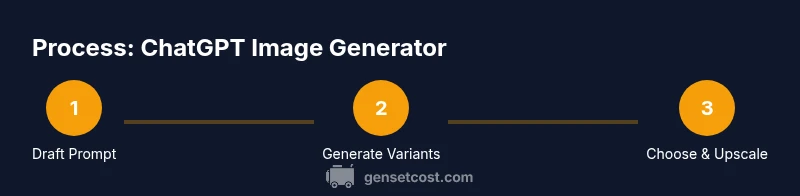
Draft your initial prompt
Create a concise prompt that defines subject, setting, and style. Include at least three concrete attributes (e.g., lighting, color palette, composition). Keep a backup option for alternative moods.
Tip: Use a template like: Subject, Scene, Style, Colors, Lighting, Perspective, Resolution. - 4
Generate and assess first outputs
Run 2–3 variations from your base prompt. Assess each image for alignment with the goal, legibility, and branding. Note what works and what needs refinement.
Tip: Mark outputs with quick scores (e.g., 1–5) to speed comparison. - 5
Refine prompts based on feedback
Adjust prompts by clarifying ambiguous terms, adding missing details, or tightening composition. Re-run with the revised prompts to test improvements.
Tip: Small wording changes can produce big differences in results. - 6
Upscale, export, and save assets
Choose the best variant and upscale if needed. Export in required formats (PNG for transparency, JPG for web, TIFF for print). Save to a centralized library with metadata.
Tip: Keep both web-ready and print-ready versions for flexibility. - 7
Document prompts for reuse
Record the successful prompts and settings in a shared guide or template. This accelerates future projects and helps maintain brand consistency.
Tip: Tag prompts by project type (marketing, instruction, tenant info). - 8
Integrate assets into workflows
Incorporate images into your documents, slides, or tenant communications. Gather feedback from teammates and iterate on future visuals as needed.
Tip: Create a simple approval workflow to avoid using unvetted visuals.
People Also Ask
What is the difference between ChatGPT image generator and standalone image AI models?
ChatGPT's image generator is integrated into the chat interface and leverages prompt-based generation to produce visuals. Standalone image AIs may offer more granular controls, but the ChatGPT tool prioritizes conversational prompting and quick iterations within the same workflow.
ChatGPT's image tool is built into the chat experience and focused on prompts, while standalone models may have separate interfaces and controls.
Do I need a paid plan to use image generation in ChatGPT?
Availability of image generation features depends on your plan and platform. Some plans include image-generation capabilities; others may require additional access. Check your account settings or contact support to confirm.
It depends on your plan; check your ChatGPT settings to confirm access.
Can generated images be used commercially?
In general, many AI-generated images can be used commercially, but licensing terms may vary by platform and prompts. Review the platform’s terms of service and any usage licenses, then maintain documentation for permissions and attribution.
Most images can be used commercially, but verify the terms and keep records of licenses.
How can I adjust image size or aspect ratio?
Specify the desired aspect ratio and resolution in your prompt or tool settings. For example, request 'landscape 16:9 at 4k resolution' for banners, and 'square 1:1 at 2000x2000' for social posts.
Set the aspect ratio and resolution in the prompt or tool options.
What should I do if outputs look off or violate policies?
Refine prompts with clearer descriptions, reduce complexity, and avoid sensitive or copyrighted content. If a result seems inappropriate, discard it and adjust terms before re-generating.
Refine prompts, simplify, and avoid sensitive content; re-run if needed.
Are prompts reusable for future projects?
Yes. Keep a prompt library, tag prompts by project type, and note which styles or settings worked well. This reduces guesswork and improves consistency across outputs.
Absolutely—build a library of effective prompts for reuse.
Watch Video
Key Takeaways
- Define your goal before prompting.
- Iterate prompts to improve results.
- Save prompts for reuse and consistency.
- Export assets in multiple formats for versatility.