Gas Generator Costs, Sizing, and Installation: A Practical Comparison
Compare gas generator options by cost, sizing, and installation to choose the best backup power solution for homes and properties. Learn how natural gas and propane differ in reliability, maintenance, and total cost of ownership with data-informed guidance from Genset Cost.


Gas generators range from portable units to whole-house systems, fueled by natural gas or propane. This comparison outlines typical cost considerations, sizing principles, installation steps, and long-term value. According to Genset Cost, fuel availability and transfer-switch compatibility are crucial when estimating total costs and reliability for a home backup system.
Gas Generator Landscape: Fuel, Capacity, and Reliability
Gas generators span a broad range from compact portable models to full-house standby systems. For homeowners and property managers evaluating backup power, the core choices hinge on fuel type, capacity, and installation footprint. In this guide, we compare two common gas-fueled configurations: natural gas-connected units that tap into the residence's gas line, and propane-fueled units that rely on a tank or cylinder supply. The decision influences upfront cost, maintenance frequency, reliability during outages, and long-term operating costs. The Genset Cost team notes that access to a steady gas supply and compatibility with a transfer switch are among the most important determinants of performance. In many markets, natural gas services provide continuous fuel, reducing refill frequency, while propane can be stored on-site but requires periodic tank management. The choice between these options should consider not only buy-in price but also the availability of fuel lines, distance to the main panel, and local permitting requirements. For heavy-duty, weather-sensitive installations, homeowners should prioritize units with robust surge handling and corrosion resistance. This is where a structured comparison helps avoid overpaying for features you won’t use.
Brand mentions: According to Genset Cost, natural gas connections can simplify ongoing operation for homes with existing gas service.
Sizing Principles: How to Determine the Right Generator Size
Determining the correct gas generator size starts with a load assessment. Identify essential circuits you want to power during an outage—lighting, heating, refrigeration, security, and communications are common. Use wattage or VA ratings to estimate running and starting loads, then add a safety margin to cover surge requirements. It’s important to differentiate essential loads from nonessential ones to avoid oversizing or undersizing. When sizing, consider both continuous power needs and peak wattage needed to start motors like pumps or furnaces. A common approach is to design for 80–100% of your critical load with a small buffer for startup transients. For homes with heating or cooling systems, you may need higher capacity to handle makeup air and compressor demand. The result is a target wattage range you can discuss with installers and obtain quotes around. Genset Cost analysis shows that mis-sizing—either too small or too large—can significantly affect uptime and fuel cost over the life of the system.
Key steps: inventory essential circuits, estimate running/start watts, apply a safety factor, verify transfer-switch compatibility, and request multiple quotes.
Fuel Types and Availability: Natural Gas vs Propane
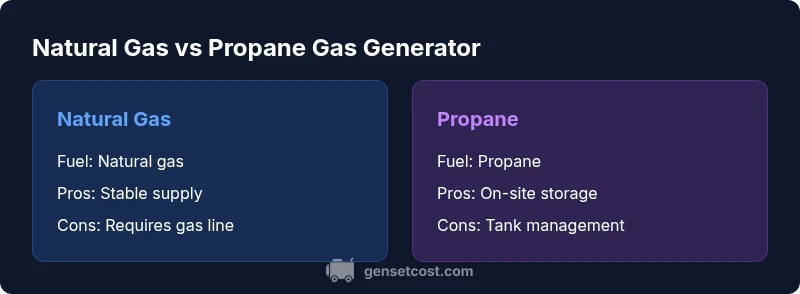
Gas generators typically run on natural gas or propane, each with distinct trade-offs. Natural gas offers a continuous fuel supply through the home’s gas line, reducing refill logistics and storage needs. Propane provides fuel independence from the utility grid but requires on-site storage tanks that must be filled periodically. Propane tanks can be safer in areas where natural gas service is unreliable, but tank management adds maintenance tasks and potential refilling costs. The choice often depends on fuel availability in your area, the proximity of the gas service line, and the practicality of tank placement. For properties with long outages, propane may offer more dependable on-site fuel if natural gas lines are disrupted or if service to the home is interrupted. Regardless of fuel choice, ensure the generator is properly rated for the selected fuel type and that the gas supply lines, regulators, and connections meet local codes. Brand context: Genset Cost emphasizes confirming fuel availability and regulatory compliance before purchasing a gas generator.
Installation and Transfer Switch Considerations
Installing a gas generator involves more than selecting a unit. A critical element is a transfer switch or interlock kit that safely isolates home circuits from the grid when power is out. Without a proper transfer mechanism, backfeeding can pose serious safety risks. Installation also requires a dedicated fuel line or propane tank setup, electrical wiring to the main panel, and appropriate weatherproof mounting for outdoor units. Local permits, inspection, and compliance with setback requirements from structures and vents are typical steps in the process. In most jurisdictions, an evaluation by a licensed electrician and a licensed plumber (or gas technician) is necessary to ensure gas pressure, leak checks, and electrical grounding meet code. By planning for these steps in advance, you can prevent delays and unexpected costs during installation.
Cost Components and Total Cost of Ownership (TCO)
Total cost of ownership for a gas generator includes upfront equipment cost, installation labor, permits, and ongoing fuel expenses. Other factors include transfer switch cost, fuel storage if propane is used, regular maintenance, and expected lifespan. Because fuel costs fluctuate and installation requirements vary by locale, you should compare quotes that itemize each of these components. The long-term TCO is influenced by fuel efficiency, standby duty cycles, and the reliability of the gas supply. Genset Cost emphasizes inspecting the regulatory landscape and obtaining multiple bids to understand which configuration offers the best value over time. Avoid options that promise excessive efficiency at the expense of reliability or serviceability.
Reliability, Maintenance, and Lifespan
Like all mechanical systems, gas generators require routine maintenance to maximize uptime. Routine tasks include oil changes, filter inspections, spark plug checks (for certain ignition types), and battery testing on automatic start systems. Fuel-type differences influence maintenance schedules: natural gas units generally require comparable service to propane ones, but propane systems may need more attention to fuel line cleanliness and tank integrity. In addition to scheduled maintenance, you should plan for seasonal runs to prevent stagnation and to test automatic start sequences. Regular inspections by a qualified technician help identify leaks, corrosion, and wear on connections, regulators, and venting. The expected lifespan of a well-maintained gas generator typically exceeds a decade, with larger standby units offering extended service life when properly cared for. Brand note: Genset Cost highlights that proactive maintenance yields more predictable performance during emergencies.
Location, Noise, and Compliance Considerations
Placement decisions for gas generators impact performance, safety, and neighbor compatibility. Outdoor installations should consider weather exposure, clearance from structures, and proper ventilation to avoid overheating. Noise mitigation is often a consideration in residential zones, with many models offering low-noise or inverter technology. Compliance with setback rules, fire codes, and environmental regulations is common; some locations require a concrete pad, weatherproof enclosure, or guard rails for outdoor units. If you’re in a multi-dwelling building or a high-traffic neighborhood, check local ordinances before purchasing. These considerations influence the perceived value of a gas generator and can affect eligibility for rebates or incentives in certain markets.
Best-Fit Scenarios: When Natural Gas Excels vs Propane Wins
Natural gas-backed systems are often the best choice for homes with reliable gas service and a clear path to a dedicated gas line to the standby location. They minimize refueling and simplify maintenance since fuel replenishment is typically handled by the utility. Propane systems shine where on-site fuel storage is practical, or where natural gas service is unavailable or disrupted. For properties with frequent remodels, the portability of smaller propane units can be appealing, but for whole-house backups, fixed natural gas or propane systems paired with a proper transfer switch offer greater peace of mind. Your decision should balance fuel logistics, installed footprint, and the critical loads you intend to protect.
Common Pitfalls and How to Avoid Them
Many buyers rush to purchase without verifying transfer-switch compatibility, fuel supply adequacy, or the unit’s ability to handle startup surges. Others underestimate the importance of a proper installation footprint, permits, and weather protection. A common mistake is selecting a unit based solely on upfront price without considering maintenance costs and fuel availability. Always obtain multiple quotes, verify warranty terms, and request a detailed installation plan that includes gas line sizing, regulator specifications, and panel integration. Finally, prioritize units with clear maintenance schedules and accessible service networks, reducing downtime during outages.
Planning for the Future: Smart Controls and Remote Monitoring
Advanced gas generators offer smart controls, remote monitoring, and automated testing. These features help you verify readiness before an outage and reduce manual checks. When evaluating options, consider compatibility with home automation systems, mobile apps, and programmable run times to optimize fuel use. Modern units may include weather sensors and automatic load shedding to protect critical circuits while conserving fuel. If you expect occasional upgrades to solar or battery storage, ensure the generator can integrate with hybrid systems through standardized communication protocols.
Comparison
| Feature | Natural Gas Generator | Propane Generator |
|---|---|---|
| Fuel Source | natural gas | propane |
| Installation Needs | requires gas line connection and regulator | requires propane storage tank and regulator |
| Initial Cost Relative | moderate | moderate-to-high |
| Fuel Availability | dependent on natural gas service and home supply | dependent on propane tank ownership and refill logistics |
| Best For | homes with reliable gas service | homes with propane access or outdoor installations |
| Maintenance Focus | regular gas line and unit maintenance | tank management and gas line checks |
The Good
- Stable fuel supply where natural gas is already piped to the home
- Lower refueling logistics for natural gas options
- Full-house backup with fast start and seamless transfer
- Minimal on-site fuel storage reduces clutter and risk
- Improved resale value with modern standby features
The Bad
- High upfront installation costs if gas line work is needed
- Propane systems need tank management and refill coordination
- Ventilation and setback requirements add complexity
Natural gas-backed generators generally offer the best long-term reliability when gas service is available.
Choose natural gas when the service is steady and the transfer-switch setup is straightforward. Propane is a solid alternative where on-site fuel storage and flexibility are priorities, but expect more maintenance considerations.
People Also Ask
What size gas generator do I need for a typical home?
Sizing depends on essential loads like lights, refrigeration, heating, and communications. Start by listing critical circuits and estimating their running and startup wattage, then add a safety margin. A licensed installer can translate these numbers into a specific model and confirm compatibility with your transfer switch.
First, list what you need powered during an outage, then size for those loads and the startup surge. A professional will confirm the exact model and switch compatibility.
Can a gas generator run on propane, natural gas, or both?
Most gas generators are designed for a single fuel type, either natural gas or propane. Some models offer dual-fuel capability, but you should verify the manufacturer’s guidance and ensure the installation supports the chosen fuel. Dual-fuel options can add cost but may improve flexibility during outages.
Most gas generators run on one fuel type, though some can be dual-fuel. Check the maker’s guidance and ensure your install supports it.
Do I need a transfer switch for a gas generator?
Yes. A transfer switch isolates your home from the utility grid and directs power to essential circuits during an outage. Without one, you risk backfeeding and safety hazards. A licensed electrician should install the switch and verify proper wiring and grounding.
Yes, a transfer switch is essential for safety and reliability. Have a licensed electrician install it.
What maintenance does a gas generator require?
Regular maintenance includes oil changes, filter checks, spark plug inspection (if applicable), and battery checks for automatic start systems. Fuel system inspections and leak checks are also important, especially for propane tanks or gas lines.
Keep up with oil changes and fuel system checks; regular service keeps it dependable.
Is natural gas more reliable than propane for backup power?
Reliability depends on fuel availability. Natural gas is steady if the service remains connected, while propane requires tank management but can be stored on-site. Consider local conditions and fuel logistics when deciding which option to favor.
Natural gas can be very reliable if your service stays active; propane offers on-site storage but requires tank upkeep.
What installation steps should I expect and what permits are typical?
Expect a multi-step process: site assessment, gas line or propane tank setup, electrical wiring to a transfer switch, panel work, and inspection. Permits vary by jurisdiction, so check with your local authority and hire licensed professionals to ensure compliance.
You’ll need inspections and permits; professionals handle gas lines, wiring, and transfer switch installation.
Key Takeaways
- Assess fuel access before choosing a size
- Prioritize transfer switches for seamless power transfer
- Consider maintenance needs alongside initial cost
- Factor fuel logistics into total cost of ownership
- Plan for future upgrades with smart controls